Boletus rubroflammeus
Boletus rubroflammeus
A species of Boletus.
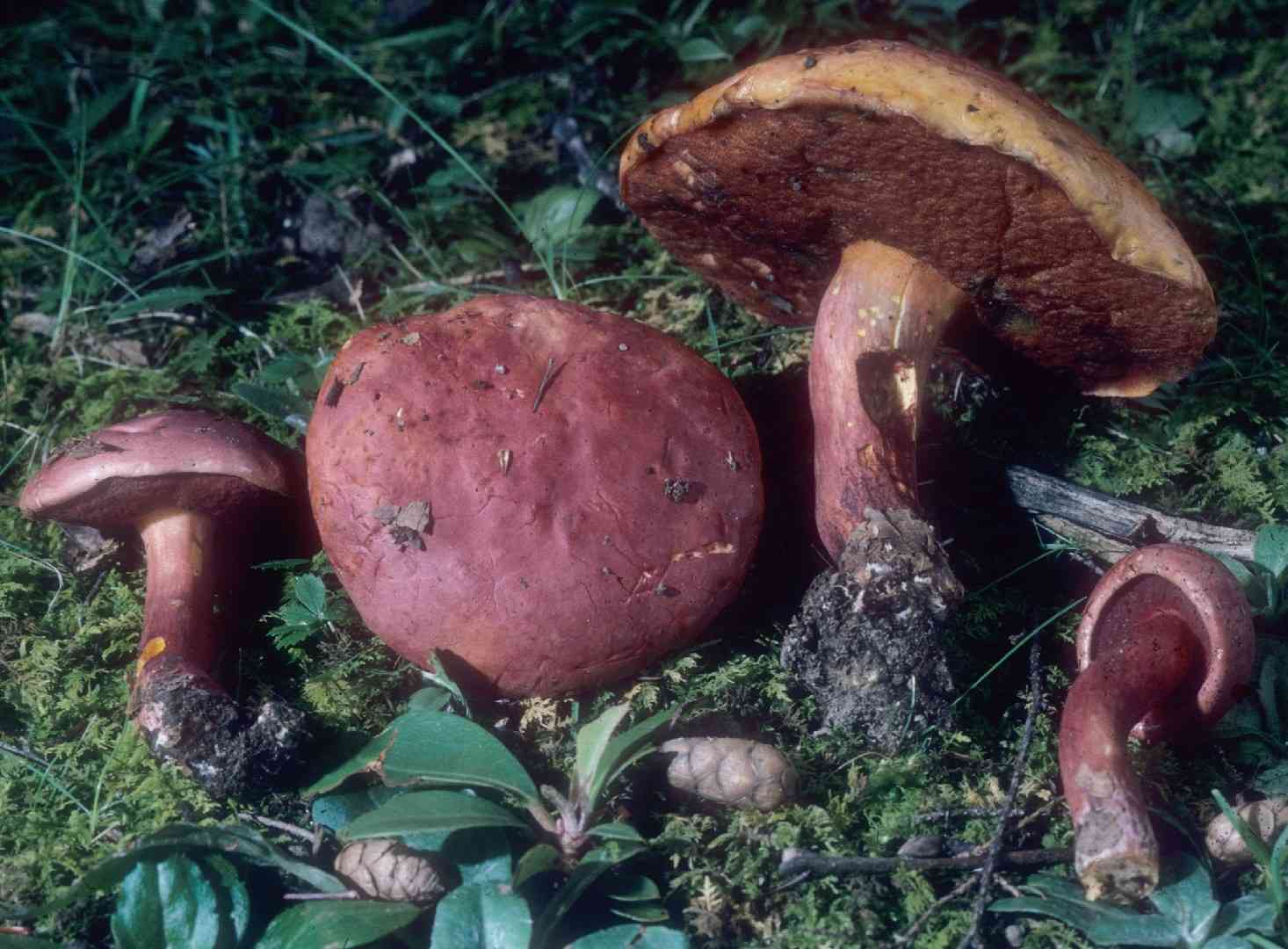
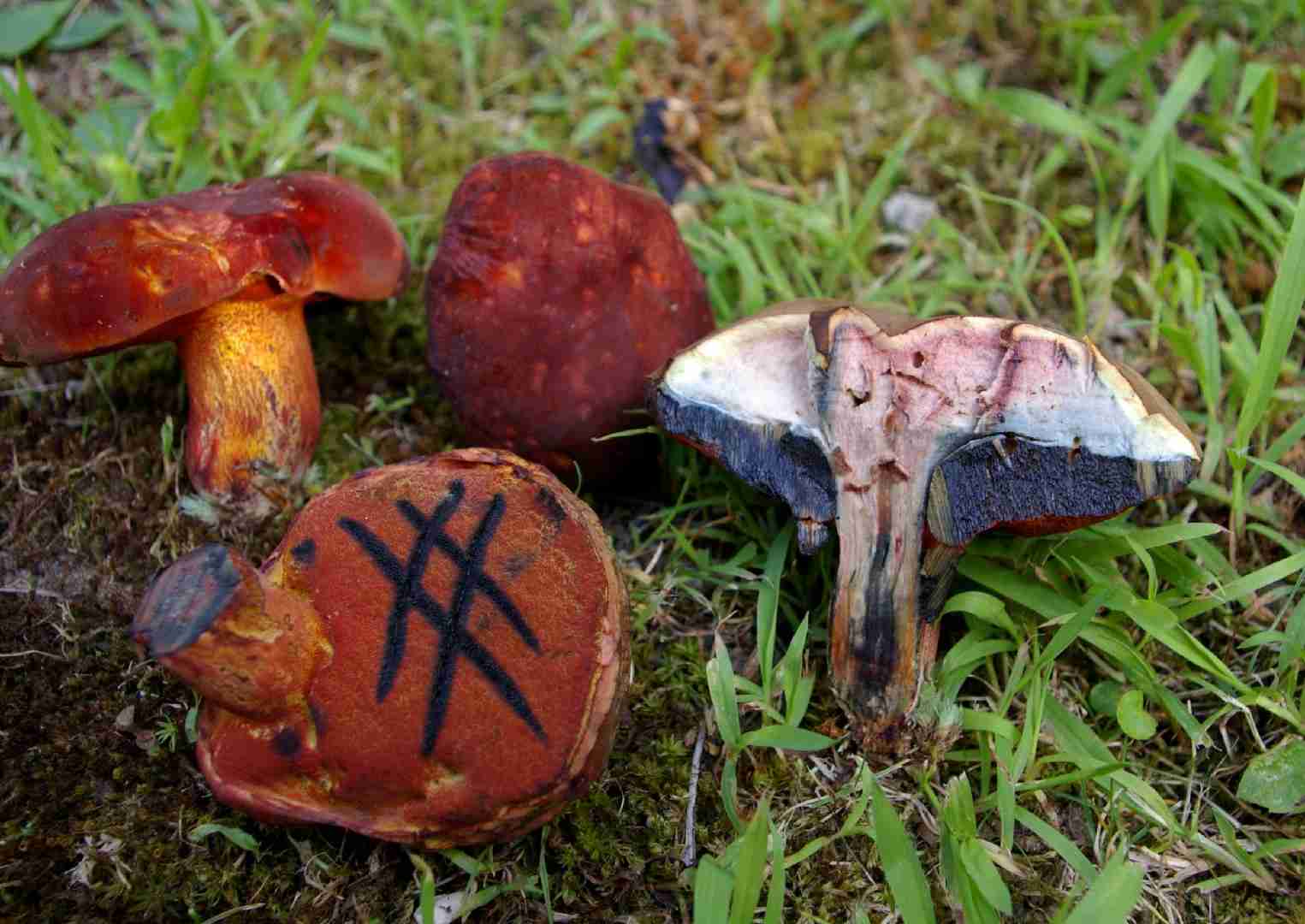
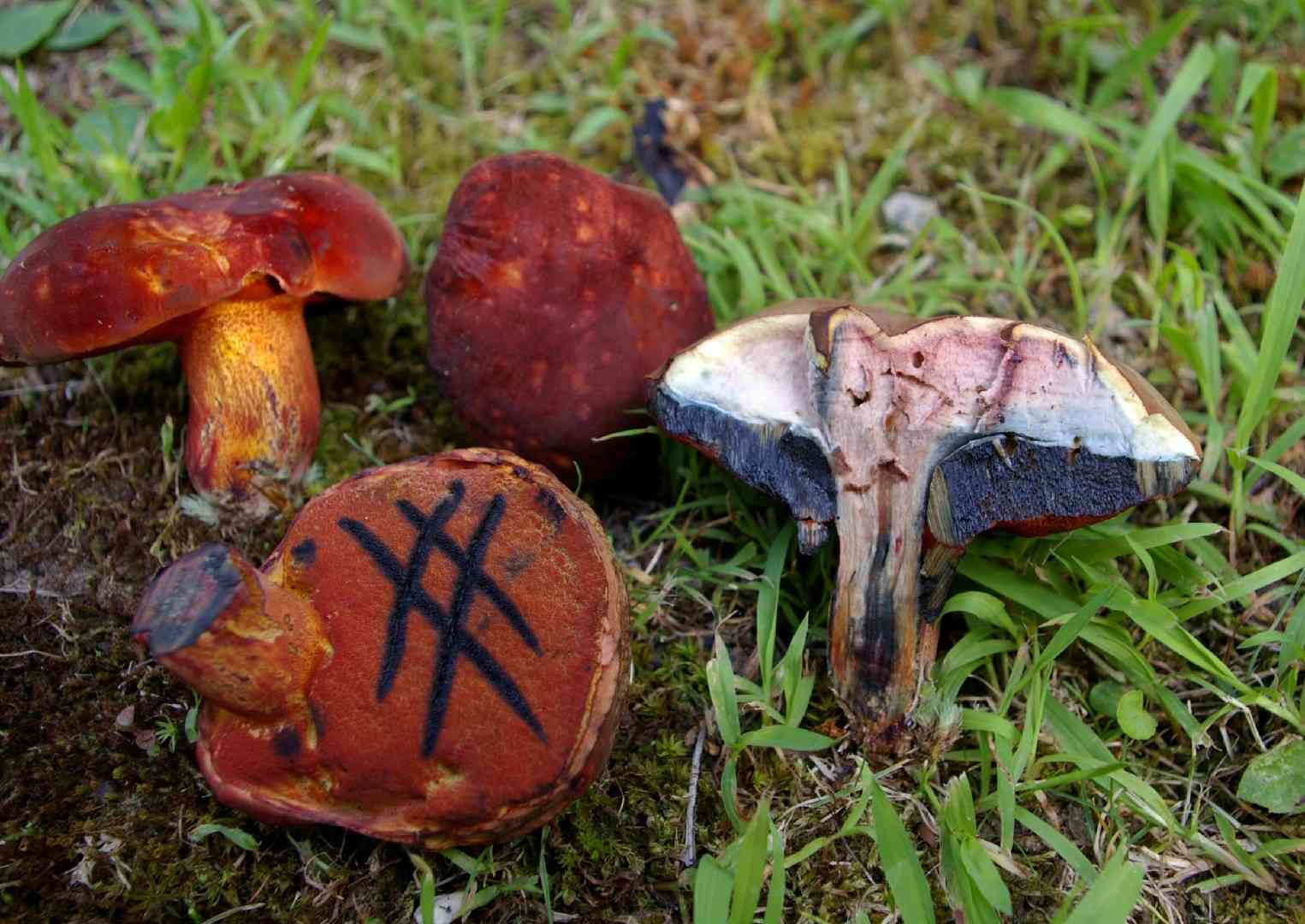
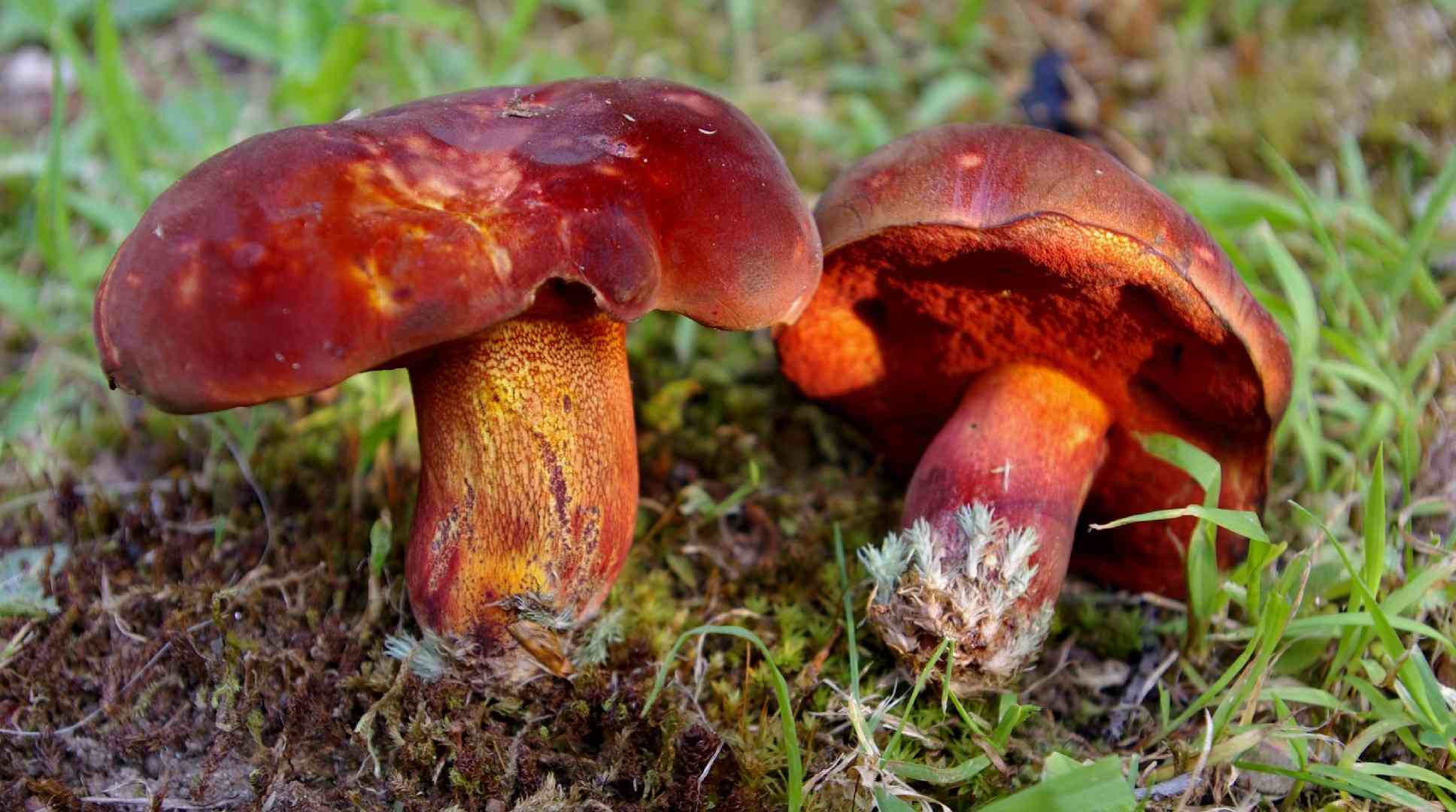
Boletus rubroflammeus exhibits a cap that is convex to broadly convex, measuring 6–12 cm (2.4–4.7 in) in diameter. Its margin slightly extends beyond the tubes. The cap surface is dry, initially appearing as appressed-fibrillose or matted grayish tomentum. With maturity, the fibrils detach, leaving the matted tomentum primarily along the margin, and the cap center may develop slight cracks. The cap maintains a consistent deep vinaceous-red color throughout its lifespan. The flesh is thick, soft, and yellow, with a mild taste and no distinct odor.
Beneath the cap, the spore-bearing surface consists of vertically arranged tubes with pore-like openings. These yellow tubes are 1–2 cm (0.4–0.8 in) deep, initially attached to the stem (adnate), but later becoming free. Individual pores are small and round (approximately 2 per mm), while the overall pore surface is uneven or pitted. Its initial deep red color fades slightly with maturity, and it rapidly turns blue upon injury.
The stem, 6–8 cm (2.4–3.1 in) long and 1–2 cm (0.4–0.8 in) thick, is solid and can be either uniform in width or club-shaped. Internally, it is yellowish with reddish streaks. Most of the stem surface is covered by coarse dark red reticulations, though near the top, the yellow color is visible beneath these reticulations. All parts of the mushroom quickly stain blue when cut, bruised, or damaged.
This mushroom is poisonous, causing gastrointestinal distress if ingested, with typical symptoms including cramping, nausea, bloating, vomiting, and diarrhea. Boletus rubroflammeus produces an olive-brown spore print. The spores are smooth, roughly oblong to slightly swollen (ventricose) in face view, and inequilateral in profile view, measuring 10–14 by 4–5 µm. They possess a broad, shallow suprahilar depression and appear yellowish translucent in Melzer's reagent, and pale yellow-orange in a potassium hydroxide (KOH) solution.
The basidia (spore-bearing cells) are club-shaped with a long stalk (pedicel), bear four spores, and measure 30–40 by 8–9 µm. Pleurocystidia (cystidia on the tube faces) are rare to scattered, 28–37 by 9–15 µm, fusoid to ventricose, and have a somewhat sharp tip. Cheilocystidia (cystidia on gill edges) are abundant, 18–35 by 5–9 µm, and similar in shape to the pleurocystidia. In KOH, cheilocystidia appear dingy orange-yellow with smooth, thin walls.
The tissue of the tubes is bilateral, featuring a central strand of roughly parallel hyphae from which other hyphae diverge. This central strand consists of interwoven, floccose, orange-yellow hyphae in KOH; the diverging hyphae extend into the hymenium, forming a subhymenium containing smooth hyphae 4–6 µm wide. The cap cuticle is composed of tightly interwoven, pressed-down hyphae, typically 3–5 µm wide. Hyphae in the epicuticular zone often exhibit fine granular incrustations visible in both KOH and Melzer's reagent. Clamp connections are absent in the hyphae of B. rubroflammeus.
Attributes of Boletus rubroflammeus
Scientific Classification of Boletus rubroflammeus
Toxicity and Edibility of Boletus rubroflammeus
Is Boletus rubroflammeus Toxic?
Toxicity information is not available for this mushroom. Always consult with an expert before consuming any wild mushrooms.