Pineapple bolete
Boletellus ananas
A species of Boletellus.
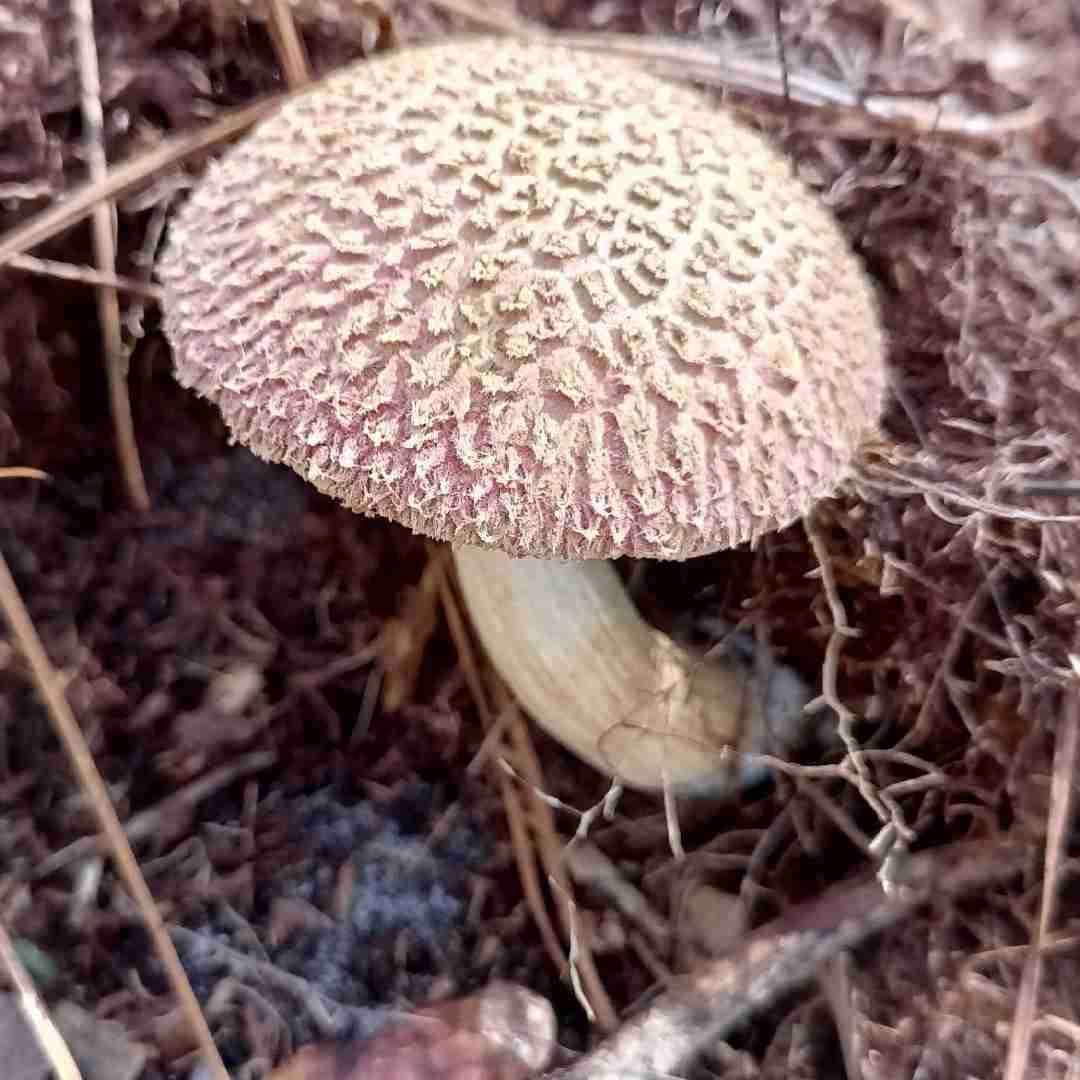
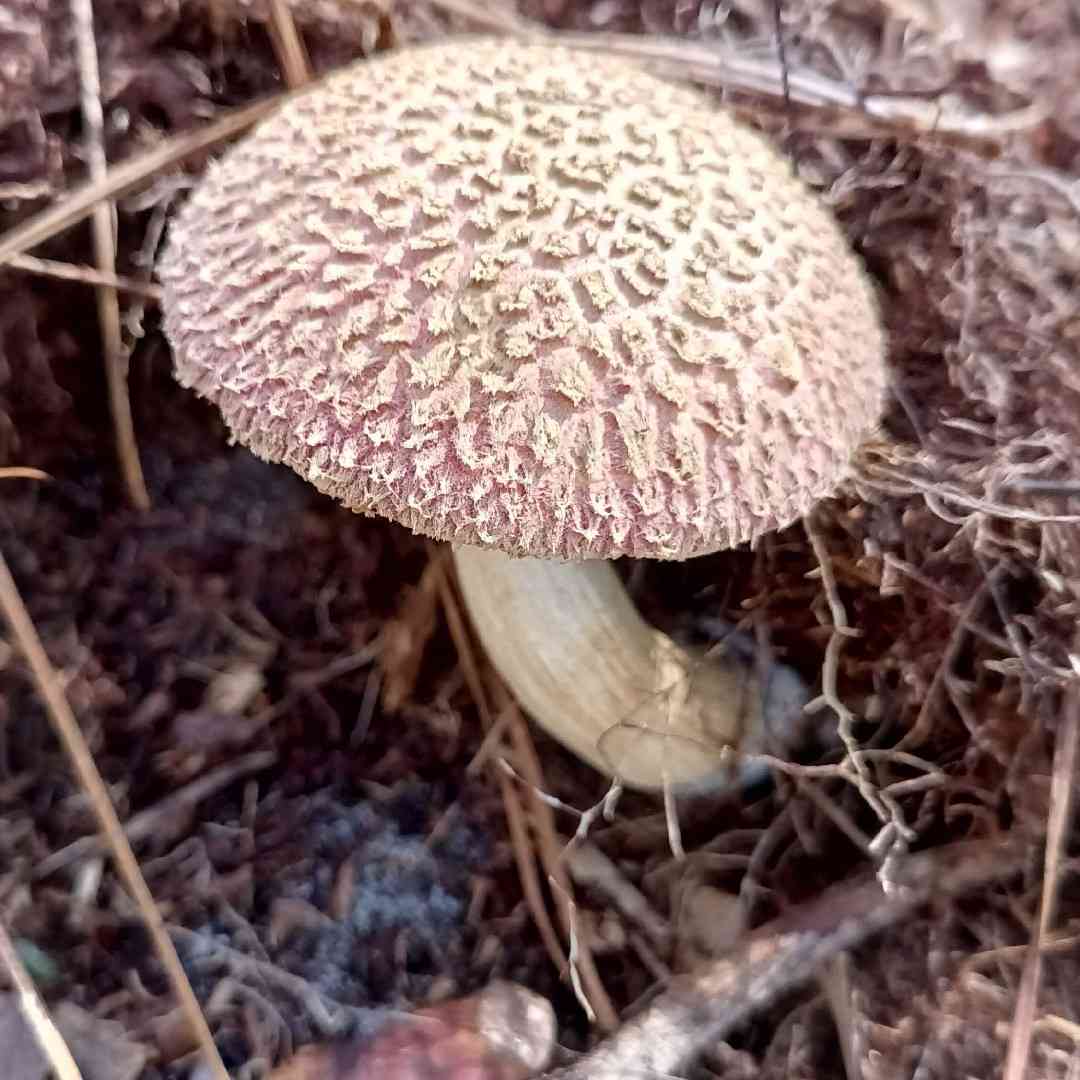
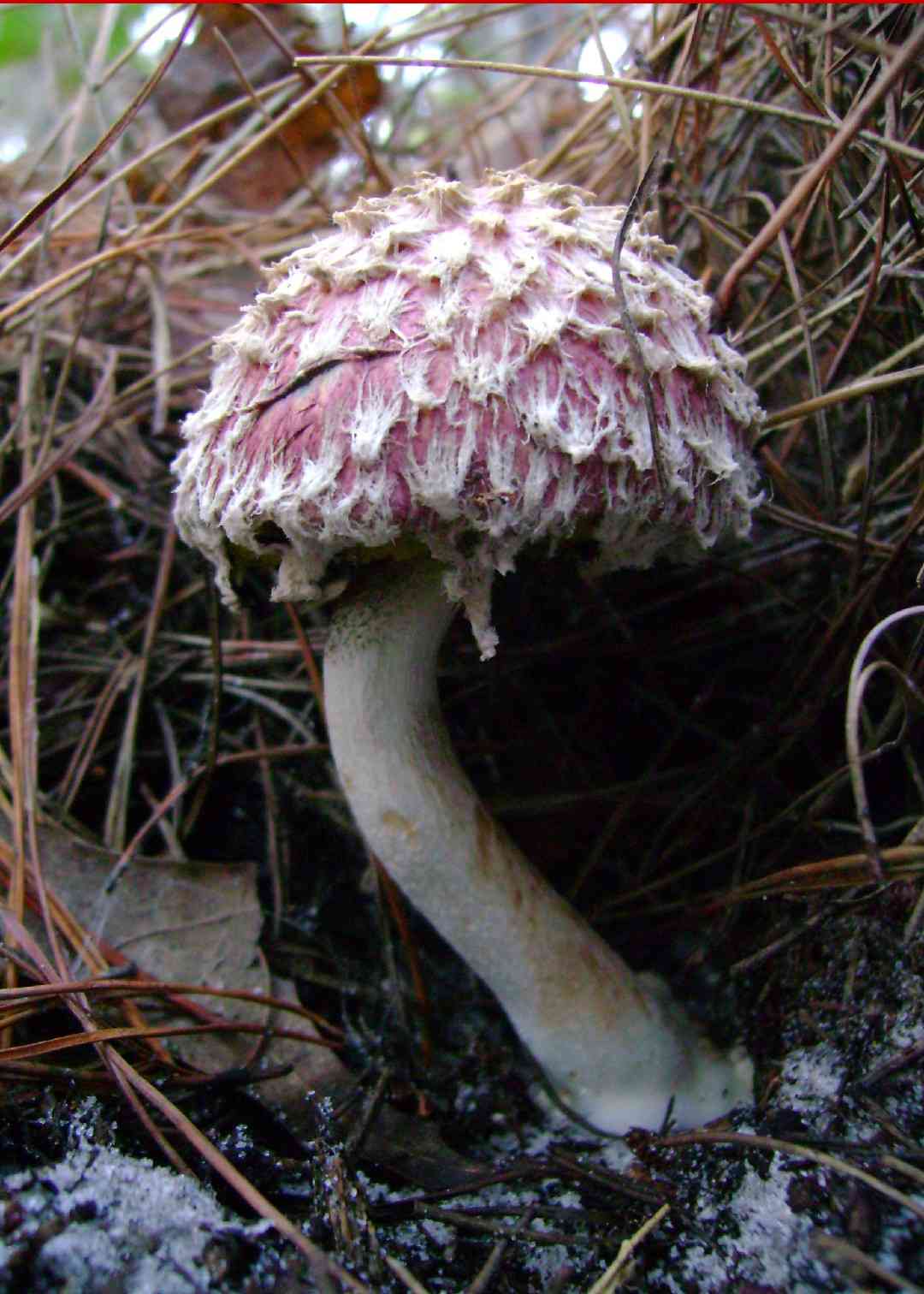
The pineapple bolete stands out among boletes, recognized by its remarkably coarse, shaggy, and scaly cap that develops purplish tones with age. Uniquely, when young, this mushroom is enveloped in a whitish veil, adding to its distinct characteristics.
In This Article
Attributes of Pineapple bolete
Cap Diameter
3 - 11 cm
Height
6 - 12 cm
Cap
Cap 4 - 10 cm across; round, convex to flat; buff to pinkish, red; margin hung with veil remnants
Cap Shape
Convex, Flat
Cap Surfaces
Fibrillose-scaly
Stem
Stem 5 - 10 cm long, 1 - 2 cm thick; whitish to pinkish or yellowish
Stem Shapes
Cylindrical
Stem Surfaces
Smooth
Flesh
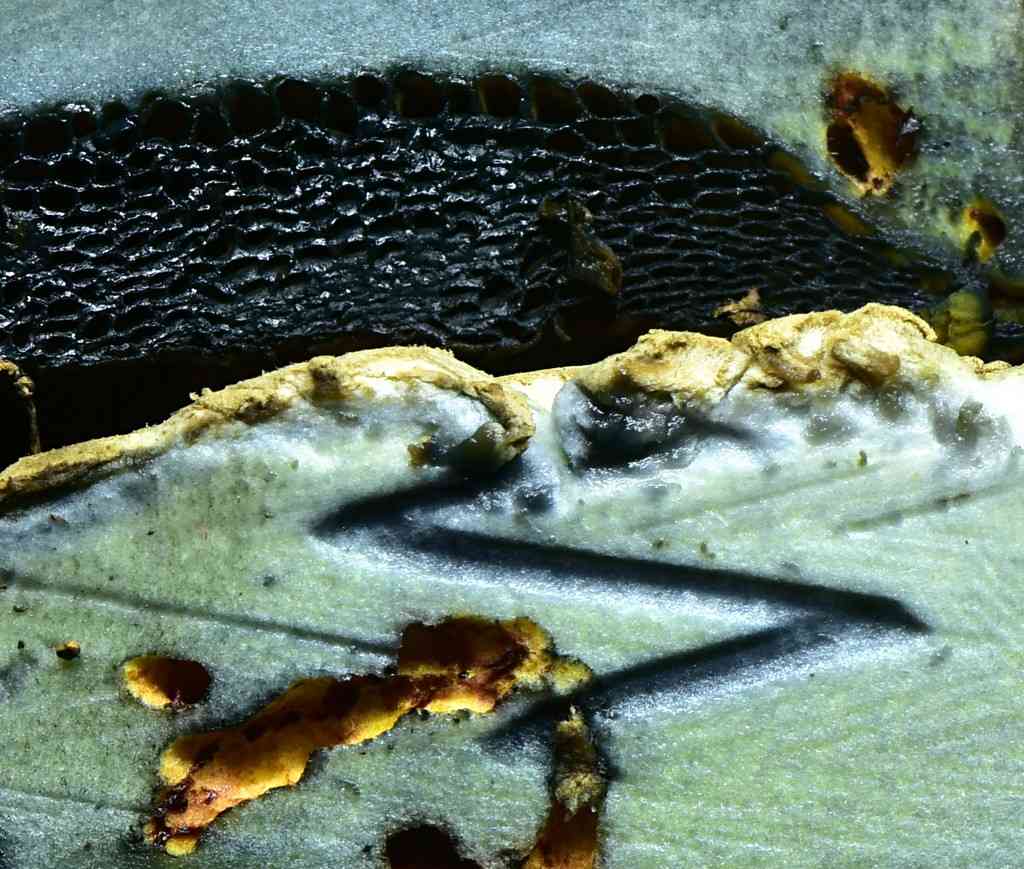
Whitish to yellowish; staining blue when sliced
Ring
Ringless
Spore Print Color
Medium brown
Odor
Mildly mushroomy but not distinctive.
Body Color
YellowRedPurplePink
Flesh Bruises
Discolor to blue
Growth Form
Solitary, Gregarious
Nutrient Gathering
Mycorrhizal, Saprophytic
Substrate
Dead Woods, Wood of Living Trees
You can find Pineapple bolete by these plants
Pines, Oaks
Occurence Habitats
Coniferous Woodland
Species Status
Widely distributed
Endangered Species
No
Scientific Classification of Pineapple bolete
Phylum
Club fungi
Class
Mushroom-forming fungi
Order
Boletes and allies
Family
Boletes
Genus
Boletellus
Toxicity and Edibility of Pineapple bolete
Is Pineapple bolete Toxic?
Ingesting the pineapple bolete, a toxic fungus, can lead to gastroenteritis within 30 minutes to 3 hours. Key indicators include nausea, vomiting, abdominal cramps, and diarrhea, occasionally accompanied by perspiration, fatigue, lightheadedness, and shivers.

