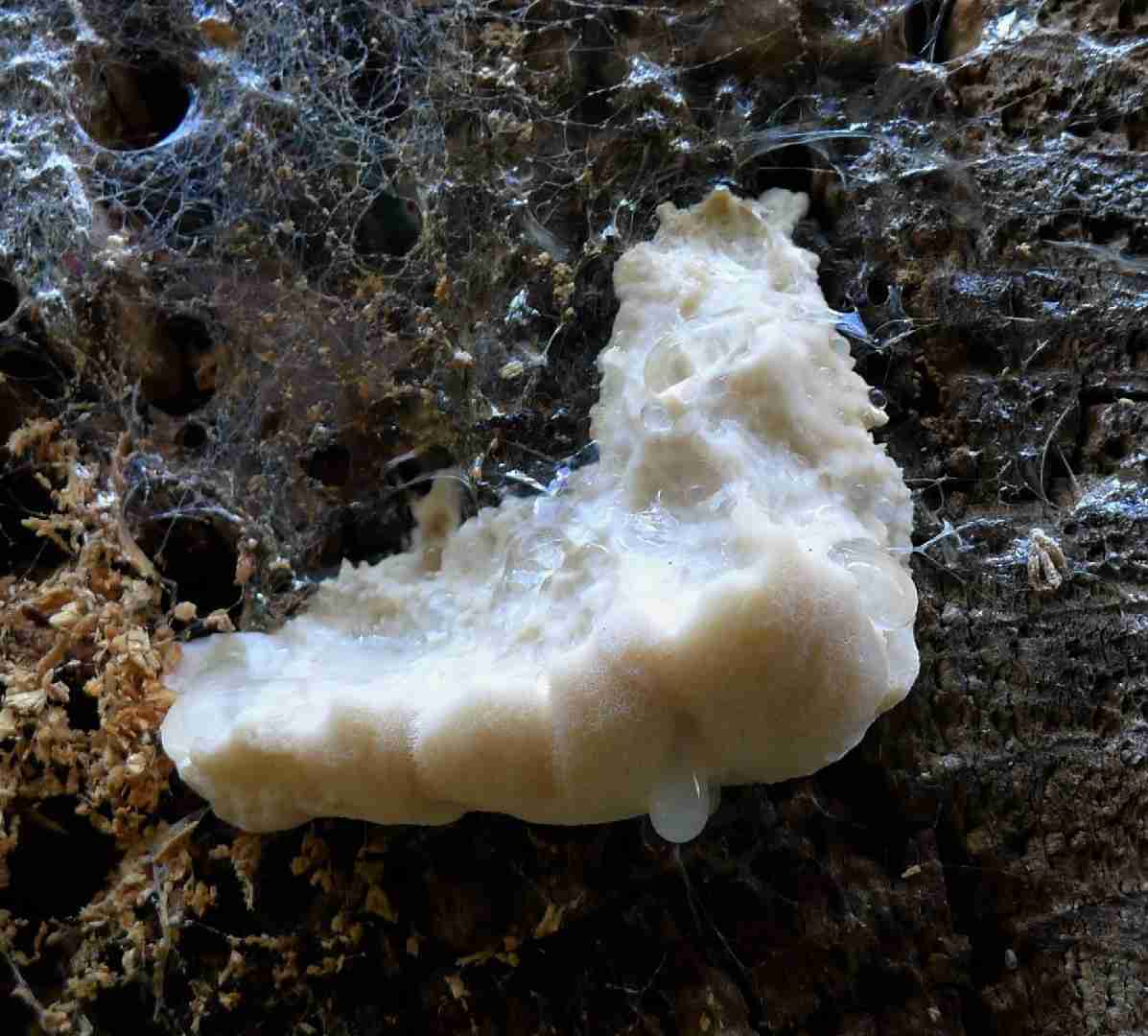
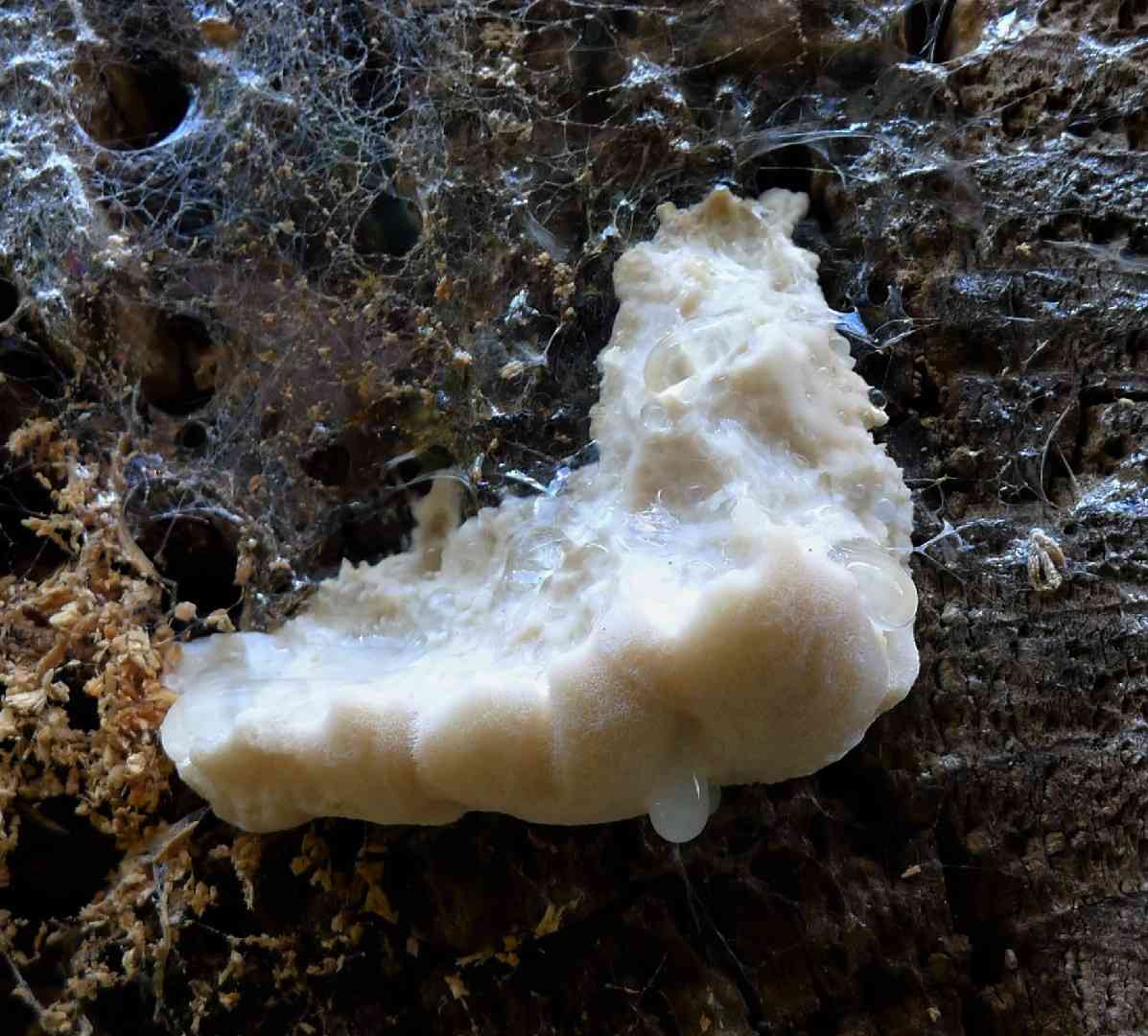
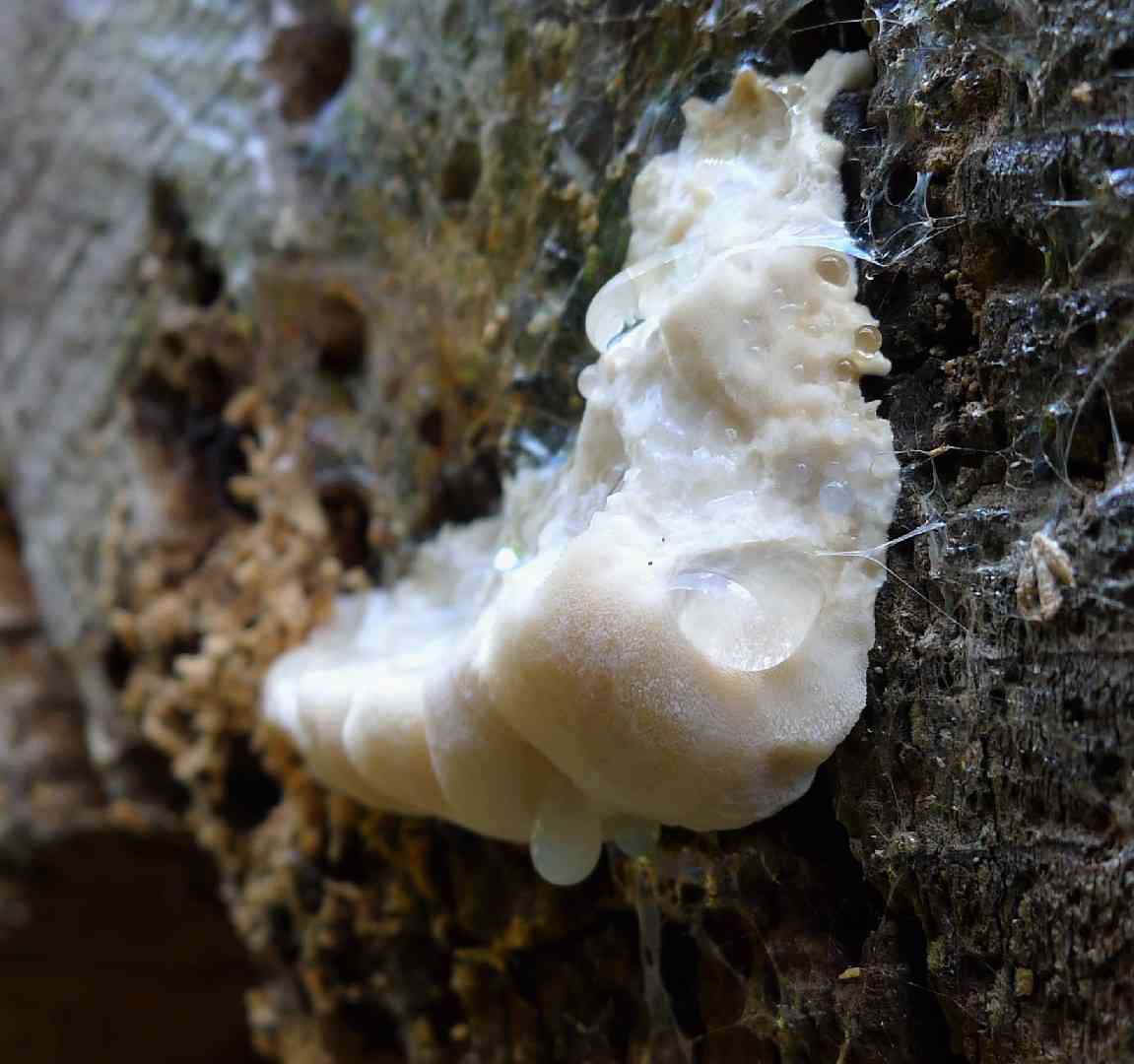
Greasy bracket
Aurantiporus fissilis
A species of Aurantiporus.
Also known as the fat bracket, this woody fungus predominantly colonizes deceased or struggling hardwood trees. It's identifiable by its layered, shelf-like formation and a noticeably oily sheen on its surface. The greasy bracket plays a crucial role in its environment by aiding in wood decomposition, which in turn returns vital nutrients to the soil. Commonly found in temperate forests, its persistent fruiting bodies allow for year-round identification.
In This Article
Attributes of Greasy bracket
Cap Diameter
5 - 30 cm
Cap
20 cm wide, 10 cm thick; bracket shaped; whitish; upper surface rough, felty
Cap Surfaces
Fibrillose-scaly
Flesh
Firm, moist; white
Spore Print Color
White
Odor
Mildly mushroomy but not distinctive.
Body Color
White
Flesh Bruises
The flesh or milk does not discolor when bruised or cut.
Growth Form
Clustered
Nutrient Gathering
Saprophytic
Substrate
On wood
You can find Greasy bracket by these plants
Willows
Species Status
Rare
Endangered Species
No
Scientific Classification of Greasy bracket
Phylum
Club fungi
Class
Mushroom-forming fungi
Order
Shelf fungi
Family
Polyporaceae
Genus
Aurantiporus
Toxicity and Edibility of Greasy bracket
Is Greasy bracket Toxic?
Toxicity information is not available for this mushroom. Always consult with an expert before consuming any wild mushrooms.

