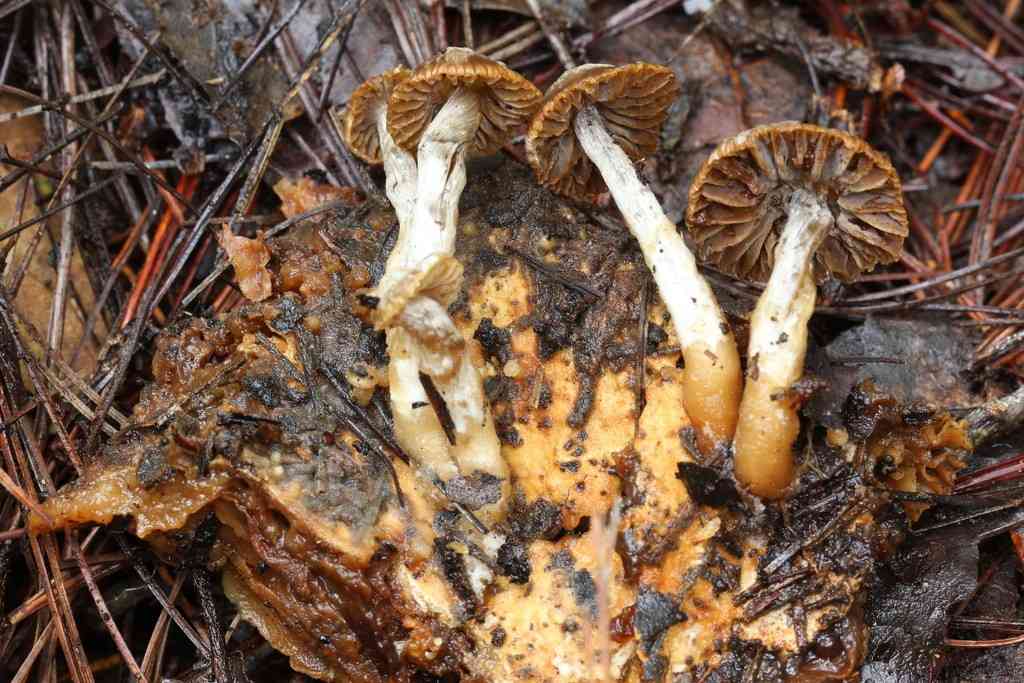
Silky piggyback
Asterophora parasitica
A species of Piggybacks.
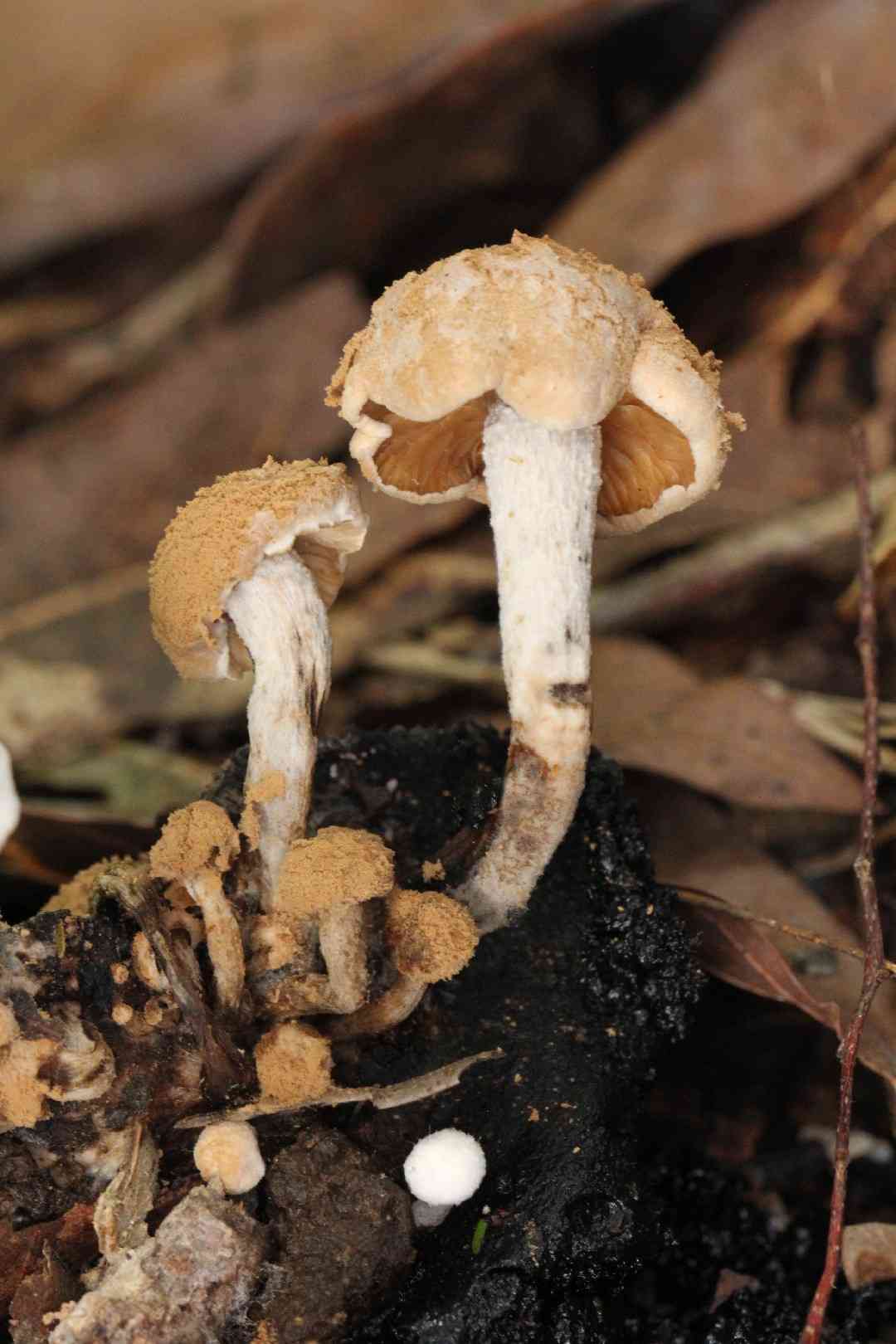
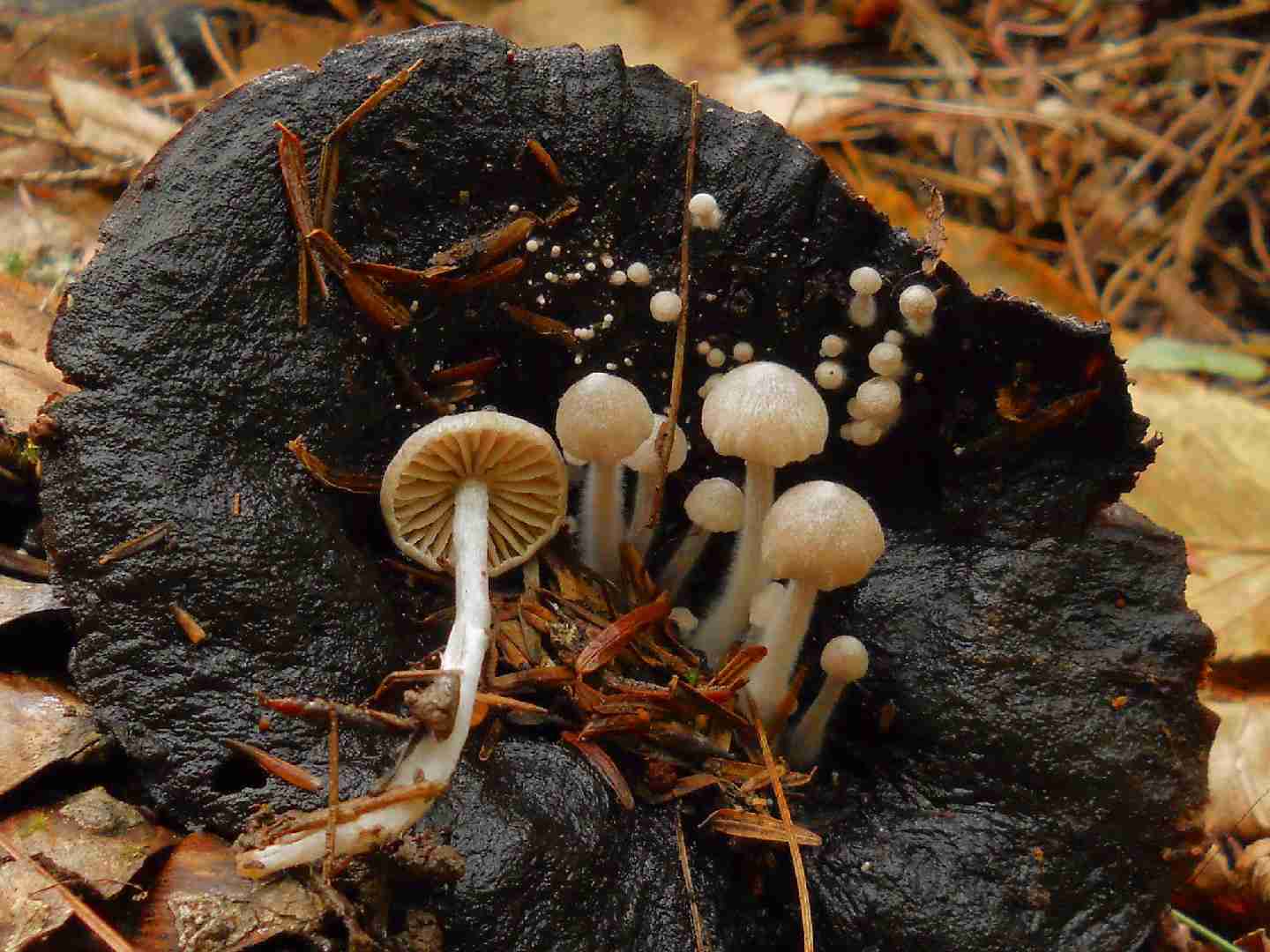
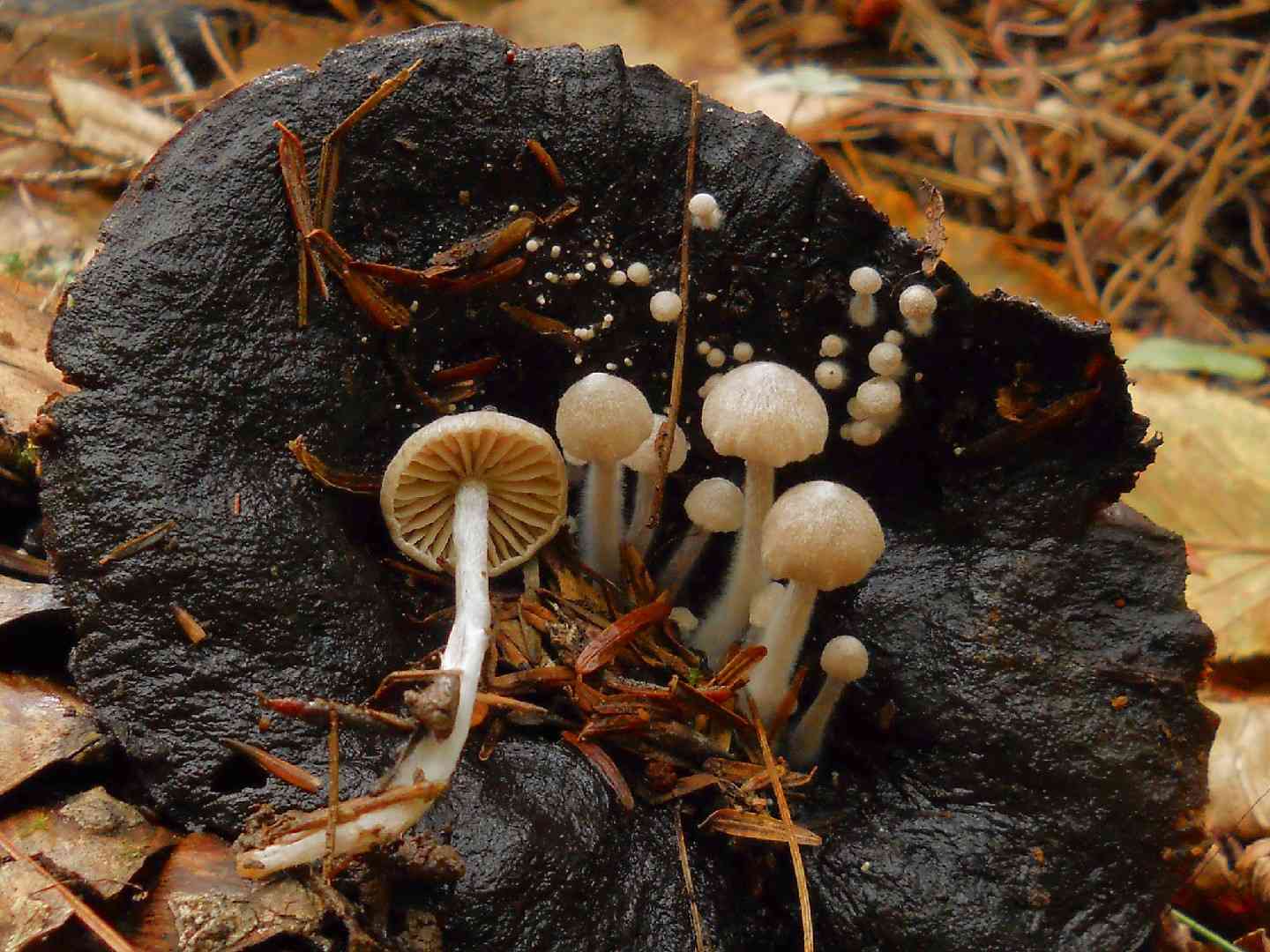
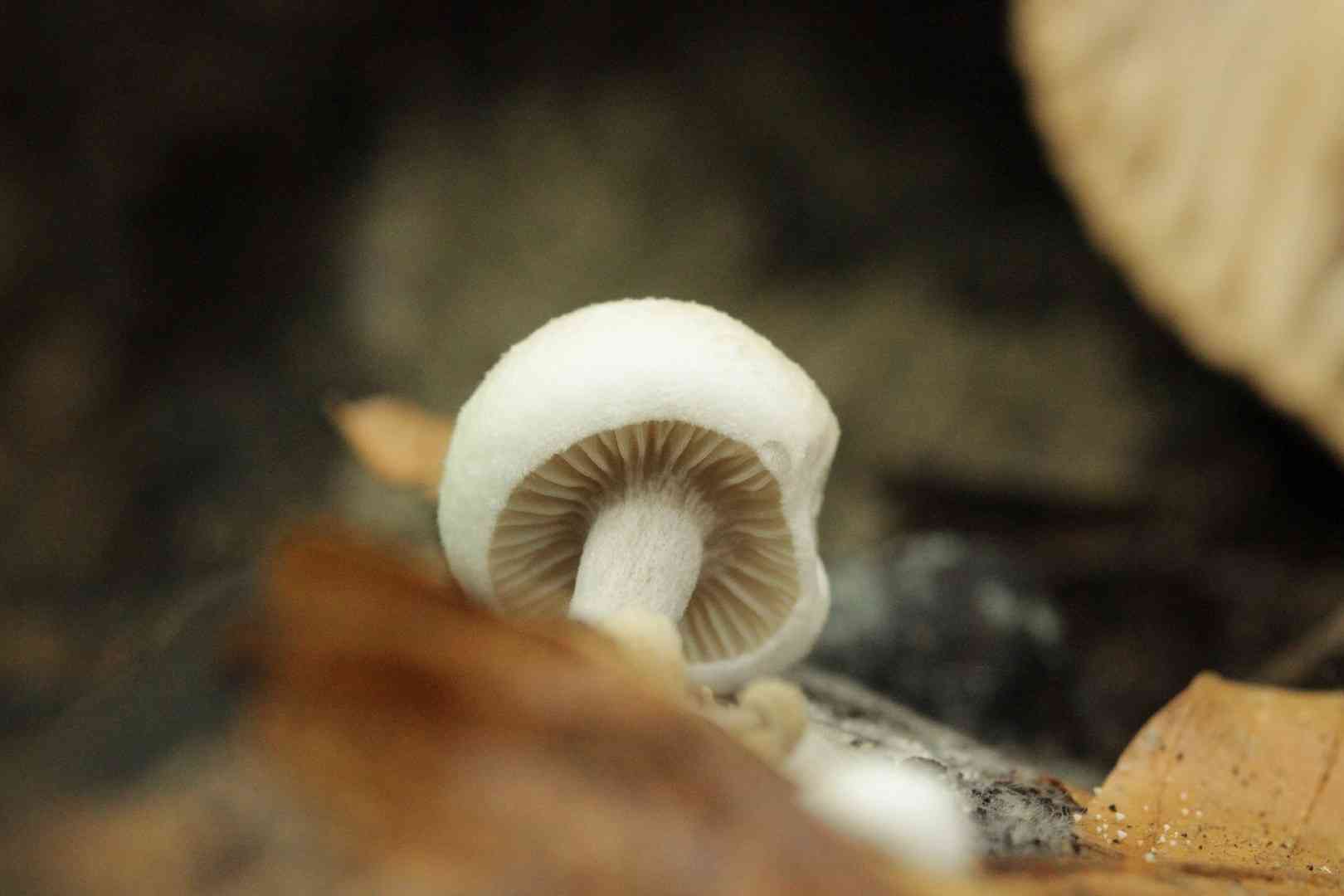
Hylomyces armeniacus, or silky piggyback, presents an intriguing case among fungi, notably preferring to colonize other fungal species rather than substrate like ground or timber. Its distinct ecological approach involves extracting sustenance from its mushroom hosts. This fungus is characterized by its diminutive, fragile fruiting structures, which acquire a plush, velutinous feel upon reaching maturity, inspiring its common appellation.
In This Article
Attributes of Silky piggyback
Cap Diameter
1 - 2 cm
Height
1 - 4 cm
Cap
Cap diameter of 8 - 20 mm; round to convex, flat; white to pale grey, changing to grayish brown; smooth; margin initially rolled inward
Cap Shape
Convex
Cap Surfaces
Fibrillose-scaly
Gills
Attached to shortly decurrent; widely spaced; whitish to grayish brown
Gill Attachment
Attached
Stem
1 - 3 cm long by 2 - 3 mm thick; solid; grayish brown, base white; fine white fibers
Stem Shapes
Cylindrical
Stem Surfaces
Smooth to slightly fibrous
Flesh
Thin; whitish to brownish
Ring
Ringless
Spore Print Color
White
Odor
Mildly mushroomy but not distinctive.
Body Color
BrownGrayWhite
Flesh Bruises
The flesh or milk does not discolor when bruised or cut.
Growth Form
Gregarious
Nutrient Gathering
Saprophytic, Parasitic
Substrate
On mushrooms
You can find Silky piggyback by these plants
Russulas, Spruces
Species Status
Widespread but not common
Endangered Species
No
Scientific Classification of Silky piggyback
Phylum
Club fungi
Class
Mushroom-forming fungi
Order
Gilled fungi
Family
Lyophyllaceae
Genus
Piggybacks
Toxicity and Edibility of Silky piggyback
Is Silky piggyback Toxic?
Toxicity information is not available for this mushroom. Always consult with an expert before consuming any wild mushrooms.