Honey mushroom
Armillaria sinapina
A species of Honey fungi.
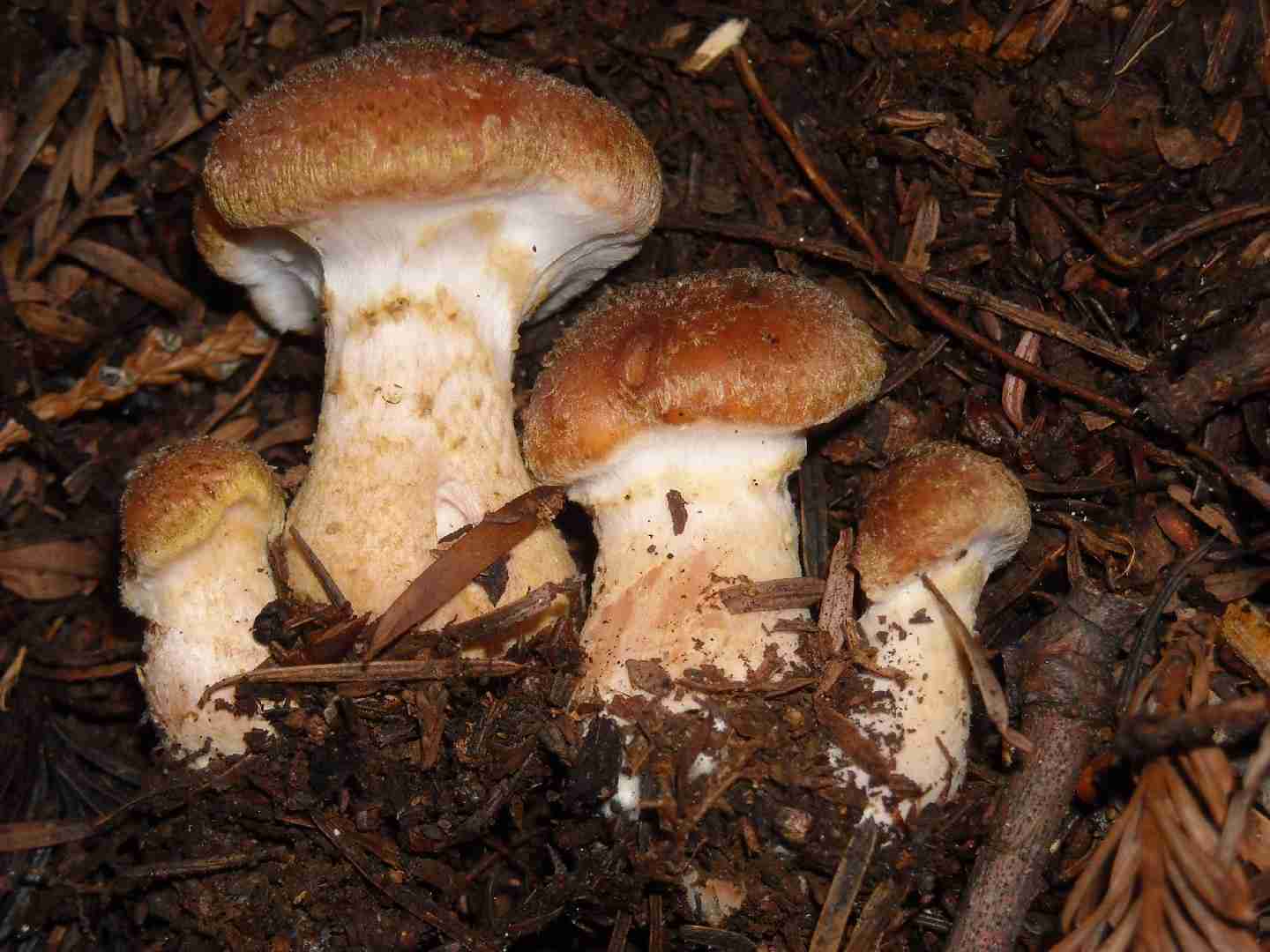
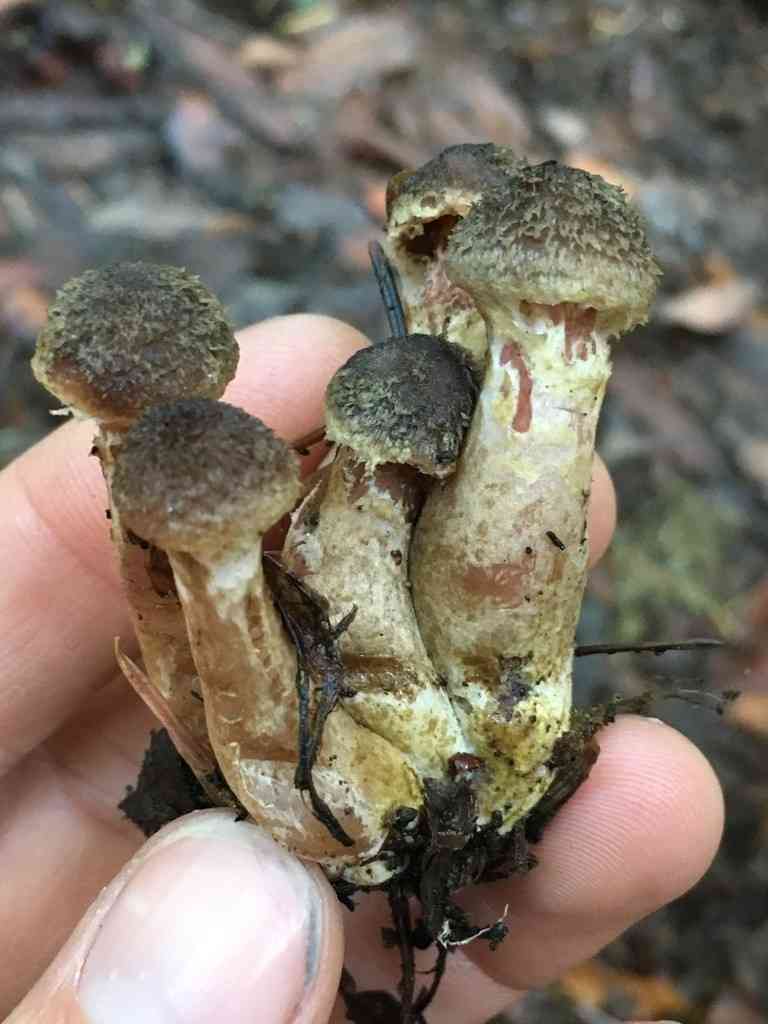
The Armillaria sinapina, commonly known as the honey mushroom, stands out among fungi due to a remarkable characteristic: its soft tissues emit light in the dark! However, its appearance during daylight hours is quite ordinary, featuring a muted, brownish-yellow hue, a wide and substantial cap resting on a compact, thick stalk. The surface of the cap might also display yellowish, wart-like protrusions.
In This Article
Attributes of Honey mushroom
Cap Diameter
2 - 6 cm
Cap
Cap 2 - 6 cm across; bell-shaped, convex, mammillate; red, brown
Gills
Decurrent; close; cream, cinnamon
Stem
Stem 4 - 8 cm long, 5 - 10 mm thick; club-shaped, fibrous; brown, red, yellow
Flesh
Thin to thick; white to cream
Spore Print Color
White
Body Color
BrownYellowRedGrayWhiteOrange
Flesh Bruises
The flesh or milk does not discolor when bruised or cut.
Growth Form
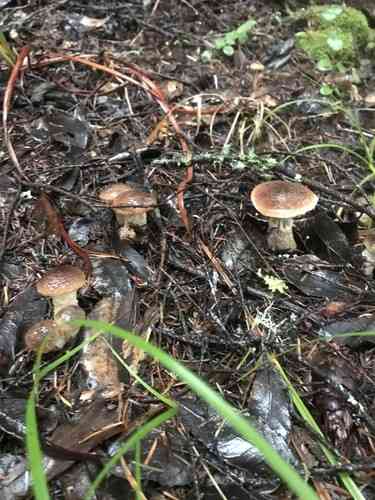
Gregarious, Clustered
Nutrient Gathering
Parasitic
Substrate
On wood
You can find Honey mushroom by these plants
Coast live oak
Species Status
Widespread, common
Endangered Species
No
Scientific Classification of Honey mushroom
Phylum
Club fungi
Class
Mushroom-forming fungi
Order
Gilled fungi
Family
Physalacriaceae
Genus
Honey fungi
Toxicity and Edibility of Honey mushroom
Is Honey mushroom Toxic?
Toxicity information is not available for this mushroom. Always consult with an expert before consuming any wild mushrooms.

