Northern honey mushroom
Armillaria borealis
A species of Honey fungi.
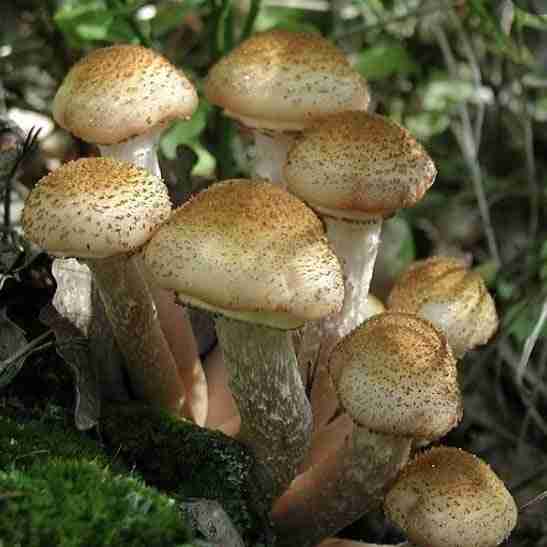
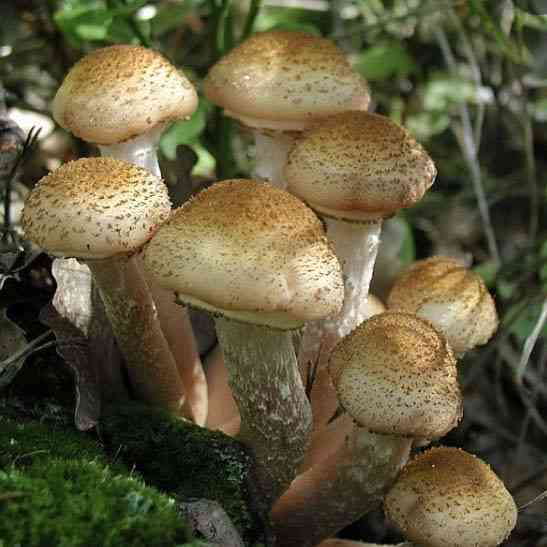
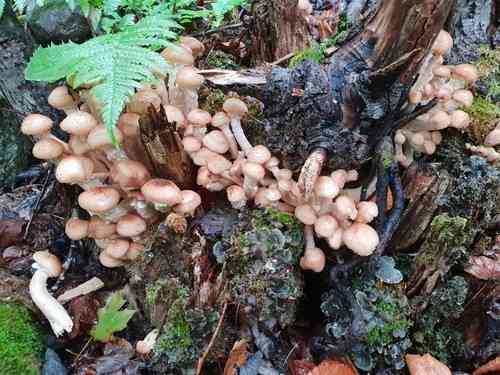
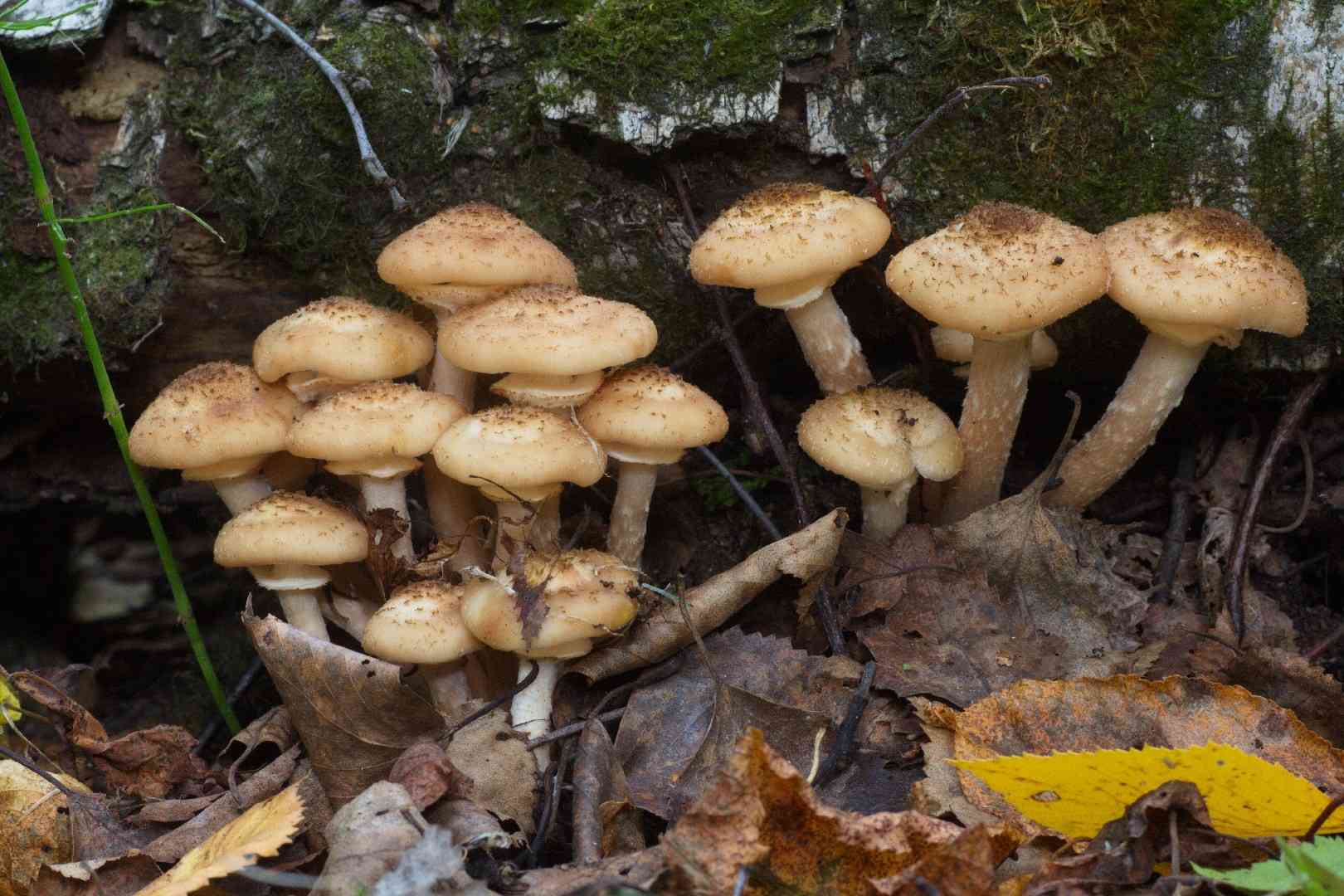
The Northern honey mushroom (Armillaria borealis) thrives in cooler climates, favoring northern regions, a preference reflected in its Latin name, borealis, which signifies its chosen boreal environment. This parasitic fungus is typically found growing elevated on the trunks of its host trees.
In This Article
Attributes of Northern honey mushroom
Cap Diameter
2 - 8 cm
Height
5 - 15 cm
Cap
Cap 2 - 8 cm in diameter; convex then flat; orange-brown; hygrophanous, surface covered with small brown pointed scales
Cap Shape
Convex, Flat, Central Bump
Cap Surfaces
Fibrillose-scaly
Gills
Adnate or shortly decurrent; crowded; white, cream, then orange
Gill Attachment
Attached
Stem
Stem 4.5 - 12 cm long; slender, with a clavate base, tapering towards the apex; palest at the apex, colour as cap below the ring; with persistent yellowish woolly scales
Stem Shapes
Club Shaped
Stem Surfaces
Scaly
Flesh
Firm; whitish
Ring
With Ring
Spore Print Color
Very pale cream
Odor
Mildly mushroomy, faintly noticeable.
Body Color
BrownGreenOrange
Flesh Bruises
The flesh or milk does not discolor when bruised or cut.
Growth Form
Gregarious
Nutrient Gathering
Saprophytic, Parasitic
Substrate
Wood of Living Trees, Dead Woods
You can find Northern honey mushroom by these plants
Oaks
Occurence Habitats
Deciduous Woodland, Coniferous Woodland
Species Status
Very rare in Britain and Ireland
Endangered Species
No
Scientific Classification of Northern honey mushroom
Phylum
Club fungi
Class
Mushroom-forming fungi
Order
Gilled fungi
Family
Physalacriaceae
Genus
Honey fungi
Toxicity and Edibility of Northern honey mushroom
Is Northern honey mushroom Toxic?
Toxicity information is not available for this mushroom. Always consult with an expert before consuming any wild mushrooms.

