Red volva amanita
Amanita rubrovolvata
A species of Amanita mushrooms.
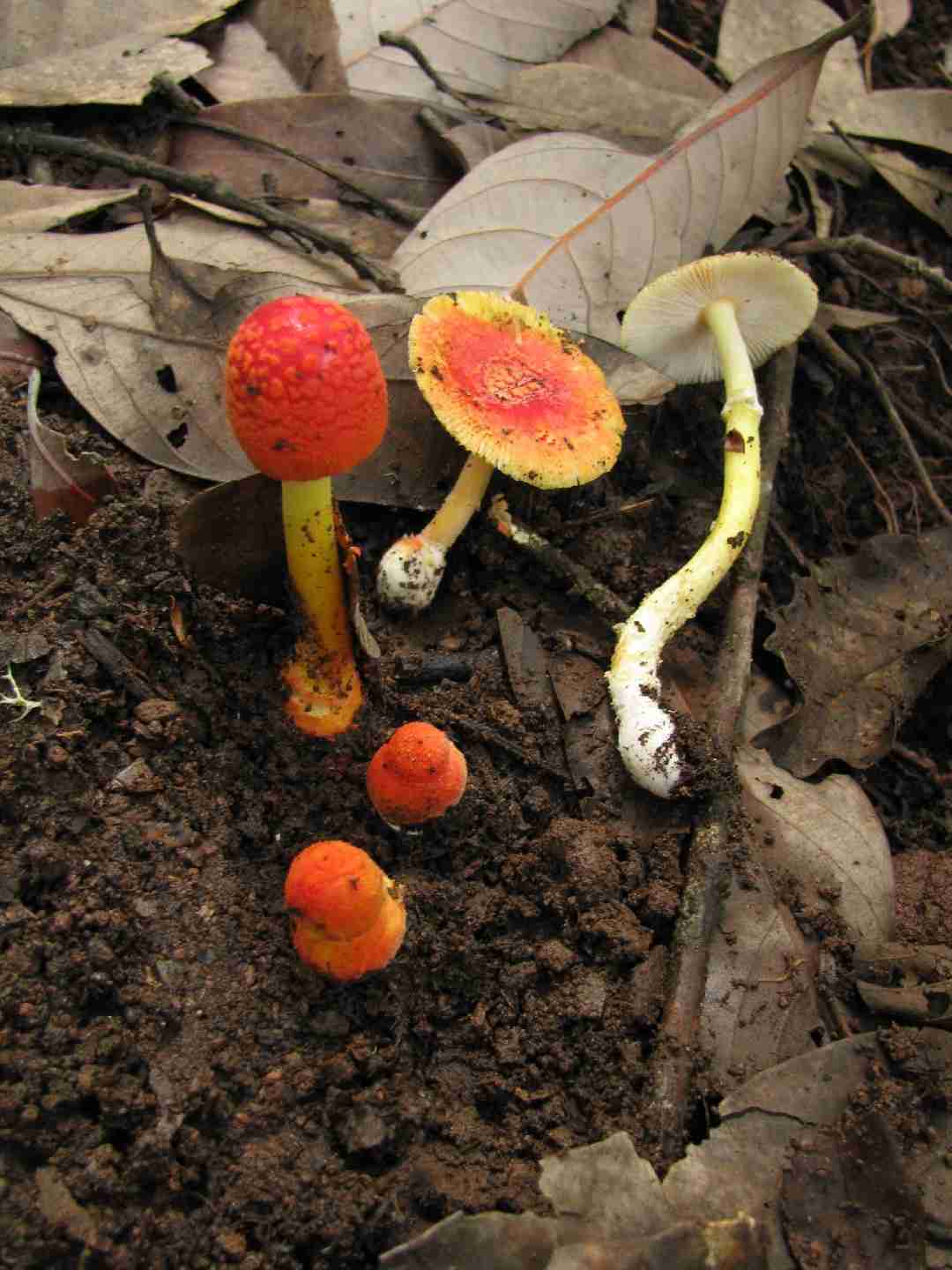
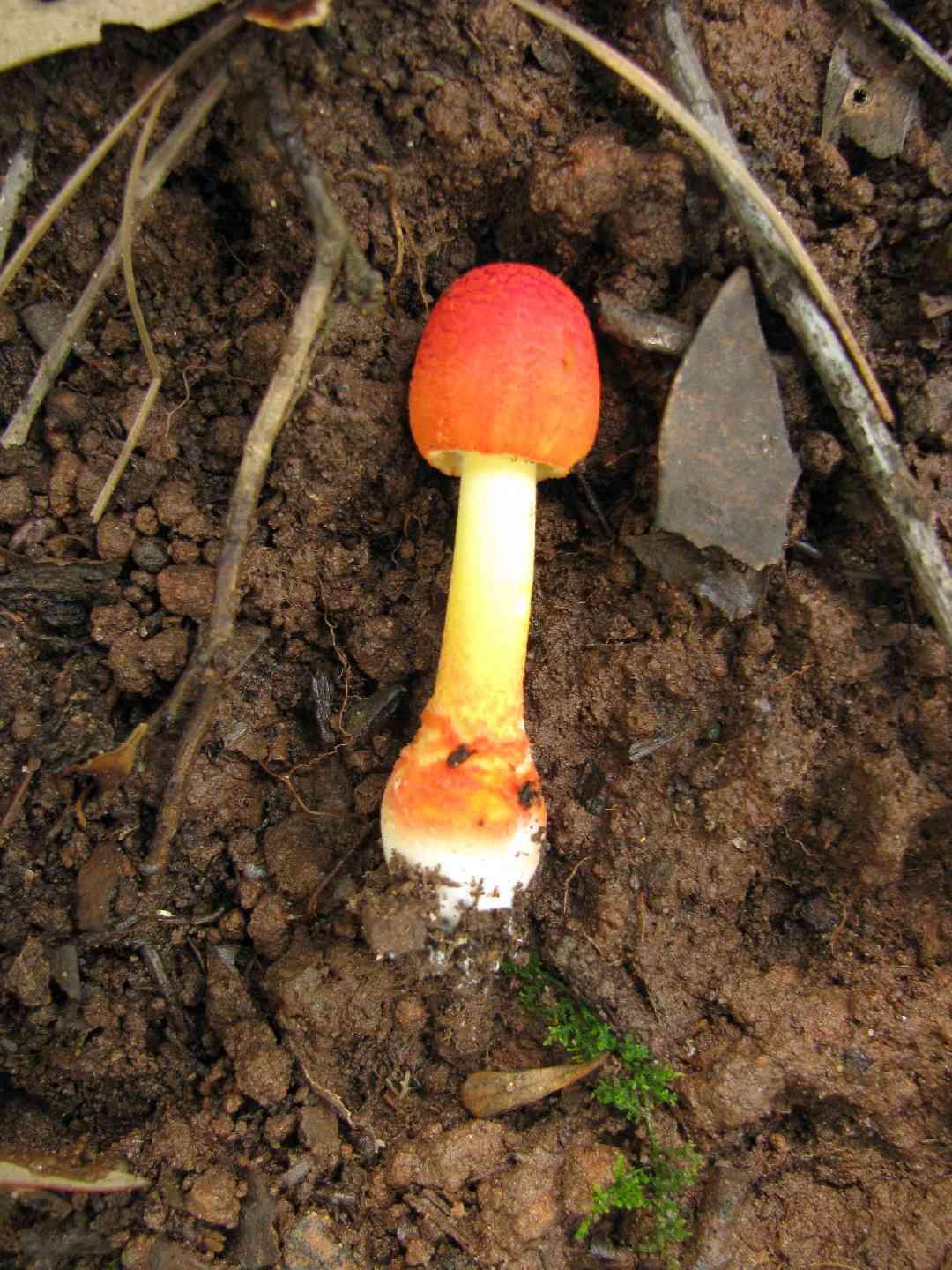
The vibrant cap of the red volva amanita, a standout on the forest floor, begins as a brilliant red, gradually shifting to orange and yellow at its edges as it matures. This mushroom's distinctive red volva at the stem's base is the source of its common name.
In This Article
Attributes of Red volva amanita
Cap Diameter
2 - 7 mm
Height
5 - 10 cm
Cap
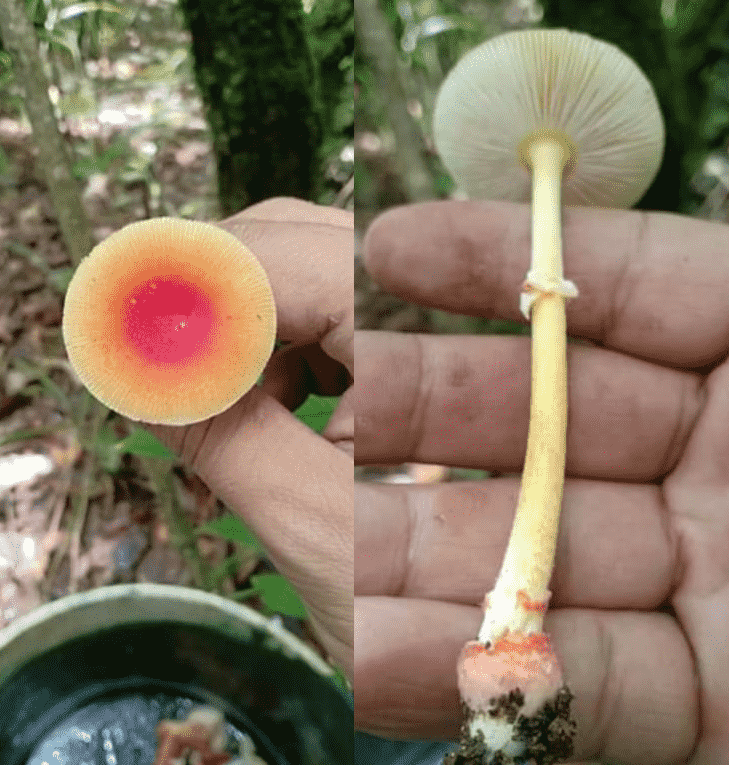
Cap 2 - 7 mm wide; convex to flattened; dark red to reddish-orange, yellowish at the margin; margin grooved
Gills
Free; crowded; white
Stem
Stem 5 - 10 cm by 5 - 10 mm thick; roughly cylindrical or slightly larger upwards; cream above the ring and cream to yellowish below
Flesh
White to yellow, or reddish immediately beneath the cap cuticle
Volva
Bulb-like; white; covered by red scales
Ring
Membranous, persistent; upper surface white, lower surface yellowish tinge, edge red to orange
Spore Print Color
White to cream
Body Color
YellowRedOrangeCream
Growth Form
Solitary, Scattered
Nutrient Gathering
Mycorrhizal
Substrate
On soil
You can find Red volva amanita by these plants
Pines, Oaks
Species Status
Widely distributed in eastern Asia
Scientific Classification of Red volva amanita
Phylum
Club fungi
Class
Mushroom-forming fungi
Order
Gilled fungi
Family
Amanita
Genus
Amanita mushrooms
Toxicity and Edibility of Red volva amanita
Is Red volva amanita Toxic?
The vibrant red cap of this Amanita signifies its potentially lethal toxicity. Inadvertent consumption of certain Amanita species can lead to severe poisoning. It is crucial to avoid any contact with this particular mushroom.

