How Often Should You Water Your Cape leadwort?
1
Cape leadwort typically requires watering weekly, though this varies with seasonal and environmental factors.
2
Employing a moisture sensor can assist in preventing both excessive and insufficient watering of your Cape leadwort.
3
Applying mulch around your Cape leadwort aids in soil moisture retention, thereby decreasing the necessary watering frequency.
Grasping the Hydration Requirements of Plumbago auriculata
Recognizing Indicators of Proper Hydration
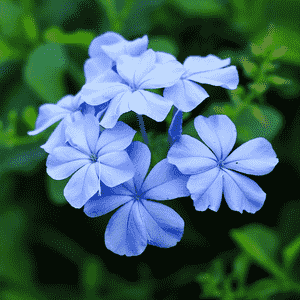
When irrigating your Plumbago auriculata, it's vital to discern the signs that show it's receiving the correct water volume. Healthy Plumbago auriculata specimens will exhibit vibrant green foliage and produce clusters of soft blue or white blooms. The substrate should be slightly damp but not saturated, and the root structure should be firm and robust.
Ramifications of Excessive and Insufficient Watering
Over-irrigation can lead to root decay, a condition where roots become soft and discolored, ultimately hindering the plant's capacity to absorb vital nutrients. Conversely, under-irrigation can result in wilted, yellowed leaves and stunted development. Maintaining equilibrium is paramount for your Plumbago auriculata's well-being.
Optimal Watering Practices for Plumbago auriculata
Selecting the Appropriate Water Type
Plumbago auriculata flourishes best with water devoid of chemicals and salts. Utilizing rainwater or distilled water is ideal, as municipal water can contain chlorine and other substances that might harm the plant over time. If rainwater or distilled water isn't an option, allowing tap water to sit for 24 hours before use can help dissipate some chlorine.
Establishing an Irrigation Schedule
Consistency is crucial when hydrating your Plumbago auriculata. A good starting point is to water the plant weekly. However, this frequency may require adjustment based on factors like temperature, humidity, and light exposure. Observing your plant and feeling the soil's moisture level are practical methods to determine if modifications are needed.
Seasonal Watering Adjustments for Plumbago auriculata
Summer and Spring Irrigation Advice
During the warmer months of summer and spring, your Plumbago auriculata will be actively growing, demanding more water to support its development. In this period, the plant might need more frequent watering, possibly twice weekly, especially during heatwaves. Always check soil moisture before watering to prevent over-saturation.
Winter and Autumn Considerations
In contrast, during the cooler months of winter and autumn, Plumbago auriculata's growth rate diminishes. Consequently, the plant requires less frequent irrigation. Ensure the soil doesn't become completely arid, but reduce watering frequency to once every ten to fourteen days. Avoid watering during periods of extended cold or frost.
Advanced Strategies for Peak Hydration
Employing Moisture Meters for Accuracy
A moisture meter is an invaluable tool for precisely gauging the soil moisture level of your Plumbago auriculata. By inserting the device into the substrate, you can obtain a clear reading of whether the plant needs more water. This precision helps avert the common issues of over-watering and under-watering, ensuring your plant thrives.
Mulching: A Method to Retain Moisture
Applying a layer of mulch around your Plumbago auriculata can significantly decrease watering frequency. Mulch aids in retaining soil moisture, regulating soil temperature, and inhibiting weed growth. Organic mulch, such as shredded bark or compost, is particularly advantageous as it gradually decomposes and enriches the soil.



