How Often Should You Water Your Blue passionflower?
1
Blue passionflower thrives in continuously damp soil, yet it must not be saturated.
2
Irrigating in the early morning reduces water loss through evaporation and enhances uptake.
3
To determine if your Blue passionflower requires watering, insert your finger approximately 2.5 cm (1 inch) into the soil â if it feels arid, then watering is due.
Grasping the Hydration Requirements of Blue passionflower
Elements Affecting Water Demands
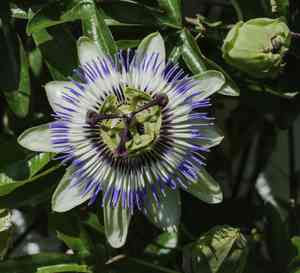
The Blue passionflower (Passiflora caerulea) is a robust and appealing plant recognized for its striking, large blue blossoms. When tending to this vibrant climbing plant, comprehending its specific watering necessities is paramount. Various elements can impact the amount of water your Blue passionflower needs. These elements include the plant's age, dimensions, the container or ground it is situated in, and environmental conditions such as temperature and humidity. Young and recently transplanted specimens generally require more frequent irrigation to establish their root systems. Meanwhile, mature plants with an extensive root network can endure longer intervals between watering sessions. Soil composition is another crucial aspect; sandy soils drain rapidly and may necessitate more frequent watering compared to clay soils, which hold moisture longer.
Indicators of Excessive and Insufficient Watering
Properly hydrating your Blue passionflower ensures robust development, and it's vital to identify the signs of both overwatering and underwatering. Overwatering can lead to root decay, evidenced by yellowing foliage, wilting despite wet soil, and a general lack of vitality. Conversely, indicators of underwatering include dry, brittle leaves, wilting plants even in a moist environment, and stunted growth. Observing these signs can help you adjust your watering regimen accordingly, ensuring your Blue passionflower remains healthy and vibrant.
Optimal Watering Techniques for Blue passionflower
How to Water Appropriately
Watering your Blue passionflower correctly involves a balance between supplying sufficient moisture to sustain its growth and avoiding excess that could harm its roots. When irrigating, aim to saturate the soil thoroughly until water exits from the bottom of the pot or penetrates deeply into the ground if planted outdoors. This promotes deep root development, which aids the plant in enduring dry spells. Utilize a watering can with a narrow spout or a hose with a gentle setting to prevent disturbing the soil. Watering should ideally be performed in the early morning, allowing the plant to absorb moisture before the day's heat can cause rapid evaporation.
Seasonal Adjustments in Hydration
Watering requirements fluctuate with the seasons, and modifying your routine accordingly is crucial for your Blue passionflower's well-being. During the active growth period in spring and summer, the plant typically demands more frequent watering, approximately once a week, as it dedicates energy to producing new foliage and flowers. Conversely, in the cooler autumn and winter months, growth decelerates, and the plant's water needs diminish significantly. During this period, reduce watering to prevent waterlogging and root rot, ensuring the soil is just barely moist.
Further Advice for Hydrating Blue passionflower
Employing the Correct Water
Water quality is important when it comes to the health of your Blue passionflower. Whenever feasible, use rainwater or purified water, as tap water often contains chlorine and other chemicals that can accumulate in the soil and harm the plant over time. If utilizing tap water, allow it to sit out overnight to permit some of these chemicals to dissipate before using it to water your plant. This minor step can significantly enhance the health and longevity of your Blue passionflower.
Mulching to Preserve Moisture
Mulching is an excellent practice to help retain soil moisture, ensuring your Blue passionflower receives consistent hydration. Add a layer of organic mulch, such as straw, shredded bark, or compost, around the base of the plant. This layer not only helps maintain soil moisture by reducing evaporation but also regulates soil temperature and suppresses weed growth. Apply mulch about 5-10 centimeters (2-4 inches) thick, making sure to keep it a few centimeters away from the plant stem to prevent rot.



