How Often Should You Water Your Money tree?
1
Provide your Money tree with water weekly, however, always verify soil dampness beforehand to prevent excessive watering.
2
During colder months, you might need to irrigate your Money tree less often due to decreased growth.
3
Employ a potting mixture that drains effectively to deter root decay caused by standing water.
Deciphering the Hydration Requirements of Money Tree
Water's Contribution to Money Tree Vitality
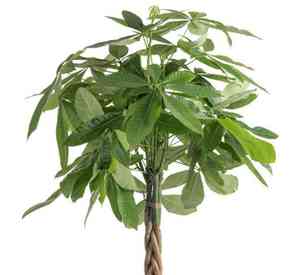
Moisture is fundamental for the well-being of your Money tree, a favored indoor plant recognized for its braided trunk and abundant, verdant foliage. Sufficient hydration supports various plant functions like nutrient transport, cell rigidity, and photosynthesis. Ensuring your Money tree receives the correct amount of water will help maintain its vigor and flourishing state.
Indicators of Excessive and Insufficient Watering
Achieving the ideal watering equilibrium for your Money tree can be challenging. Symptoms of over-watering include yellowing leaves, a musty odor emanating from the soil, and root decay. Conversely, under-watering presents as dry, brittle leaves and stunted development. Observing your plant for these cues can assist you in adapting your irrigation regimen accordingly.
Optimal Strategies for Money Tree Hydration
Determining the Appropriate Water Volume
The correct volume of water for your Money tree largely depends on its dimensions and surrounding environment. Typically, irrigate until you observe runoff from the drainage openings, signaling that the root system has been adequately moistened. A helpful tip is to insert your digit or a moisture gauge into the substrate; if the upper 2-3 cm (approximately 1 inch) of soil feels arid, it's an opportune moment to water.
Seasonal Adjustments to Watering Schedule
Seasonal shifts impact your Money tree's watering demands. During its active growth phase (spring and summer), the plant will likely necessitate more frequent watering, roughly once per week or even more often based on ambient humidity and temperature. In its dormant period (autumn and winter), decrease the irrigation frequency to every fortnight or when the soil registers as dry.
Evaluating Your Money Tree's Surroundings
Humidity's Influence on Watering Frequency
The atmospheric moisture level in your residence can significantly affect how often you need to hydrate your Money tree. Elevated humidity can keep the soil damp for extended periods, reducing the need for frequent watering. Conversely, in arid indoor settings, the soil may dry out more quickly, requiring more regular irrigation. A hygrometer can assist in monitoring indoor humidity, aiming for a 40-60% range for peak plant health.
Selecting the Proper Soil and Container for Ideal Watering
Employing well-draining soil and a suitably sized pot is essential for maintaining healthy moisture levels. A mixture comprising peat moss, perlite, and a small amount of sand performs well for Money tree. Furthermore, ensure the container possesses ample drainage perforations to preclude water accumulation, which can result in root rot.
Common Errors to Avoid When Irrigating Money Tree
Preventing Water Accumulation
One of the most frequent errors in watering indoor plants is causing water to collect. Always empty the dish beneath your Money tree after watering to prevent water buildup that can lead to root rot. Ensuring your pot has good drainage can also help mitigate this issue.
Monitoring Water Purity for Plant Vitality
The quality of water you utilize is just as vital as the quantity. Tap water frequently contains chlorine and other chemical substances that could potentially harm your Money tree. If feasible, employ distilled or rainwater, or allow your tap water to sit uncovered for 24 hours to enable chemicals to dissipate. This straightforward measure can significantly enhance your plant's health.



