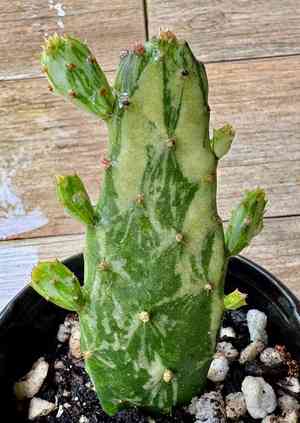
How Often Should You Water Your Drooping prickly pear?
1
A Drooping prickly pear requires hydration every fortnight. Modify irrigation schedule according to the time of year and surroundings.
2
Indications of insufficient watering involve shrunken pads and arid substrate, whereas excessive watering is evident through discolored pads and waterlogged soil.
3
The ideal moment to provide water to your Drooping prickly pear is during the early morning hours or late in the evening to minimize moisture evaporation.
Deciphering the Hydration Requirements of Drooping prickly pear
Recognizing Indicators of Insufficient Water
Spotting the symptoms of inadequate hydration for your Drooping prickly pear is crucial for its well-being. Under-watering often presents as shrunken or slender pads, suggesting the plant is parched. Another indicator is arid, compacted soil that pulls away from the pot's edges. When these signs appear, it's time to increase watering frequency or ensure more thorough irrigation.
Identifying Excess Watering Symptoms
Excessive watering can be as detrimental as insufficient watering. Key signs of over-watering in Drooping prickly pear include pads turning yellow, a soft texture, and a noticeable decrease in new growth. In severe cases, root decay may occur, emitting a foul odor. Soil that retains too much moisture for prolonged periods is also a warning sign. To prevent these issues, allow the soil to dry out between watering sessions.
Optimal Soil Moisture Levels for Your Drooping prickly pear
The ideal soil moisture for Drooping prickly pear is moderately dry. This plant thrives in well-draining soil that doesn't hold water for extended periods. A soil moisture meter can be beneficial for maintaining the correct humidity level. Aim for a soil moisture reading of approximately 10% to 15%. Overly saturated soil can lead to root rot, while excessively dry soil can cause dehydration.
Optimal Watering Techniques for Your Drooping prickly pear
Selecting the Best Time of Day for Watering
Choosing the appropriate time of day to irrigate your Drooping prickly pear can significantly impact its vitality. Watering in the early morning or late evening minimizes evaporative water loss and ensures the plant has ample time to absorb moisture. Avoid watering during the hottest part of the day, as this can cause scalding or ineffective hydration.
Appropriate Water Volume Per Irrigation
When hydrating your Drooping prickly pear, it's vital to supply enough water to moisten the root zone without saturating the soil. Typically, one to two liters (about half a gallon) of water per watering instance is adequate. Ensure the water reaches the roots by applying it slowly and uniformly.
Frequency Adjustments Based on Seasonal Shifts
Modifying watering frequency according to seasonal changes is essential for your Drooping prickly pear's health. During the active growth period (spring and summer), water bi-weekly. In the dormant season (fall and winter), reduce frequency to once a month. Always monitor soil moisture and adjust as needed to prevent over or under-watering.
Watering Implements and Methodologies
Recommended Tools for Effective Watering
Utilizing efficient watering tools can aid in sustaining your Drooping prickly pear's health. Consider a watering can with a slender spout for precise application or a drip irrigation system for consistent moisture levels. Soil moisture meters are also excellent instruments for gauging soil humidity.
Strategies for Promoting Deep Root Hydration
Deep root watering ensures moisture penetrates to the plant's roots where it is most needed. To achieve this, water slowly and deeply, allowing thorough soil penetration. Constructing a shallow basin around the plant's base can help collect water and facilitate deep hydration. Repeat the process until confident that water has reached the root zone.
Common Queries Regarding Drooping prickly pear Watering
Is tap water suitable for my Drooping prickly pear?
Yes, tap water can be used for your Drooping prickly pear. However, it's important to allow the water to sit uncovered overnight to let chlorine dissipate. If your tap water has high mineral content, occasionally use distilled or rainwater to prevent mineral accumulation in the soil.
Should watering amounts be altered during winter?
Yes, watering quantities should be adjusted in winter. The Drooping prickly pear enters a period of dormancy during colder months, requiring less water. Reduce the amount to half of what is typically provided during the growing season and extend the intervals between waterings to once a month.



