How Often Should You Water Your European honeysuckle?
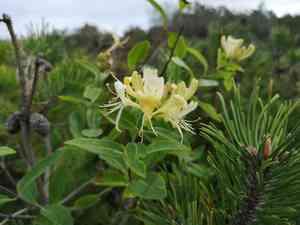
1
During its active growth phase, irrigate your European honeysuckle bi-weekly for optimal health and vigor.
2
Assess soil dampness by inserting a finger approximately 5-7 cm (2-3 in) deep. If dry, watering is necessary.
3
Increase watering frequency during arid periods and high temperatures to maintain your European honeysuckle's hydration.
Grasping the Hydration Requirements of European honeysuckle
Seasonal Irrigation Fluctuations
The hydration demands of European honeysuckle vary considerably with the changing seasons. During spring and summer, when the plant is actively growing, it's vital to keep the soil consistently damp but not waterlogged. This period typically necessitates watering twice weekly. Conversely, in autumn and winter, when growth slows and the plant enters dormancy, irrigation can be significantly reduced. Ensure the soil remains just slightly moist to prevent root desiccation. Always consider rainfall; if natural precipitation is adequate, additional watering may be unnecessary.
Indicators of Excessive and Insufficient Watering
Both overwatering and underwatering can stress your European honeysuckle, though in different ways. Signs of overwatering include yellowing foliage, root decay, and a general wilted appearance despite ample soil moisture. In contrast, underwatering manifests as dry, brittle leaves, stunted growth, and premature leaf drop. A useful tip is to use your finger to check the soil's moisture; if the top 5-7 centimeters (2-3 inches) of soil are dry, it's a clear sign your plant needs water. Balancing these indicators will guide you to an optimal watering schedule.
Optimal Practices for Hydrating European honeysuckle
Ideal Irrigation Schedule
For a vigorous and flourishing European honeysuckle, adhering to an ideal watering schedule is crucial. Typically, irrigating your plant twice per week is sufficient during the active growth period (spring through summer) to maintain consistent soil moisture. During the dormant phase in fall and winter, you can decrease this frequency to once every two weeks, provided there's no substantial rainfall. Always ensure that the water penetrates deeply to encourage root development, aiding in overall plant stability and health.
Adjusting Watering Based on Climatic Conditions
Weather conditions significantly influence your European honeysuckle's water requirements. In hot, sunny weather or during dry spells, the plant may need more frequent watering, up to three times per week, to prevent the soil from completely drying out. Conversely, during rainy periods, you can reduce irrigation. Keep a close watch on the weather forecast and local precipitation levels. If uncertain, soil moisture meters can be an excellent investment to accurately gauge soil hydration and adjust watering routines accordingly.
Implements and Methods for Effective Hydration
Utilizing the Correct Watering Implements
Employing the appropriate watering tools can greatly enhance the efficiency and effectiveness of your irrigation routine. For European honeysuckle, consider using a soaker hose or drip irrigation system, which ensures even moisture distribution and minimizes water waste. These tools allow water to slowly permeate, reaching deeper into the soil and promoting robust root growth. If using a watering can, opt for one with a long spout to direct water precisely at the plant's base, reducing leaf wetness which can lead to fungal issues.
Mulching to Preserve Moisture
Mulching is an excellent technique to retain soil moisture for your European honeysuckle. Applying a 5-7 centimeter (2-3 inch) layer of organic mulch, such as straw, wood chips, or compost, around the plant's base helps reduce evaporation, moderate soil temperature, and suppress weed growth. Ensure the mulch is kept a few centimeters away from the stem to prevent rot. Mulching not only conserves water but also gradually adds nutrients to the soil as it decomposes, fostering healthier plant development.



