How Often Should You Water Your Honey locust?
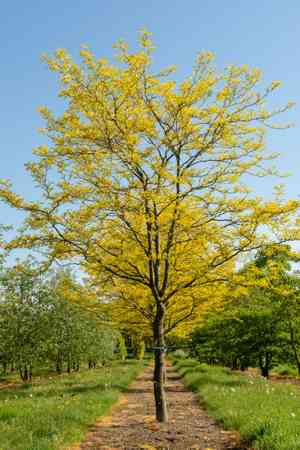
1
Moisten your Honey locust two times weekly for optimal consistency.
2
Refrain from frequent, superficial watering; instead, target deeper, less often irrigation periods.
3
In warm and arid periods, boost watering frequency to guarantee the soil stays sufficiently damp.
Grasping the Hydration Requirements of Honey locust
Core Principles of Honey locust Hydration
The Honey locust, a deciduous tree indigenous to central North America, adapts well to various soil types but flourishes best in well-drained earth. These trees tolerate drought once established, yet sufficient watering is crucial, especially in their initial years. This aids in developing deep roots that can access moisture from lower soil strata as the tree matures.
Indicators of Insufficient and Excessive Watering
Identifying symptoms of both underwatering and overwatering is vital for maintaining your Honey locust's health. Signs of insufficient water include yellowing foliage, premature leaf shedding, and a generally droopy appearance. Excessive watering can be equally detrimental, leading to root decay, fungal growth, and also yellowing leaves. Ensuring a balanced watering regimen is key to preventing these issues.
Seasonal Hydration Demands
The water requirements of Honey locust trees fluctuate with the seasons. During spring and summer, the tree's active growth period, it needs more water, particularly during dry spells. Conversely, irrigation can be reduced in autumn and winter when the tree is dormant. Adjusting watering frequency with seasonal changes is essential for the tree's optimal development.
Effective Watering Strategies for Honey locust
How to Properly Irrigate Your Honey locust
Proper watering involves thoroughly saturating the soil around the tree's base. This promotes deeper root growth, enhancing drought resilience. Water slowly to allow penetration into the soil rather than runoff, ensuring it reaches the root zone.
Employing Mulch for Moisture Retention
Mulching is an efficient method to preserve soil moisture. Apply a layer of mulch (5-10 cm or 2-4 inches) around the Honey locust's base, but keep it clear of the trunk to prevent rot. Mulch helps maintain consistent soil temperature and moisture levels, reducing the need for frequent irrigation.
Optimal Watering Times
The best time to water your Honey locust is either early in the morning or late in the evening. This timing minimizes water evaporation due to cooler temperatures and allows water to deeply penetrate the soil. Avoid watering during the hottest part of the day to prevent rapid evaporation.
Monitoring Soil Moisture for Ideal Care
Tools and Methods for Assessing Soil Moisture
Using a soil moisture meter can eliminate guesswork from your watering schedule. Insert it into the soil near your Honey locust to easily determine if the soil is too dry or too wet. Alternatively, you can use your finger to check moisture by digging a small hole near the tree. If the soil feels dry a few inches (approximately 5 cm) down, it's time to water.
Modifying Your Watering Schedule Based on Observations
Observation plays a significant role in adjusting your watering routine. If you notice signs of stress or thriving in your Honey locust, modify your regimen accordingly. Additionally, consider environmental factors such as rainfall, temperature, and humidity, all of which influence how much and how often you should water.



