How Often Should You Water Your Burning bush?
1
During its active growth phase, hydrate your Burning bush bi-weekly.
2
Prior to irrigating, always assess the soil's dampness to avoid excessive watering.
3
Modify your watering routine according to weather shifts, particularly during warm, arid spells.
Deciphering the Hydration Requirements of Burning bush
Fundamental Principles of Soil Moisture for Burning bush Vitality
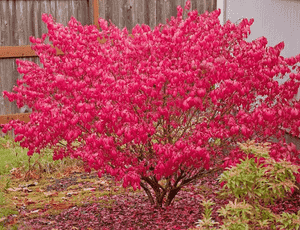
The Euonymus alatus, commonly known as Burning bush, flourishes in earth that drains well and maintains consistent dampness. Optimal soil moisture is vital for its wellness and vibrant appearance, especially its characteristic fiery red autumn foliage. Understanding the equilibrium between parched and excessively saturated soil encourages vigorous development and guards against root rot or desiccation problems.
Consequences of Excessive and Insufficient Watering
Achieving the correct watering equilibrium is paramount. Excessive irrigation can cause root decay, smothering roots by depriving them of crucial oxygen. Signs of overwatering include yellowing foliage and a general decline in plant vigor. Conversely, insufficient watering can result in wilting, browning, and premature leaf drop. The Burning bush prefers soil that remains uniformly moist, not waterlogged.
Seasonal Adjustments to Irrigation Practices
Hydration requirements fluctuate with the seasons. Throughout spring and summer (the active growth period), the Burning bush requires watering twice weekly. In autumn, water slightly less to allow the plant to prepare for winter. During winter dormancy, watering needs significantly decrease, but ensure the soil doesn't completely dry out during prolonged rain-free periods.
How to Assess Soil Moisture Prior to Irrigation?
The Finger Test: A Simple Method
An effortless technique to gauge soil moisture is the finger test. Insert your finger approximately 5 centimeters (2 inches) into the soil. If the top 2 to 3 centimeters (1 inch) of soil feel dry, it's time to irrigate. This approach helps prevent unnecessary watering and maintains the Burning bush's root health.
Moisture Meters and Their Application
For a more precise measurement, utilize a moisture meter. Position the probe into the soil surrounding the Burning bush. A reading in the mid-range typically indicates appropriate moisture levels. This device can be particularly useful if you are uncertain about soil conditions and wish to ensure accurate watering intervals.
Optimal Practices for Hydrating Your Burning bush
Effective Watering Methods for Promoting Deep Root Development
Deep watering greatly benefits the Burning bush. It stimulates stronger and deeper root growth, improving drought tolerance. Employ a soaker hose or drip irrigation system to distribute water evenly into the soil, ensuring moisture penetrates to lower layers. Avoid overhead watering, which can encourage disease and lead to water evaporating before reaching the roots.
Frequency and Timing: Establishing an Irrigation Schedule
Establish a regular watering schedule, typically twice per week during the active growth season. Water in the early morning or late afternoon to minimize water loss due to evaporation. Adhering to a schedule helps maintain consistent soil moisture, benefiting the overall well-being of the Burning bush.
Modifying Watering Based on Meteorological Conditions
Weather can significantly influence irrigation needs. During hot, arid spells, the Burning bush may require additional hydration. Similarly, during rainy periods, reduce watering to prevent waterlogging. Always observe the plant's response and adjust accordingly, ensuring it receives sufficient but not excessive moisture.



