How Often Should You Water Your Sweet william?
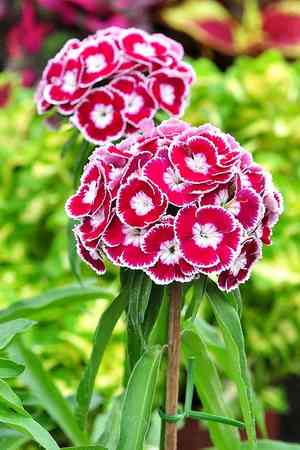
1
Hydrate your Sweet William weekly, adapting to current weather patterns and specific soil compositions.
2
Employing a soil moisture gauge can assist in maintaining optimal hydration for your Sweet William, preventing excessive watering.
3
Applying mulch can greatly contribute to preserving soil dampness between irrigations, particularly during warm periods.
Grasping the Essential Hydration Requirements of Sweet William
The Significance of Sufficient Moisture
Ensuring your Sweet William receives enough hydration is crucial for its general well-being and blooming potential. These lovely biennials thrive with steady moisture, but like many plants, they dislike saturated conditions. Water facilitates vital processes such as nutrient absorption, photosynthesis, and cell development. Without adequate hydration, Sweet William may struggle to produce vivid blossoms and become more vulnerable to pests and diseases.
How Ground Composition Impacts Watering Frequency
The type of ground your Sweet William is planted in considerably influences how often irrigation is needed. Sandy soils typically drain quicker and might demand more frequent watering compared to clay soils, which hold moisture longer. To determine optimal watering frequency, check soil dampness approximately 2.5 cm (1 inch) beneath the surface. If it's arid at this depth, it's time to water. For sandy soils, weekly watering might be insufficient, while clay soils could retain moisture for extended periods.
Recognizing Indicators of Insufficient and Excessive Watering
Symptoms of Under-Hydrated Sweet William
Spotting early signs of insufficient watering in Sweet William can prevent severe plant distress. Watch for wilting foliage, decreased flower production, and dry, crumbly earth. When under-watered, the plant's leaves might start to curl or turn brown along the edges. These indications suggest the plant isn't getting enough water to support its cellular functions and overall health.
Symptoms of Over-Hydrated Sweet William
Excessive watering can be as damaging as under-watering and is often harder to detect. Signs of over-watering in Sweet William include yellowing leaves, a damp or mildewed soil surface, and, in severe instances, root decay. The plant might also appear limp despite abundant water. This happens because over-watering can suffocate plant roots, hindering their access to oxygen vital for healthy development.
Optimal Watering Practices for Sweet William
Seasonal Adaptations in Watering Routine
Your watering regimen should adjust with the changing seasons. During spring and summer, when Sweet William is actively growing and temperatures are higher, you might need to increase irrigation frequency. Conversely, in the colder months of autumn and winter, reduce watering as the plant's growth slows and evaporation rates decrease. Regularly check soil moisture and modify as needed to ensure your plant consistently receives the correct amount of water.
Effective Techniques for Hydrating Sweet William
Properly watering your Sweet William can greatly impact its health and growth. The ideal time to water is early morning when the soil and air are cool, minimizing water loss due to evaporation. Use a watering can or hose with a gentle spray nozzle to avoid disturbing the soil. Ensure water penetrates deep into the root zone by applying it slowly and allowing it to soak in thoroughly. This approach aids in developing robust root systems.
Maintaining Moisture Levels Between Waterings
Mulching Methods for Moisture Preservation
Mulching is an excellent strategy to sustain soil moisture levels between irrigations. Apply a 5-7 cm (2-3 inch) layer of organic mulch, such as shredded bark, straw, or compost, around the base of your Sweet William. Mulch helps to reduce water evaporation from the soil, suppresses weed growth, and gives your garden a tidy, finished appearance. It also gradually enhances soil structure as it breaks down, further improving water retention.
Utilizing Moisture Meters for Precise Monitoring
If you're uncertain about the moisture levels in your Sweet William's soil, a moisture meter can be an invaluable aid. Insert the sensor probe into the soil to get an immediate reading of the moisture content. This device helps eliminate guesswork from watering, diminishing the risk of over or under-watering. By using a moisture meter, you can ensure your Sweet William consistently receives the optimal amount of water for vigorous growth.



