How Often Should You Water Your Bleeding-heart vine?
1
Provide moisture to your Bleeding-heart vine around once a week, making sure the growing medium stays consistently damp without being oversaturated.
2
Modify your irrigation schedule according to the time of year, increasing frequency in warm summer periods and reducing it during colder seasons.
3
Routinely assess the soil's dampness by inserting your digit roughly 2-3 inches (5-7.5 cm) into the substrate—administer water if it feels arid at that depth.
Deciphering the Hydration Requirements of Bleeding-heart vine
The Significance of Adequate Moisture for Vigor and Blossoms
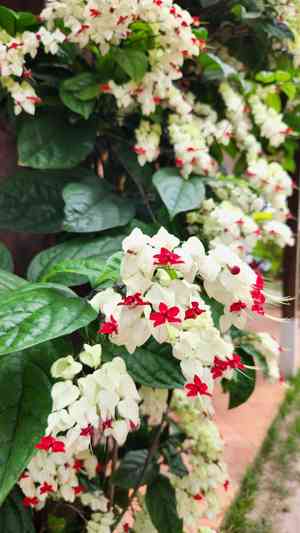
Maintaining proper moisture levels for your Bleeding-heart vine is vital for its overall health and for ensuring it produces abundant, beautiful flowers. Sufficient water promotes strong development, supports the striking red and white blooms, and keeps the foliage vibrant and green. Inadequate or inconsistent watering can lead to stunted development, leaf shed, and a dull appearance, while excessive watering can cause root rot, a frequent and potentially fatal plant issue.
Elements Influencing Water Demand
Several factors impact how much water your Bleeding-heart vine requires, including its placement, container dimensions, substrate type, and climate. For instance, plants in pots dehydrate faster than those in the ground, necessitating more frequent irrigation. Additionally, the kind of soil affects water retention; clay soils hold moisture longer than sandy ones. Your local weather, particularly humidity levels and temperature, also significantly determine watering frequency.
How to Gauge Your Bleeding-heart vine's Moisture Status
Techniques for Accurate Soil Moisture Assessment
To ensure your Bleeding-heart vine receives the correct amount of water, it's essential to regularly check the soil's moisture content. The easiest method involves inserting your finger into the soil approximately 2-3 inches (5-7.5 cm) deep. If it feels parched at this depth, it's time to irrigate. For more precise measurements, consider using a soil moisture meter, which provides a direct reading of the soil's hydration level.
Indicators of Insufficient and Excessive Watering
Recognizing the symptoms of both under-watering and over-watering is crucial for maintaining a healthy Bleeding-heart vine. Signs of under-hydration include wilting, yellowing leaves, and dry, brittle soil. In contrast, symptoms of over-hydration include soft, droopy yellow leaves, accompanied by a musty or sour smell from the soil, indicating root rot. Promptly addressing these signs can help you adjust your watering habits and keep your plant flourishing.
Optimal Practices for Irrigating Your Bleeding-heart vine
Effective Watering Methods and Tools
For optimal results, irrigate your Bleeding-heart vine thoroughly yet infrequently. Deep watering encourages roots to grow downward, improving the plant's stability and nutrient access. Use a watering can with a narrow spout to direct water to the plant's base, avoiding the foliage. This helps prevent fungal problems that can arise from wet leaves. If using an automatic irrigation system, ensure it delivers a slow and steady water flow.
Crafting a Personalized Watering Regimen
Developing a tailored watering schedule for your Bleeding-heart vine ensures consistency and minimizes the risk of insufficient or excessive watering. Begin by observing the plant's needs over a few weeks, noting how quickly the soil dries. Typically, watering once a week works well, but adjust based on your observations and environmental conditions. Remember to account for changes in weather and seasons to maintain an effective year-round schedule.
Managing Bleeding-heart vine Hydration in Diverse Climates
Adapting Watering in Humid vs. Arid Conditions
In highly humid environments, the soil retains moisture longer, so you may need to water your Bleeding-heart vine less often. Conversely, in dry conditions, the soil dries out more quickly, requiring more frequent irrigation. Monitor the plant closely and adjust as needed—humidity trays or a humidifier can also help maintain adequate moisture levels in arid climates.
Seasonal Adjustments to Watering
As seasons change, so too should your watering routine. During the warm summer months, the Bleeding-heart vine will likely need more frequent watering to cope with increased evaporation and growth rate. Conversely, in cooler months, especially if indoors, reduce watering frequency as growth slows and evaporation rates decrease. Always tailor your approach to align with the plant's active growth cycle and the ambient conditions.



