How Often Should You Water Your Paperflower?
1
Provide water to your Paperflower on a weekly basis, or when the uppermost 2 inches (5 cm) of its soil feels arid to the touch.
2
Paperflower flourishes in potting mediums that drain effectively; a mixture of loam and sand is recommended.
3
Refrain from irrigating the leaves directly to deter fungal infections. Direct water application to the plant's base instead.
Deciphering Paperflower's Hydration Requirements
Elements Affecting Moisture Needs
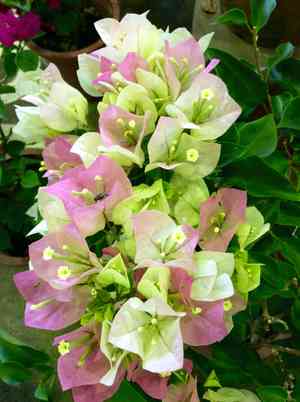
The Bougainvillea glabra, known as Paperflower, is a vigorous climbing plant cherished for its vibrant, paper-like bracts. Several aspects can impact how much water your Paperflower will require. Environmental factors such as heat, humidity levels, and sun exposure play a significant part. For instance, during warmer periods, the plant may need more frequent irrigation. Additionally, the growing medium and placement of your Paperflower—whether potted or in a garden bed—can influence its hydration demands.
Indicators of Adequate Hydration in Paperflower
Well-hydrated Paperflower plants display vigorous growth and lively bracts. The leaves should feel firm and be free from yellow or brown marks, which typically signal water stress. Observe the bracts; if they appear papery and are flourishing, your watering regimen is likely correct. Also, pay attention to the soil—it should be damp but not waterlogged. This delicate balance indicates your plant is receiving the appropriate amount of water.
Optimal Practices for Watering Your Paperflower
Seasonal Watering Recommendations
Paperflower's watering requirements vary with the seasons. In spring and summer, during active growth and blooming, aim to thoroughly water once per week or when the top 2 inches (5 cm) of soil feels arid. During autumn and winter, when the plant enters a dormant phase, decrease watering frequency to once every two weeks. Keep an eye on weather conditions; after heavy rainfall, additional irrigation might be unnecessary.
Methods for Efficient Watering
For optimal results, irrigate your Paperflower in the early morning to allow moisture to reach the roots before the day's heat. Direct water to the plant's base, rather than the foliage, to prevent fungal problems. Employ a soaker hose or drip irrigation system to ensure deep saturation, which promotes strong root development. Remember, consistency is vital—regular watering helps maintain the plant’s vitality and beauty.
Typical Watering Errors to Avoid with Paperflower
Excessive Watering and Its Repercussions
Overwatering is one of the most frequent errors made with Paperflower. This can lead to root rot, identifiable by a foul odor from the soil and wilting leaves that don't recover post-watering. To prevent overwatering, ensure your plant is in a well-draining potting mix and that the container has sufficient drainage holes. If you notice these signs, consider repotting your Paperflower into fresh, well-aerated soil.
Insufficient Watering and How to Remedy It
Underwatering can also harm your Paperflower, resulting in dry, curled leaves and faded bracts. To address this, check soil moisture regularly using a moisture meter. Applying mulch around the base can help retain soil hydration. If your plant shows signs of drought stress, provide a deep watering immediately and schedule consistent checks to prevent recurrence.
Maintaining Ideal Soil Moisture for Paperflower
Selecting the Appropriate Soil Blend
Choosing the correct soil mix is essential for regulating proper moisture levels for your Paperflower. Opt for a well-draining blend, such as a combination of loam and sand, which prevents water from accumulating at the roots. Adding perlite or small gravel can further enhance drainage. A suitable soil mix supports healthy roots and minimizes the risk of water-related problems.
Monitoring Soil Hydration Levels
Regularly checking soil moisture ensures your Paperflower remains hydrated without being excessively watered. Use a moisture meter, or simply insert your finger about 2 inches (5 cm) into the soil to assess dampness. If it feels dry at the surface but moist underneath, your watering schedule is effective. Adjust based on weather conditions and always observe the plant’s response to any modifications.



