How Often Should You Water Your Persian silk tree?
1
Provide water to your Persian silk tree twice weekly during its active growth phase for peak vitality.
2
Employ a soil moisture sensor to precisely determine the soil's wetness prior to irrigation.
3
Lessen how often you water during periods of rain or if the substrate remains damp several centimeters (inches) beneath the top.
Deciphering the Hydration Needs of Persian Silk Trees
Factors Affecting Water Requirements
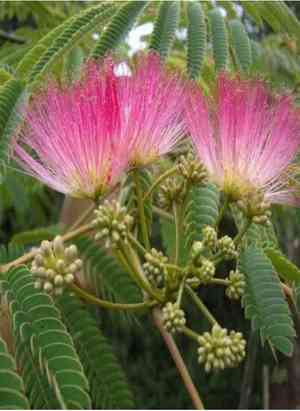
The Persian silk tree, recognized for its delicate, fern-like leaves and striking fluffy pink flowers, possesses specific hydration demands influenced by several elements. Climate plays a crucial role; in hotter, arid environments, your tree will necessitate more frequent irrigation compared to cooler, more humid locales. Soil type is also significant; sandy soils, which drain rapidly, will require more frequent watering than clay-rich soils, which retain moisture longer. Furthermore, the tree's age and dimensions impact its water needs. Younger trees generally demand more water for establishment, while mature trees have deeper roots accessing subterranean moisture.
Indicators of Proper Hydration
Recognizing when your Persian silk tree has been watered appropriately can be observed through several cues. Vibrant, green foliage and abundant flower production signify the tree is receiving adequate moisture. Soil that consistently remains moderately moist about 5-8 centimeters (2-3 inches) below the surface also indicates that the tree's water requirements are being met. Conversely, yellowing leaves or dry, brittle branches can signal insufficient water, whereas excessively saturated soil and root decay suggest overwatering. Regular observation and adjustments are vital for maintaining the optimal health of your Persian silk tree.
Optimal Practices for Irrigating Your Persian Silk Tree
Seasonal Watering Guidelines
Watering your Persian silk tree is not a uniform task; it varies with the seasons. During spring and summer, when the tree is actively growing and flowering, it typically requires irrigation approximately twice weekly. Ensuring that the soil is consistently moist but not waterlogged is essential during these warmer months. In contrast, during fall and winter, the tree enters a dormant phase and needs less frequent watering, sometimes only once every two to three weeks. Always adjust your watering schedule based on rainfall and climatic conditions to prevent excessive saturation or dehydration.
Assessing Soil Moisture Prior to Watering
One of the best strategies for watering your Persian silk tree is to check the soil moisture before applying more water. This straightforward step can prevent common watering errors. Utilize a soil moisture meter or simply insert your finger into the soil about 5 centimeters (2 inches) deep. If the soil feels dry at this depth, it's time to water. If it's still damp, wait a couple of days and recheck. Ensuring the soil is adequately moistened but not oversaturated will encourage the best growth and health for your tree.
Watering Methodologies
Effective watering techniques ensure that your Persian silk tree receives appropriate hydration without waste or overwatering. One popular approach is deep watering, where water is applied slowly to penetrate the soil thoroughly, encouraging the tree's roots to extend downwards. Employing a soaker hose or drip irrigation system is ideal as it delivers water directly to the base of the tree, minimizing evaporation and ensuring uniform soil moisture. Avoid overhead watering, as it can foster fungal diseases on the foliage. Water in the early morning or late evening to maximize water absorption and minimize evaporation.
Common Irrigation Errors to Avoid with Persian Silk Trees
Excessive Watering and Its Repercussions
Overwatering is a frequent mistake that can inflict significant damage on your Persian silk tree. When the soil is perpetually waterlogged, it deprives the roots of vital oxygen, leading to root rot. This fungal ailment causes the roots to become soft and darkened, ultimately resulting in a weakened tree that may exhibit symptoms such as yellowing leaves, stunted development, and heightened susceptibility to pests and diseases. To prevent overwatering, always verify soil moisture before adding water, and ensure proper drainage by loosening compacted soil around the tree's base.
Insufficient Watering and Its Effects
Conversely, underwatering your Persian silk tree can be equally detrimental. When the tree does not receive enough water, its leaves may droop, turn yellow, and eventually drop off. The tree's growth will be inhibited, and flower production will diminish, depriving you of its beautiful display. Chronically dry soil can also lead to a compromised root system, rendering the tree more vulnerable to stress and disease. To avert underwatering, establish a consistent irrigation routine and modify it based on weather conditions, ensuring that the soil remains moderately moist throughout the growing season.



