The Hidden Danger in Your Home? Unmasking the Toxicity of the Narrowleaf milkweed Plant.
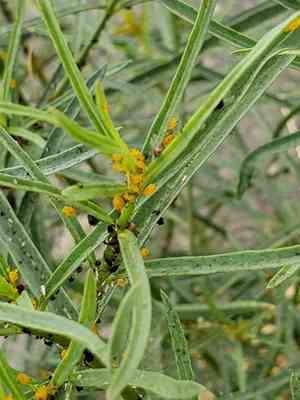
1
Even tiny quantities of narrowleaf milkweed sap are highly poisonous, possibly leading to cardiac arrhythmia, convulsions, and fatality if consumed.
2
Exposure to narrowleaf milkweed sap can lead to skin and eye irritation, even without ingestion.
3
Felines and canines are similarly vulnerable to narrowleaf milkweed toxicity, exhibiting severe signs such as emesis and respiratory distress upon consumption.
Is Narrowleaf milkweed toxic to humans?
Every part of narrowleaf milkweed contains cardenolides, which are moderately to highly poisonous if consumed. The plant's sap is its most toxic component. Signs of narrowleaf milkweed poisoning include gastrointestinal problems, sickness, stomach discomfort, throwing up, loose stools, fatigue, sluggishness, and disorientation. In serious instances, ingestion can lead to heart rhythm irregularities, convulsions, breathing cessation, and even fatality. Even without ingestion, narrowleaf milkweed should be handled cautiously as its sap can irritate skin and eyes.
Is Narrowleaf milkweed toxic to cat?
Narrowleaf milkweed presents a moderate danger of toxicity to felines. If consumed, every portion of narrowleaf milkweed could result in poisoning. Cats might consume the plant due to curiosity or by mishap. Following ingestion, a cat is likely to experience signs of physical distress, which may appear as sickness or discomfort. Given these potential dangers, cat guardians should observe their pets carefully and restrict access to narrowleaf milkweed. If a cat is suspected of having ingested any part of narrowleaf milkweed, it is crucial to immediately seek veterinary care to address the poisoning and reduce health issues.
Is Narrowleaf milkweed toxic to dog?
Narrowleaf milkweed presents a moderate toxicity risk to canines. When dogs consume any part of the plant, they can be poisoned due to its harmful properties. Poisoning typically happens when a dog swallows portions of narrowleaf milkweed, including its leaves, stalks, blossoms, and seeds. After consuming narrowleaf milkweed, dogs might display symptoms such as throwing up, loose stools, weakness, labored breathing, or enlarged pupils. It is vital for dog owners to supervise their pets closely and prevent access to this plant. Should a dog ingest narrowleaf milkweed, it is imperative to seek immediate veterinary attention to ensure the best possible outcome for the affected animal.



