How Much Sunlight Do Japanese pagoda tree Need?
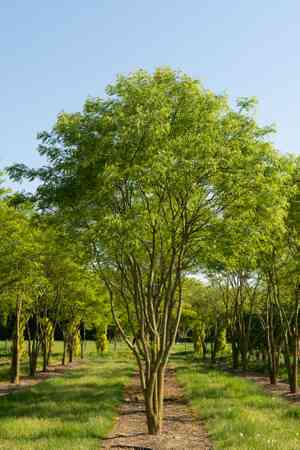
1
For optimal growth, the Japanese pagoda tree requires a minimum of six hours of direct sun exposure daily.
2
While it can endure some partial shade, the tree's leaves might appear less vivid.
3
Sufficient sunlight is crucial for the blooming and general well-being of the Japanese pagoda tree.
Ideal Sunlight Conditions for Japanese Pagoda Tree
Full Sun vs. Partial Shade Adaptability
The Japanese pagoda tree is a versatile species capable of adapting to various light environments. Ideally, it should be situated in a spot receiving full sun, equating to a minimum of 6 hours of direct solar exposure daily. However, it also tolerates partial shade, especially during the hottest summer months. Trees grown in partial shade might exhibit less vigorous growth and thinner foliage, but they will still prosper.
Duration and Intensity of Sun Exposure
For prime development, ensure your Japanese pagoda tree receives ample sunlight, particularly throughout the extended days of spring and summer. Aim for roughly 6-8 hours of sun exposure if feasible. Morning sun is generally gentler and preferred, especially in warmer climates, whereas intense afternoon sun can sometimes be detrimental to young or recently planted trees.
Seasonal Changes in Light Exposure
Seasonal shifts impact the amount of sunlight your Japanese pagoda tree receives. During summer, longer daylight hours provide abundant light, which is crucial for photosynthesis and growth. In winter, days shorten, resulting in less sunlight. This typically isn't an issue as the tree naturally slows its growth during colder periods.
Influence of Sunlight on Japanese Pagoda Tree Development
Photosynthesis Efficiency and Growth
Sunlight is vital for photosynthesis, the process by which plants convert light energy into chemical energy. For the Japanese pagoda tree, sufficient sunlight ensures efficient production of sugars and energy required for robust growth. Without adequate light, the tree's photosynthetic capacity diminishes, leading to weaker development and potentially compromising its long-term vitality.
Effect on Leaf Quality and Bloom Production
Sunlight directly impacts the density and coloration of the Japanese pagoda tree's leaves. Trees exposed to full sun typically feature lush, vibrant foliage, while those in shaded locations may display sparser or less vivid leaves. Additionally, the tree's beautiful white blossoms, which emerge in late summer, are more prolific and striking when the tree receives appropriate sunlight.
Indicators of Light-Related Stress in Japanese Pagoda Tree
Symptoms of Excessive Sunlight
While the Japanese pagoda tree thrives in sunlight, an overabundance can induce stress. Signs of too much sun exposure include scorched leaves, wilting, and sunburnt patches. If these symptoms appear, consider providing some shade, particularly during peak afternoon heat, to safeguard your tree.
Symptoms of Insufficient Sunlight
Conversely, a lack of sunlight can also pose problems. Indicators of too little light include etiolated (leggy) growth, pale or yellowing leaves, and reduced flowering. If your Japanese pagoda tree exhibits these signs, it may need to be moved to a brighter location or given more light.
Optimal Placement Strategies for Your Japanese Pagoda Tree
Best Outdoor Siting
When planting your Japanese pagoda tree outdoors, select a spot that receives ample sun, such as a south or west-facing area. Avoid locations that are overly shaded by buildings, large trees, or other obstructions.
Adapting for Indoor Cultivation
If cultivating a Japanese pagoda tree indoors, position it near a south or west-facing window to ensure abundant sunlight. If natural light is inadequate, supplement with grow lights to guarantee it receives the necessary illumination for flourishing.
Utilizing Supplemental Artificial Lighting
Artificial lighting can be an excellent solution for ensuring your indoor Japanese pagoda tree gets sufficient light. Employ full-spectrum LED grow lights, which mimic natural sunlight and supply the crucial wavelengths needed for photosynthesis.



