How Much Sunlight Do Staghorn sumac Need?
1
Staghorn sumac flourishes most robustly when receiving more than six hours of direct sun each day.
2
While partial shade is tolerable for Staghorn sumac, complete shade should be avoided to ensure peak development.
3
Observe light-colored foliage and stunted development as indicators of insufficient light levels.
What is the Optimal Sunlight for Staghorn Sumac?
Ample Sun Exposure
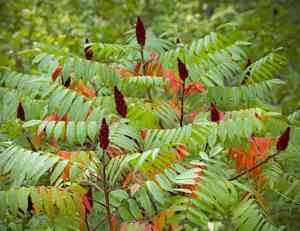
Staghorn sumac achieves its most brilliant and vigorous state when exposed to ample direct sunlight. This translates to the plant receiving a minimum of 6 hours of unblocked sun daily. Abundant sunlight not only fosters the growth of its distinctive crimson fruits and luxuriant green leaves but also bolsters the plant's overall vitality and hardiness. When placing Staghorn sumac in your landscape, select a location that receives continuous sunlight throughout the day for prime outcomes.
Partial Shade Conditions
Although Staghorn sumac thrives in full sun, it can withstand partial shade, indicating it will still develop adequately with 3 to 6 hours of direct sunlight each day. Under partial shade circumstances, the plant might not mature as robustly as it would in full sun, and its autumn foliage color may be less vibrant. Nonetheless, partial shade can prove quite advantageous during periods of extreme heat, offering some reprieve and preventing plant stress.
How to Ensure Adequate Sunlight for Staghorn Sumac?
Selecting the Proper Placement
Choosing the correct placement is vital for guaranteeing your Staghorn sumac receives sufficient sunlight. Ideally, you should establish it in an open area where it can benefit from complete sun exposure throughout the day. Avoid situating it too close to larger trees or buildings that might create shadows, thereby reducing its sunlight. If your gardening area is restricted, think about planting it on the south or west side of your residence, where it will naturally receive more solar energy.
Seasonal Light Adjustments
As seasons progress, the sun's angle and duration of illumination shift. During colder months, sunlight can be less intense and available for shorter periods. To compensate, ensure your Staghorn sumac is positioned to maximize exposure during these times. Pruning nearby plants and trees can also aid in removing any light obstructions. Furthermore, since this plant is deciduous, it will shed its leaves in winter and photosynthesize less, making its solar requirements somewhat less critical during this interval.
What are the Indicators of Insufficient Sunlight for Staghorn Sumac?
Reduced Growth Rate
A primary sign that your Staghorn sumac isn't getting enough sunlight is a slow growth rate. If you observe that your plant isn't expanding as anticipated or if new shoots and leaves are scarce, it might be struggling to acquire the necessary sunlight. Typically, Staghorn sumac is a rapid grower, so a noticeable decrease in growth serves as a clear indication that its light needs are unmet.
Fading Foliage
Another clear symptom of inadequate sunlight is the appearance of pale or yellowing leaves. Staghorn sumac leaves should display a vivid green hue during the active growth period. If they begin to lose their color and become pallid, this is frequently a direct consequence of insufficient light. Fading leaves suggest that the plant is unable to photosynthesize effectively, which is essential for its health and development.
Can Staghorn Sumac Withstand Full Shade?
Effect on Development
Full shade environments are unsuitable for Staghorn sumac. If cultivated in complete shade, the plant will show stunted development and will not flourish. Leaves will likely be sparse, and the overall vitality of the sumac will be compromised. Full shade can lead to poor fruit production and less vivid autumn colors. In essence, while Staghorn sumac is quite resilient, it requires sunlight to sustain its energy, health, and visual appeal.
Optimal Strategies for Shaded Zones
If your garden contains shaded areas but you still wish to cultivate Staghorn sumac, consider integrating it with other plants that can help improve light conditions. Trimming back nearby trees or shrubs to permit greater light penetration can also be beneficial. Additionally, growing Staghorn sumac in a container could enable you to relocate it to different spots depending on the available sunlight throughout the seasons.
Staghorn Sumac Sunlight Requirements by Geographical Region
Sunlight in Northern Regions
In colder climates, solar exposure can be more limited, particularly during winter months. Therefore, it is crucial to establish Staghorn sumac in the brightest location available. The extended daylight hours of summer will furnish the necessary sunlight, but ensure the plant is not obscured by other vegetation or structures. In northern areas, the Staghorn sumac might also benefit from being situated near reflective surfaces that can help amplify sunlight exposure.
Sunlight in Southern Regions
In warmer climates where the sun is more intense and the days are longer, Staghorn sumac can still flourish with full sun exposure. However, partial shade might actually be advantageous to shield it from the extreme midday sun and heat. Be sure to provide ample water during hot, arid periods to prevent dehydration and stress. The equilibrium between sufficient sunlight and protection from excessive heat is vital in southern regions.



