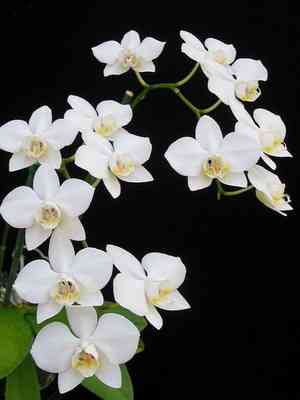
How Much Sunlight Do Aphrodite's phalaenopsis Need?
1
Aphrodite's phalaenopsis flourishes optimally with moderate sunlight, equating to approximately 3-6 hours of daily sun exposure.
2
Should you observe discoloration of leaves to yellow, it could indicate that your Aphrodite's phalaenopsis is exposed to excessive light.
3
Employing drapes or window coverings can assist in regulating the intensity of direct solar rays reaching your indoor orchid.
Optimal Lighting for Aphrodite's phalaenopsis
Ideal Light Exposure
Supplying the correct amount of light to your Aphrodite's phalaenopsis is vital for its overall well-being and blooming performance. Generally, this orchid variety thrives best with moderate sun exposure, meaning roughly 3-6 hours of light daily. This balanced illumination aids in producing vivid blooms without stressing the plant.
Indirect vs. Direct Light
Aphrodite's phalaenopsis favors diffused sunlight over harsh, direct rays. Unfiltered direct light can be too potent and might scorch the foliage, particularly during midday. Positioning your orchid near a window with filtered light or behind a sheer drape can offer an ideal setting that imitates its natural habitat.
Signs of Excessive Light
Too much sunlight can lead to several problems for your Aphrodite's phalaenopsis. A primary indicator is leaf burn, where the leaves develop yellowish or brownish patches. Additionally, if the foliage becomes parched and brittle, or if flower spikes show signs of charring, it suggests the orchid is receiving more sun than it can endure.
Signs of Insufficient Light
Conversely, too little sunlight can also be detrimental. Inadequate light can cause the leaves to turn a deep green, signifying that the plant isn't photosynthesizing effectively. Furthermore, without ample light, your orchid may produce fewer flowers or exhibit stunted development. Ensuring balanced light exposure is critical for the plant's vitality.
Optimal Placements for Aphrodite's phalaenopsis
Indoor Positioning
When cultivating Aphrodite's phalaenopsis indoors, the plant's location plays a crucial role in its health. A spot near an east-facing or north-facing window is generally perfect, as it provides gentle morning light and avoids the intense afternoon sun. You can also employ sheer curtains to diffuse the light and safeguard the orchid from direct exposure.
Outdoor Positioning
If you opt to place your Aphrodite's phalaenopsis outdoors, it's essential to find a spot that offers dappled or filtered light. Beneath a tree canopy or on a patio with partial shade can be good choices. Ensure the location is protected from strong gusts and harsh weather to keep the orchid healthy and flourishing.
Seasonal Light Adjustments
It's important to factor in seasonal variations when caring for your Aphrodite's phalaenopsis. During winter, when daylight hours are shorter, you might need to relocate the orchid to a brighter area or supplement with artificial illumination. Conversely, in summer, you may need to provide more shade to prevent overheating and sunburn.
Modifying Light for Enhanced Growth
Utilizing Shades and Drapes
An effective method to manage light for your Aphrodite's phalaenopsis is by using window coverings or curtains. Sheer drapes can filter out the strong afternoon sun while still allowing sufficient light for the orchid to thrive. Adjusting the amount of shade can help create an ideal lighting environment for growth and blooming.
Supplementing with Artificial Lighting
In instances where natural light is inadequate, particularly in winter, you can use supplemental grow lights to meet the light requirements of your Aphrodite's phalaenopsis. LED grow lights are a favored option as they are energy-efficient and can be adjusted to deliver the correct light spectrum for your orchid's development.
Regular Plant Rotation
Periodically rotating your Aphrodite's phalaenopsis ensures even light distribution to all parts of the plant. This practice helps prevent uneven growth and promotes uniform development. Make it a habit to turn the plant every one to two weeks, especially if it's in a fixed position where light only comes from a single direction.



