How Much Sunlight Do Rough horsetail Need?
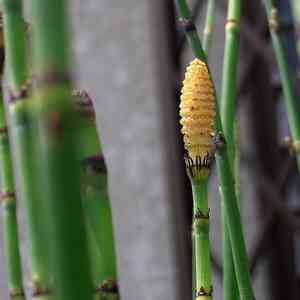
1
Equisetum hyemale flourishes optimally when exposed to a minimum of six hours of direct sun daily.
2
While this species can endure some dappled light, its growth will be less vigorous in those environments.
3
Observing the foliage hue can assist in assessing whether your Rough horsetail is getting sufficient illumination.
Ideal Light Conditions for Rough horsetail
Preferred Illumination Levels
Rough horsetail thrives in full sunlight, making it a helio-loving plant. It should ideally receive a minimum of six hours of direct sun daily to encourage robust growth and abundant foliage. While it can survive in partial shade, its development might be less vigorous. Therefore, positioning your Rough horsetail in a brightly lit area is essential for optimal performance.
Filtered vs. Unobstructed Sunlight
Unobstructed sunlight means solar rays directly strike the plant without any hindrance. For Rough horsetail, extensive exposure to direct sunlight helps foster healthier stems and leaves. Conversely, while it can persist under filtered sunlight—light that passes through a window or thin canopy—its growth rate may diminish, and the plant might appear less vibrant.
Impacts of Insufficient Light on Rough horsetail
Indicators of Low Light
One of the clearest indications of inadequate sunlight for Rough horsetail is the discoloration and yellowing of its leaves or stems. Another symptom is stem etiolation, where stems grow longer and weaker as they stretch towards the light source. You might also observe reduced foliage density, making the plant look sparse and less hardy.
Growth Consequences
When Rough horsetail does not get enough sunlight, its overall development can be hindered. Stems may become slender and fragile, increasing their susceptibility to breakage. Furthermore, the plant might reduce its natural propagation, resulting in fewer spores or flowers. Thus, for your Rough horsetail to flourish, guaranteeing sufficient sunlight is paramount.
Ensuring Adequate Sunlight for Rough horsetail
Choosing the Optimal Location
Selecting the appropriate placement for your Rough horsetail is vital for its health. If grown outdoors, a sunny garden bed that receives light throughout the morning and afternoon is ideal. Indoor specimens should be situated near south-facing windows, which typically receive the most daylight. In both cases, avoid areas where buildings or trees might cast prolonged shadows.
Utilizing Supplemental Lighting
If natural sunlight proves insufficient, particularly during shorter winter days, you can complement it with artificial lighting. Full-spectrum grow lights that mimic the sun's natural illumination are the best choice. Position these fixtures approximately 30 cm (12 inches) above the plant and aim for at least 12-14 hours of light daily to ensure your Rough horsetail gets ample illumination.
Common Sunlight-Related Issues with Rough horsetail
Symptoms of Excessive Exposure
While Rough horsetail generally tolerates full sun, overly intense light, especially during peak summer, can lead to problems. Signs of overexposure include browning and scorching of leaf tips and edges. Another indicator might be sudden wilting or desiccation of the plant, even if the soil remains adequately moist.
Solutions for Overexposure
If your Rough horsetail exhibits signs of overexposure, consider relocating it to a spot with some afternoon shade to mitigate the intensity of sunlight during the hottest parts of the day. Employing a shade cloth to filter the light or erecting a temporary screen can also be beneficial. Additionally, ensure the plant receives consistent hydration to help it manage increased sun exposure.



