How Much Sunlight Do Pigtail anthurium Need?
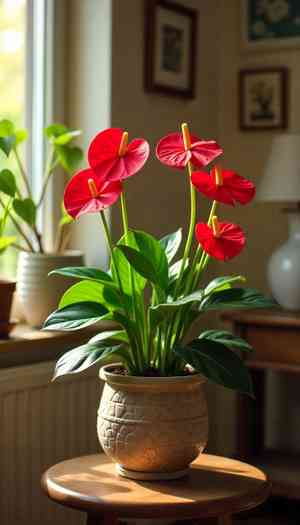
1
Pigtail anthuriums flourish in diffused illumination, avoiding direct sun exposure.
2
Excessive direct sun can cause burning on the foliage of the Pigtail anthurium.
3
Supplemental artificial light can augment natural light, especially in dimly lit spaces.
Optimal Illumination for Pigtail Anthurium
Indirect Illumination
The Pigtail anthurium thrives in bright, diffused light. Unlike some indoor plants that tolerate full sun, this species flourishes when sunlight is softened by a sheer curtain or a partially shaded window. Providing these ideal light conditions helps foster vibrant blooms and healthy, abundant foliage. Position your Pigtail anthurium in a room with ample natural light, but keep it out of the direct path of the sun's rays.
Steer Clear of Direct Sun Exposure
Direct sun exposure can harm the Pigtail anthurium, causing its leaves to scorch and turn brown. It's best to avoid placing this plant on windowsills or in areas where it will receive unfiltered, intense sunlight for extended periods. Instead, choose a location where light is plentiful but scattered, offering a safe environment for the plant to flourish without suffering from sunburn.
Supplemental Lighting Solutions
For those in spaces with limited natural light, artificial illumination offers an excellent alternative to ensure your Pigtail anthurium gets the light it requires. Full-spectrum fluorescent lamps or LED grow lights that mimic natural sunlight are effective choices. Position the lights approximately 30-45 cm (12-18 inches) above the plant and keep them on for about 12-14 hours daily. This setup will provide the necessary light intensity and duration for robust growth.
Identifying Light-Related Stress in Pigtail Anthurium
Indicators of Excessive Light
When a Pigtail anthurium receives too much light, it exhibits several stress signals. Watch for yellowing or browning leaf tips, scorched areas, and an overall wilted appearance. If you observe these signs, it's crucial to move your plant to a location with less direct sunlight immediately. Addressing the conditions promptly can help restore your plant's health and prevent further harm.
Indicators of Insufficient Light
Conversely, inadequate light can hinder the growth of your Pigtail anthurium. Signs of insufficient light include elongated stems, smaller and fewer leaves, and a lack of flowers. If your plant appears to be struggling in low light, relocate it to a brighter spot. Adding an artificial light source can also help supplement inadequate natural light.
Optimal Placement for Pigtail Anthurium
Near Windows
Windows are excellent spots for the Pigtail anthurium, but strategic placement is vital. North or east-facing windows provide ample indirect sunlight throughout the day, which is perfect for this plant. If positioning near a south or west-facing window, ensure to use a curtain to diffuse the light's intensity and prevent scorching.
Indoor Positioning Advice
Opt for rooms that receive moderate light levels throughout the day, such as a well-lit living room or a bright bathroom. Avoid dark corners or areas far from windows, as they won't provide the necessary light intensity. Regularly rotate your Pigtail anthurium to ensure all sides of the plant receive equal light exposure, promoting balanced growth.
Outdoor Placement Considerations
If you choose to place your Pigtail anthurium outdoors, select a spot that replicates its preferred indoor light conditions. A shaded patio or an area beneath a tree canopy can create a suitable environment. Avoid direct sunlight and ensure the plant is protected from harsh weather conditions, such as heavy rain or strong winds, which could damage its delicate leaves.
Common Errors to Avoid
Exposure to Intense Sunlight
One of the most frequent errors is exposing the Pigtail anthurium to harsh, direct sunlight. This can lead to severe leaf burn and compromise the plant's overall well-being. Always ensure the sunlight is diffused and filtered to prevent these detrimental effects.
Over-reliance on Artificial Light
While artificial light can be beneficial, depending solely on it without considering available natural light can be a mistake. Balance is crucial; use artificial lighting to supplement, not replace, natural light unless absolutely necessary. Combine both sources to create an optimal light environment.
Disregarding Light Stress Signals
Ignoring the signs of light stress can lead to a decline in your Pigtail anthurium's health. Be observant and attentive to the plant's requirements. Promptly addressing issues like yellowing leaves or leggy growth can prevent long-term damage and help maintain the plant's vibrancy and health.



