How to Prune Rock elm?
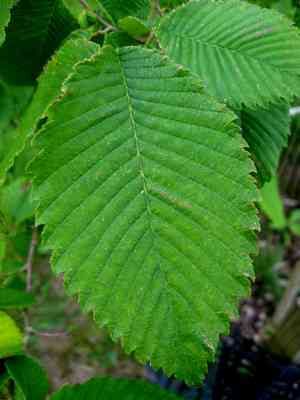
A robust deciduous tree, rock elm, featuring interwoven limbs, flourishes with judicious trimming. Rock elm benefits from structural pruning in the initial part of spring or the latter part of winter to eliminate deceased, ailing, or intersecting branches, and to preserve its inherent vase-like form. Reducing the density of mature branches improves light access and air movement, fostering vigorous development. It is essential to refrain from pruning in late spring or early summer to avert the dissemination of 'Dutch elm disease,' which is transmitted by beetles attracted to recent incisions.
Advantages of Trimming Rock Elm
Advantages of Trimming Rock Elm
Trimming rock elm encourages robust development and assists in maintaining a desired form. Strategic cuts can revitalize rock elm by eliminating dead or diseased wood, enhancing air circulation and light penetration, crucial for its well-being and structure.
Optimal Time for Trimming Rock Elm
Optimal Time for Trimming Rock Elm
Late winter and early spring are considered ideal for trimming rock elm as this timing prevents sap leakage, which can be more common when sap begins to flow in late spring or summer. Trimming during late winter, while rock elm is still dormant, minimizes plant stress, allowing for vigorous spring growth. Early spring trimming, before bud break, ensures quick wound healing without diverting energy from developing flowers or leaves. It also allows gardeners to shape rock elm more easily as the plant's structure is more visible, and corrective trimming can be performed effectively.
Tools Required for Trimming Rock Elm
Hand Pruners (Secateurs)
Useful for cutting small branches, twigs, and leaves. Suitable for shaping rock elm smaller branches (up to 3/4 inch in diameter), ensuring clean cuts that promote good plant health.
Loppers
Designed for larger branches that hand pruners can't handle, typically up to 2 inches in diameter. Loppers provide the necessary leverage to prune rock elm branches while reducing strain on the gardener's hands.
Pruning Saw
Ideal for cutting branches over 2 inches in diameter. The pruning saw allows for precise cuts on rock elm without causing unnecessary damage to the surrounding bark and tissue.
Pole Pruner
For reaching higher branches on rock elm without the use of a ladder. It includes a saw and lopper on an extendable pole, which makes it easier to maintain the tree's structure and health from the ground.
Hedge Shears
While not commonly used for trees, hedge shears can be effective for trimming and shaping the dense foliage of rock elm if needed, especially while the tree is young and has softer foliage.
How to Trim Rock Elm
Sanitize tools
Before beginning the trimming process, ensure all trimming tools are clean and sterilized to prevent the spread of disease to rock elm.
Remove dead wood
Identify and carefully remove any dead wood from rock elm, making clean cuts close to the trunk or main branch to avoid leaving stubs that could harbor pests or disease.
Cut damaged limbs
Trim away damaged limbs by making cuts at a 45-degree angle just above a bud or branch that faces the outside of rock elm, promoting healthy growth and better air circulation.
Thin water sprouts
Locate and thin out water sprouts, which are vigorous upright shoots that draw energy away from rock elm, by cutting them at their point of origin without leaving any stubs.
Shape the tree
For the overall health and structure of rock elm, selectively trim to maintain its natural shape, promote strong branch architecture, and ensure an even distribution of foliage.
Common Trimming Errors with Rock Elm
Over-trimming
Removing too much foliage from rock elm can stress the tree, weaken its structure, and potentially lead to disease or pest infestations.
Improper cut sites
Making cuts too close to the trunk can damage the bark and proper healing. Conversely, leaving too long a stub can prevent proper healing and lead to decay.
Flush cuts
Making flush cuts against the trunk or parent limb can remove the branch collar, resulting in poor wound closure and increased susceptibility to disease.
Topping
Cutting the top off of rock elm to reduce its size can lead to weakly attached new growth and increased vulnerability to disease and pests.
Trimming during periods of active disease
Trimming rock elm when active diseases are present can facilitate the spread of pathogens to healthy parts of the tree or to nearby trees.
Neglecting to sanitize tools
Failing to clean trimming tools can spread diseases from infected plants to healthy ones. Always sanitize tools before and after trimming.
General Trimming Advice for Rock Elm
Correct trimming cut
When trimming rock elm, make cuts at a slight angle, just beyond a bud or branch junction, encouraging healthy growth and proper wound healing.
Three-cut method
For removing larger branches, use the three-cut method to prevent bark tearing. This involves an undercut, a relief cut, and a final cut near the branch collar.
Branch collar preservation
Keep the branch collar intact when making cuts to promote faster and healthier healing. Do not cut flush to the trunk.
Gradual reduction
If size reduction is necessary, gradually reduce the canopy over several years to minimize stress and preserve the natural form of rock elm.
Selective thinning
Thin out crowded branches to increase light penetration and air circulation, which can reduce the risk of disease and improve the tree's structure.
Maintenance of leader dominance
Maintain the central leader (main trunk) dominance by selectively trimming competing branches, which helps to maintain rock elm's strength and vertical growth.



