How to Prune Common buckthorn?
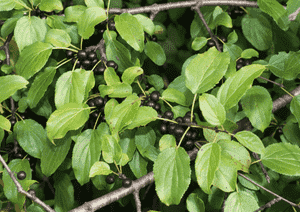
A pervasive shrub primarily managed for environmental objectives, common buckthorn necessitates intensive trimming to curb its rapid proliferation. Essential methods involve shortening excessive branches and eliminating frail or ailing sections to enhance air movement. Ideal pruning should occur in late winter or early spring to avert seed distribution and reduce re-sprouting. Trimming common buckthorn not only regulates its invasive characteristics but also fosters more robust, controllable growth habits.
What Are the Benefits of Pruning Common Buckthorn?
What Are the Benefits of Pruning Common Buckthorn?
Trimming common buckthorn promotes robust development and maintains its desired form. It aids in preventing excessive growth and the plant's potential to dominate other local species.
What Is the Best Time for Pruning Common Buckthorn?
What Is the Best Time for Pruning Common Buckthorn?
During late winter to early spring, common buckthorn remains dormant, minimizing stress and disease infection risks associated with pruning. Trimming before the spring growth cycle allows the plant to recover quickly with vigorous new growth once warmer weather triggers its active phase. This timing also avoids removing current year's growth, including potential flowers and fruit. Additionally, plant structure is more visible without leaves, simplifying strategic cuts. By pruning within this seasonal window, gardeners can effectively shape common buckthorn without harming its health or natural fruiting cycle.
What Tools Do I Need to Prune Common Buckthorn?
Hand Pruners
Ideal for cutting small branches up to 3/4 inches thick, hand pruners offer precise cuts and are easy to handle, making them perfect for selective trimming of common buckthorn.
Loppers
Designed for thicker branches, typically up to 2 inches in diameter. Loppers provide the necessary leverage to cut through common buckthorn's older or denser limbs.
Pruning Saws
For mature common buckthorn with branches exceeding 2 inches in thickness, a pruning saw is essential. It enables gardeners to make clean cuts on larger limbs without causing undue harm to the plant.
Pole Pruners
When common buckthorn has grown tall and has out-of-reach branches, pole pruners can be used to safely trim without needing a ladder.
How to Prune Common Buckthorn
Step1: Identifying Dead Wood
Locate all dead wood on common buckthorn by checking for branches lacking green growth and flexibility. These branches will often appear dry and brittle.
Step2: Tool Preparation and Disinfection
Prepare clean, sharp pruning tools. Sanitize your tools with a solution of 1 part bleach to 9 parts water to prevent disease transmission.
Step3: Pruning Dead Branches
Trim dead wood by making clean cuts at a 45-degree angle with the cut facing downwards, about 1/4 inch above a live bud or branch collar, which is the swollen area of trunk tissue that forms around the base of a branch.
Step4: Spotting Diseased Branches
Identify diseased branches on common buckthorn by looking for irregularities such as discoloration, cankers, or growths. Wear gloves to prevent spreading pathogens to healthy plant parts or yourself.
Step5: Removing Diseased Branches
Remove diseased branches by cutting at least several inches below the affected area to ensure all diseased tissue is eliminated. If the entire branch is diseased, cut it back to the branch collar.
Step6: Examining Winter Damage
Inspect common buckthorn for branches that have been harmed by winter weather, which may include broken or split branches.
Step7: Pruning Winter-Damaged Branches
Trim winter-damaged branches back to healthy tissue unaffected by the damage. If the damage is extensive, prune back to the branch collar.
Step8: Thinning the Canopy
Thinning out the canopy of common buckthorn to improve air circulation and light penetration can be beneficial. Remove select branches by cutting back to their point of origin on the main trunk or a larger branch.
Step9: Disposal of Pruned Material
Discard all removed material by burning or bagging to prevent the spread of any diseases that may be present on the dead, diseased, or winter-damaged wood.
Step10: Tool Cleaning Post-Pruning
Clean and disinfect all pruning tools after completing the pruning process to prevent the potential spread of disease to other plants.
Post-Pruning Care for Common Buckthorn
Post-Pruning Care for Common Buckthorn
Immediately after trimming common buckthorn, maintain adequate moisture without overwatering to prevent root stress. Place common buckthorn in moderate light; avoid direct, intense sunlight. Ensure balanced humidity for healing. Apply a balanced, slow-release fertilizer to replenish nutrients. Regularly check cuts for unusual discoloration or oozing, indicating infection. Implement corrective actions such as reducing water or applying fungicide if signs of stress appear, following best practices for plant health management.
Common Pruning Mistakes with Common Buckthorn
Pruning into old growth can cause bare patches
Cutting into old wood where common buckthorn might not readily produce new growth, leading to bare spots and an unattractive appearance.
Excessive foliage removal stresses the plant
Removing too much foliage at once, which can stress common buckthorn and result in poor growth or increased vulnerability to disease and pests.
Incorrect cut placement can lead to disease
Making cuts too close to the main stem or branch collar, potentially causing damage that can invite diseases or decay.
Dull or dirty tools harm plants and spread disease
Using dull or unsanitized pruning tools, which can result in jagged cuts and heighten the risk of spreading diseases between plants.
Forcing unnatural shapes weakens plant structure
Shaping common buckthorn into unnatural forms, which goes against its natural growth habit and could weaken the plant structure.
Failing to remove dead wood inhibits healthy growth
Neglecting to remove dead or diseased wood, which can hinder healthy growth and put the rest of the plant at risk.
Common Pruning Tips for Common Buckthorn
Sterilize tools to prevent disease spread
Sanitize pruning tools before and after use on common buckthorn to prevent the spread of diseases.
Make angled cuts above nodes to avoid disease
Make angled cuts just above a leaf node or bud, ensuring that water does not sit on the cut surface and reduce the risk of disease.
Thin branches for air circulation and growth
Thin out the dense branches of common buckthorn for better air circulation and light penetration, which promotes healthy growth.
Maintain structure by pruning selectively
Identify and preserve the main structural branches of common buckthorn, focusing on removing only the overgrown, diseased, or crossing branches.
Encourage outward growth with strategic cuts
Cut at a distance of about a quarter inch above buds facing the outside of the plant to encourage outward growth, which helps maintain common buckthorn's natural shape.
Immediate pest-infested branch removal is crucial
Prune branches of common buckthorn that show signs of pest infestation immediately to prevent spread, following up with appropriate pest control measures.



