How to Prune Golden larch?
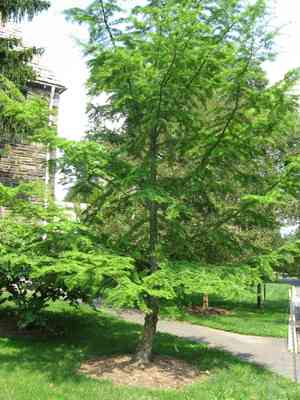
Valued for its impressive autumn leaves, golden larch thrives with consistent trimming to preserve its preferred form and well-being. Essential methods for golden larch involve excising deceased or compromised limbs, reducing crowded sections to boost air movement, and curtailing excessive growth to refine its inherent silhouette. The most effective pruning should be carried out in late winter or early spring to stimulate new development. Appropriate pruning guarantees a sturdy framework and can result in more vivid seasonal chromatic shifts.
What Are the Benefits of Pruning Golden Larch?
What Are the Benefits of Pruning Golden Larch?
Trimming golden larch promotes more vigorous development by eliminating dead or weakened limbs, thereby enhancing nutrient distribution. Shaping golden larch through trimming also preserves its aesthetic form, ensuring it effectively complements garden design.
What Is the Best Time for Pruning Golden Larch?
What Is the Best Time for Pruning Golden Larch?
Pruning golden larch in late winter or early spring is optimal as this period aligns with the plant's dormant phase, making it less susceptible to stress and illness. During late winter, sap flow is minimal, reducing the risk of sap loss that could weaken golden larch. Early spring pruning, prior to new growth, allows gardeners to shape golden larch and remove any damaged or diseased branches without affecting the upcoming growth cycle. This timing also prevents the removal of new buds, which are crucial for the plant's natural growth and development. Pruning during these seasons fosters healthy growth, lush foliage, and maintains the structural integrity of golden larch.
What Tools Do I Need to Prune Golden Larch?
Bypass Pruners
Perfect for making clean cuts on smaller branches of golden larch. This tool enables precise trimming, minimizing tissue damage and encouraging faster healing.
Loppers
Suitable for cutting thicker branches that bypass pruners cannot handle. They feature long handles that provide leverage for cutting through branches up to 1.5 inches in diameter, which matches the potential branch thickness of golden larch.
Pruning Saw
Essential for larger limbs that loppers cannot manage. Golden larch can develop substantial branches as it matures, and a pruning saw helps make clean cuts through these without excessive pressure on the plant.
Pole Pruner
Useful for reaching higher branches without a ladder. Given the height golden larch can attain, a pole pruner allows for safe trimming of hard-to-reach areas.
Hedge Shears
While not typically used for golden larch, hedge shears could be employed for shaping young plants or trimming very fine, small growth if necessary. However, this tool should be used cautiously to avoid excessive or improper pruning.
How to Prune Golden Larch
Sanitization
Before starting to prune golden larch, clean and disinfect all pruning tools. This prevents the spread of diseases and pests between plants.
Identification
Carefully examine golden larch, identifying all dead or diseased branches. These branches may show discoloration, be brittle, or have visible signs of fungal growth.
Cutting dead branches
Using a sharp, sanitized pruning saw, cut dead branches from golden larch at their point of origin or back to live wood. Make a clean cut flush with the trunk or main limb to promote proper healing.
Cutting diseased branches
Prune diseased branches on golden larch, cutting them well below the affected areas to ensure all diseased tissue is removed. Disinfect tools after each cut to avoid spreading pathogens.
Cleanup
Collect and dispose of all pruned debris away from golden larch to prevent any potential disease from lingering or spreading to healthy parts of the plant.
Common Pruning Mistakes with Golden Larch
Over-pruning
A common error is removing too much foliage at once, which can stress golden larch and hinder its growth.
Improper cuts
Making cuts that are either too close or too far from the branch collar can impede golden larch's natural healing process, leading to pest infestations or diseases.
Tearing bark
Incorrect pruning techniques might cause bark to tear, which can damage the cambium layer of golden larch and affect its overall health.
Using dull tools
Dull pruning tools can result in jagged cuts that are more susceptible to infections, negatively impacting golden larch's vitality.
Neglecting sanitation
Failing to sanitize tools between cuts can spread disease from infected parts of golden larch to healthy areas.
Common Pruning Tips for Golden Larch
Selective thinning
For golden larch, selectively thin out crowded branches to improve light penetration and air circulation, which encourages healthy growth.
Proper tool selection
Use sharp, clean tools that are appropriate for the size of branch being pruned on golden larch to make clean cuts.
Cutting technique
Use an angled cut to remove branches from golden larch, ensuring that the cut faces downwards to prevent water accumulation and promote healing.
Protecting the collar
Always cut outside the branch bark ridge and collar of golden larch to preserve the tree's natural defense system against pests and diseases.
Sequential approach
Adopt a step-by-step approach by first removing any dead or diseased branches from golden larch, followed by unwanted lower branches to maintain the desired shape.



