How to Prune Dwarf white-stripe bamboo?
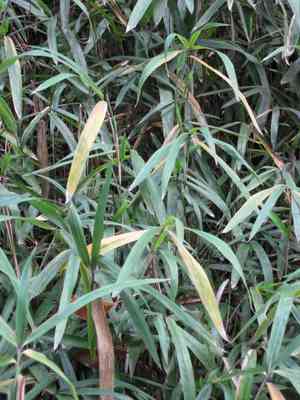
A robust, decorative grass with variegated foliage, dwarf white-stripe bamboo flourishes with judicious trimming to manage its expansion and preserve its appearance. Perform pruning in late winter or early spring, severing stalks at ground level to revitalize development. Reducing the density of mature culms facilitates light access, fostering robust, thriving shoots. Eliminating deceased or frail stems preserves its form and encourages more abundant leaves. Advantages of trimming encompass improved aesthetic quality and the deterrence of excessive growth into adjacent spaces.
What Are the Benefits of Pruning Dwarf White-stripe Bamboo?
What Are the Benefits of Pruning Dwarf White-stripe Bamboo?
Trimming dwarf white-stripe bamboo promotes robust development and helps maintain its desired compact form, ensuring the plant remains visually appealing and manageable in a garden setting.
What Is the Best Time for Pruning Dwarf White-stripe Bamboo?
What Is the Best Time for Pruning Dwarf White-stripe Bamboo?
Pruning dwarf white-stripe bamboo in early spring is advantageous as it precedes new growth, enabling gardeners to shape the plant and direct its energy towards controlled development without causing stress. Trimming during this period helps maintain the desired size and look of dwarf white-stripe bamboo. Additionally, any winter cold damage can be assessed and removed, fostering healthier shoots. Winter is also an ideal time for pruning dwarf white-stripe bamboo, especially when the plant is dormant. This minimizes disease transmission and plant stress. Furthermore, without leaves, the plant's structure is clearer, allowing for more precise cuts. Pruning during dormancy encourages vigorous spring growth and ensures energy is properly focused on the remaining canes.
What Tools Do I Need to Prune Dwarf White-stripe Bamboo?
Bypass Pruners
Perfect for making precise cuts on dwarf white-stripe bamboo's thinner stems, bypass pruners provide a clean, healthy cut without crushing plant tissue.
Loppers
Excellent for reaching into the dense clumps formed by dwarf white-stripe bamboo to trim thicker stems and branches that are too large for bypass pruners.
Hand Saw or Pruning Saw
For the most mature and thick stems of dwarf white-stripe bamboo, a sharp hand saw or pruning saw is essential for making clean cuts on woody growth without causing damage.
Hedge Shears
For shaping and controlling overall size, hedge shears are effective for trimming dwarf white-stripe bamboo's foliage, especially its mass of leaves and smaller stems.
Gloves
To protect hands from the potentially sharp edges of dwarf white-stripe bamboo's foliage and stems, sturdy gloves are an indispensable part of the toolkit.
How to Prune Dwarf White-stripe Bamboo
Sanitize
Before beginning, ensure all pruning tools are clean and sterilized to prevent disease spread to dwarf white-stripe bamboo.
Identify
Thoroughly inspect dwarf white-stripe bamboo to identify all diseased and withered leaves that need removal.
Cut Diseased Leaves
Using sharp pruning shears, carefully cut away any diseased leaves at the stem's base, taking care not to harm nearby healthy foliage.
Trim Withered Leaves
Remove withered leaves by cutting them close to the stem. This will improve air circulation and encourage new growth in dwarf white-stripe bamboo.
Dispose
Collect and discard all trimmed material away from dwarf white-stripe bamboo to avoid recontamination or disease spread.
Common Pruning Mistakes with Dwarf White-stripe Bamboo
Overpruning
Removing too much foliage at once, which can stress dwarf white-stripe bamboo and hinder its ability to recover and thrive.
Wrong technique
Using incorrect cutting methods, such as tearing or making jagged cuts, can lead to disease and damage to dwarf white-stripe bamboo's stems.
Neglecting tools
Failing to use sharp, clean tools can result in unnecessary damage to dwarf white-stripe bamboo's canes and may introduce pathogens.
Pruning healthy canes
Trimming healthy, vibrant green canes without reason, which can limit dwarf white-stripe bamboo's growth potential and reduce its natural fullness.
Ignoring thin canes
Overlooking the removal of thin, weak canes that can diminish the overall vigor and appearance of dwarf white-stripe bamboo.
Lack of clean up
Not cleaning up pruned material can invite pests and diseases and create an unsightly appearance around dwarf white-stripe bamboo.
Common Pruning Tips for Dwarf White-stripe Bamboo
Selective pruning
Carefully choose which canes to prune, focusing on older, discolored, or damaged ones to improve air circulation and light penetration for dwarf white-stripe bamboo.
Height reduction
If necessary to maintain size, cut canes of dwarf white-stripe bamboo at varying heights to encourage a more natural look rather than a uniform cut.
Cane renewal
Each year, remove about a third of the oldest canes to ground level, which stimulates dwarf white-stripe bamboo's rejuvenation and promotes healthier growth.
Tool maintenance
Use sharp, sanitized pruning shears to make clean cuts on dwarf white-stripe bamboo, reducing disease risk and ensuring quick healing.
Protective layer
Making an angled cut just above a node on dwarf white-stripe bamboo's canes helps shed water away from the cut, providing a protective layer against rot.
Methodical approach
Approach pruning dwarf white-stripe bamboo systematically, working from the top down and the inside out, to maintain control over the plant's shape and health.



