How to Prune Slash pine?
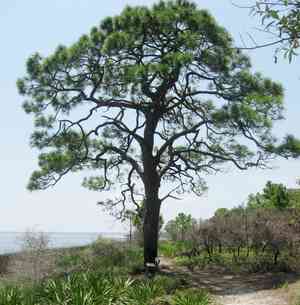
A conifer distinguished by its elongated, thin needles and value in lumber manufacturing, Pinus elliottii flourishes with careful trimming. Eliminate deceased or compromised limbs and reduce crowded sections to encourage airflow and light access. Perform pruning in the dormant winter period to lessen sap leakage and improve recuperation. Trimming additionally assists in preserving its form and can avert problems with insects and pathogens by removing prospective access points.
Advantages of Trimming Slash Pine
Advantages of Trimming Slash Pine
Trimming slash pine promotes robust development and helps maintain its desired form. Consistent trimming ensures a sound structure, preventing illness and enhancing resilience.
Optimal Time for Pruning Slash Pine
Optimal Time for Pruning Slash Pine
During this period, slash pine is in a dormant state, which minimizes the stress pruning can inflict on the plant. Pruning before the spring growth surge allows for strong recovery and development. Additionally, fewer diseases and pests are common in cooler weather, reducing the risk of infestations and infections at the cut sites.
Required Tools for Pruning Slash Pine
Hand Pruners
Perfect for snipping smaller branches on slash pine, enabling precise cuts without causing undue harm to the surrounding bark.
Loppers
Best suited for severing thicker branches that hand pruners cannot manage, providing leverage for clean cuts.
Pruning Saw
Essential for removing larger limbs from slash pine, especially when dealing with mature trees where branches exceed the capacity of loppers.
Pole Pruner
Useful for reaching elevated branches without needing a ladder, ensuring safety while pruning slash pine.
Chainsaw
For the removal of substantial branches or limbs, a chainsaw may be appropriate, but it demands careful handling and expertise to prevent injury to slash pine and the operator.
Shears (if shaping is desired)
To shape the foliage of slash pine, shears can help maintain a preferred form or control size, though extensive shaping is often not required for this species.
How to Prune Slash Pine
Identify And Prepare
Locate the dead or diseased branches on slash pine that require removal. Gather appropriate sanitized pruning tools such as pruning saws for larger branches and secateurs for small, thin branches.
Clean Cut
Make precise cuts at a slight angle to prevent water accumulation, avoid tearing the bark, and encourage proper healing. For larger branches, employ the three-cut method to prevent bark stripping: an undercut a few inches from the branch collar, a second cut to remove the branch's weight, followed by a final cut just outside the branch collar.
Dispose
Properly discard dead and diseased branches to prevent the spread of illness. Do not compost diseased material as it may contaminate the compost.
Wound Assessment
Examine wounds for smooth cuts without jagged edges. Jagged cuts could attract pests and pathogens. If necessary, carefully smooth the edges without damaging the branch collar.
Clean Tools
Clean and disinfect all pruning tools after use to prevent the spread of disease to other parts of slash pine or to other plants.
Common Pruning Errors with Slash Pine
Overpruning
Removing too much foliage from slash pine, which can stress the tree and lead to weak growth or susceptibility to pests and diseases.
Improper Cuts
Making cuts that are either too close or too far from the branch collar can result in poor healing and can increase the risk of decay.
Tearing Bark
When branches of slash pine are removed carelessly, it can tear the bark and damage the underlying cambium, which is essential for nutrient transport.
Flush Cutting
Cutting branches flush against the trunk removes the branch collar, an area that contains specialized cells for wound closure.
Removing Too Many Lower Branches
Taking off too many lower branches ('lion-tailing') can create a top-heavy tree that is more susceptible to wind damage.
Pruning During Heavy Sap Flow
While the general season is not discussed, pruning during periods of heavy sap flow can lead to excessive bleeding and may weaken slash pine.
General Pruning Advice for Slash Pine
Selective Thinning
Thinning out some of the denser areas of the crown helps to increase light penetration and air movement, promoting healthier growth of slash pine.
Proper Cuts
Make pruning cuts just outside the branch collar, using sharp tools, to facilitate quick healing and minimize the risk of disease.
Safety First
Always use proper safety gear and, if necessary, hire a professional to avoid injuries when pruning slash pine.
Tools Maintenance
Keep pruning tools well-maintained and disinfected to ensure clean cuts and prevent the spread of diseases.
Gradual Pruning
Spread pruning over several seasons if a significant reduction is needed, to reduce stress and prevent shock to slash pine.
Water Sprouts And Suckers
Regularly remove water sprouts and suckers, as these can zap energy from the main growth of slash pine and lead to a disorganized structure.



