How to Prune Dwarf ambulia?
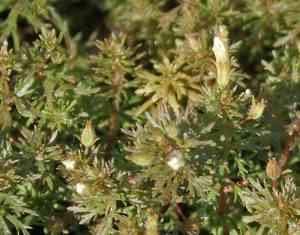
Dwarf ambulia, a rapidly expanding aquatic variety, thrives with consistent trimming of its abundant leaves. Perform pruning in Spring and Summer when its development is robust. Snip the ends of stems to foster a more compact appearance, eliminating elongated or excessively large stems near their origin to avert light obstruction. Prompt trimming improves light access and air movement, leading to more robust, thicker development. Employ sharp, sterilized shears for accurate incisions, minimizing trauma to dwarf ambulia. This upkeep guarantees visual attractiveness and maximizes the available area in the tank.
Advantages of Trimming Dwarf Ambulia
Advantages of Trimming Dwarf Ambulia
Trimming dwarf ambulia promotes more robust development by stimulating fresh growth. It also aids in preserving its desired form and density, enhancing the plant's visual appeal.
Optimal Time for Trimming Dwarf Ambulia
Optimal Time for Trimming Dwarf Ambulia
The best seasons for trimming or cutting dwarf ambulia are Spring and Summer because its growth cycle is most active during these warmer periods. Trimming in these seasons fosters healthy growth and bushiness as the plant can quickly recover and continue to flourish. In Spring, trimming dwarf ambulia helps eliminate any dead or winter-damaged parts and encourages new growth. During Summer, consistent trimming can maintain the plant's desired shape and density, as well as improve light penetration and air circulation within the foliage. This timing also prevents potential shock that could occur if trimming in colder months when the plant's growth is naturally slower, thereby promoting the overall health and aesthetics of dwarf ambulia.
Tools Required for Trimming Dwarf Ambulia
Aquatic Plant Scissors
Long-handled, curved scissors enable precise cutting of dwarf ambulia, allowing gardeners to shape the plant and trim stems just above leaf nodes without disturbing surrounding aquatic life or substrate in an aquarium setup.
Pruning Shears
For dwarf ambulia grown out of water, sharp pruning shears provide quick and clean cuts for thicker stems or to efficiently trim a larger section of the plant while minimizing damage to its structure.
How to Trim Dwarf Ambulia
Sanitize and sharpen tools
Ensure all trimming tools are clean and sharp to make accurate cuts and prevent the spread of disease to dwarf ambulia.
Identify unhealthy or withered parts
Carefully inspect dwarf ambulia to locate all diseased and withered leaves and stems that need removal.
Cut off diseased leaves
Using trimming scissors, snip off diseased and withered leaves at their base without harming healthy sections of dwarf ambulia.
Trim diseased stems
Cut back any diseased stems on dwarf ambulia to a healthy node, ensuring the cut is clean and angled to prevent water accumulation.
Discard trimmed material
Remove all pruned material from the vicinity of dwarf ambulia and dispose of it properly to prevent the spread of any disease.
Common Trimming Errors with Dwarf Ambulia
Excessive trimming
Cutting back too much of dwarf ambulia can hinder its growth, as it requires sufficient leaves for photosynthesis and to maintain health.
Uneven trimming
Trimming dwarf ambulia unevenly can result in an asymmetrical and visually unappealing appearance, as well as inconsistent growth patterns.
Using dull implements
Dull or dirty trimming tools can damage dwarf ambulia's stems, potentially leading to disease entry and poor wound healing.
Neglecting dead sections
Failing to remove dead or dying sections of dwarf ambulia can impede new growth and may lead to disease and pest infestation.
Trimming too early
Trimming dwarf ambulia before it has adequately matured can restrict its ability to establish a strong foundation for growth.
General Trimming Advice for Dwarf Ambulia
Sharp, clean tools
Utilize sharp and clean cutting tools to make precise cuts on dwarf ambulia, which will heal more effectively and minimize disease risk.
Trim for form
Regularly trim dwarf ambulia to encourage a desired shape, and maintain an even density, which promotes light penetration and air circulation throughout the plant.
Cut above nodes
Make trimming cuts just above leaf nodes on dwarf ambulia's stem to encourage new branching and denser growth.
Moderate trimming
Trim approximately one-third of dwarf ambulia's length to maintain health and vigor, avoiding excessive removal which can stress the plant.
Clear debris
After trimming dwarf ambulia, remove any cuttings or debris from the growth area to prevent the spread of pests and diseases.



