How to Prune Pride of India?
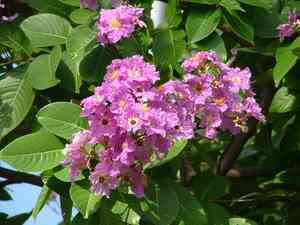
This leafy tree, celebrated for its brilliant blossoms and expansive, shaded top, flourishes with appropriate trimming. For Lagerstroemia indica, robust cutting is recommended to eliminate lifeless or ailing limbs, foster air circulation, and sculpt the upper portion. Perform pruning in late winter or early spring, while the plant is inactive, to stimulate abundant fresh development and boost flowering. Reducing the density of internal branches permits light to enter, thereby enhancing the plant's well-being and floral presentation. Refrain from over-trimming to avert strain on Lagerstroemia indica.
Advantages of Trimming Pride Of India
Advantages of Trimming Pride Of India
Trimming pride of India promotes robust development and maintains its form. Eliminating dead or crowded branches enhances air circulation, lowering disease risk. It also stimulates new growth, ensuring a dense, appealing canopy and potentially boosting blooms.
Optimal Period for Trimming Pride Of India
Optimal Period for Trimming Pride Of India
During late winter, prior to new growth, trimming pride of India helps remove any dead or diseased wood and fosters a strong framework for the upcoming season's growth. Early spring trimming ensures quick wound healing without significant plant stress, and prepares pride of India for abundant summer flowering by allowing more light and air to reach inner branches. Furthermore, pruning in these seasons minimizes the risk of pest and disease infestation, which is higher in warmer weather.
Necessary Tools for Trimming Pride Of India
Hand Pruners
For cutting slender branches and shaping pride of India, hand pruners offer precision, making them ideal for small to medium-sized stems.
Lopping Shears
To trim thicker branches, typically those beyond the capacity of hand pruners, lopping shears provide the necessary leverage and strength for pride of India.
Pruning Saw
For the thickest branches of pride of India that hand pruners and lopping shears cannot manage, a pruning saw with its sharp teeth is essential.
Hedge Shears
If pride of India is cultivated as a hedging plant, hedge shears are best for shaping and maintaining a uniform appearance.
Pole Pruner
When dealing with elevated branches or areas of pride of India that are out of normal reach, a pole pruner allows for safe trimming without needing a ladder.
How to Trim Pride Of India
Sanitize Tools
Before any trimming, sanitize all pruning tools with a solution of one part bleach to nine parts water to prevent disease spread.
Remove Dead Branches
Identify and remove any dead branches from pride of India by cutting them at their origin or back to a strong lateral branch. Use clean, sharp bypass pruners or a handsaw for thicker branches.
Cut Diseased Branches
Cut back any diseased branches on pride of India to healthy wood, at least several inches below the affected section. Disinfect tools after each cut to avoid contaminating healthy parts.
Shape Tree
Trim to maintain the natural shape of pride of India, cutting just above a bud that faces the desired growth direction for the new branch. Remove any rubbing or crossing branches to promote good air circulation.
Clean Up
Gather and dispose of all trimmed material away from pride of India, especially diseased branches, to reduce the risk of disease spreading.
Common Trimming Errors with Pride Of India
Excessive Trimming
Removing too much plant material in a single trimming session, which may stress pride of India and lead to reduced flowering or vigor.
Incorrect Cutting
Making cuts that are either too angled, too close, or too far from the node, which can increase disease risk and hinder healthy regrowth.
Using Dull Tools
Utilizing dull blades can cause jagged cuts that take longer to heal and can introduce pests and diseases to pride of India.
Neglecting Sanitation
Failing to disinfect trimming tools between uses, especially when moving between plants, which might spread pathogens to pride of India.
General Trimming Advice for Pride Of India
Selective Trimming
Focus on removing only dead, diseased, or crossing branches to promote better air circulation and light penetration within pride of India's canopy.
Retain Structure
Preserve the natural shape and structural integrity of pride of India by carefully considering which branches to cut, ensuring the plant remains balanced.
Gradual Rejuvenation
If pride of India requires significant shape correction or size reduction, perform the trimming gradually over several seasons to minimize stress.
Tool Preparation
Prepare sharp, clean cutting tools to make precise, clean cuts that heal quickly, reducing the chance of infection for pride of India.



