How to Prune Costa rican pitahaya?
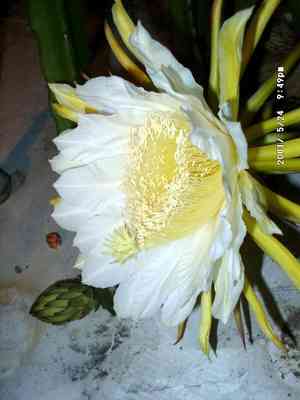
This particular cactus, recognized for its intricate nocturnal blossoms and fruit yield, flourishes with deliberate trimming. For costa rican pitahaya, remove impaired or superfluous growth to stimulate fruit development. The tip can be cut back to foster branching, resulting in a greater abundance of flowers and fruit. The most opportune period for trimming is early spring, right before the commencement of its vigorous growth cycle. Appropriate pruning guarantees sufficient sunlight exposure and air movement, both crucial for the well-being and output of costa rican pitahaya.
Advantages of Trimming Costa Rican Pitahaya
Advantages of Trimming Costa Rican Pitahaya
Trimming costa rican pitahaya promotes a more abundant fruit yield, encourages robust development, and maintains a manageable form, ensuring peak plant health and output.
Optimal Time for Trimming Costa Rican Pitahaya
Optimal Time for Trimming Costa Rican Pitahaya
Trimming in early spring is beneficial for costa rican pitahaya as the plant emerges from its dormant winter phase. This timing allows gardeners to easily spot and remove any dead or damaged branches before new growth begins. Pruning at this stage can help stimulate new growth and enhance air circulation, which is vital for costa rican pitahaya's health. Furthermore, as the summer growth season approaches, costa rican pitahaya will have ample time to recover from pruning cuts before expending energy on flowering and fruiting, leading to a vigorous plant with improved yields.
Tools Required for Trimming Costa Rican Pitahaya
Hand Pruners
Perfect for making precise cuts on costa rican pitahaya's thinner stems and for removing dead or unwanted shoots. Hand pruners offer control and minimize damage to the plant's tissue.
Long-Handled Loppers
Costa rican pitahaya may have some thicker stems that hand pruners cannot manage. Loppers provide the extra leverage needed for cutting through stems up to 2 inches thick.
Pruning Saw
For mature costa rican pitahaya with much thicker branches, a pruning saw is essential to make clean cuts without struggling or tearing the plant's flesh.
Gloves
Costa rican pitahaya's spines can be sharp and potentially irritating to the skin. Wear gloves to protect hands while pruning.
Disinfectant
It is crucial to prevent disease spread. Clean all tools before and after use on costa rican pitahaya with a proper disinfectant. This will help maintain plant health.
How to Trim Costa Rican Pitahaya
Identify
Examine costa rican pitahaya to locate diseased leaves, withered leaves, dead branches, diseased branches, and excessively growing branches. Begin pruning by focusing on these identified areas.
Sanitize
Before making any cuts, sterilize pruning tools with alcohol or a bleach solution to prevent the spread of disease to healthy parts of costa rican pitahaya.
Remove Diseased And Withered
Carefully remove all diseased and withered leaves from costa rican pitahaya, cutting at the base of the leaf stem using precision pruners or scissors.
Prune Dead And Diseased Branches
Cut away dead and diseased branches from costa rican pitahaya by making clean cuts at a slight angle just above a bud, node, or junction that is not affected.
Control Growth
Limit the excessive growth of branches on costa rican pitahaya by trimming back to a desired shape, taking care not to remove more than one-third of any branch to maintain the health and vigor of the plant.
Common Trimming Errors with Costa Rican Pitahaya
Over-Pruning
Removing too much growth can stress costa rican pitahaya and limit its fruiting potential. This plant benefits from conservative cuts, maintaining adequate foliage for photosynthesis.
Incorrect Cut Locations
Cutting too far away from a node can leave an unsightly stub that risks infection. Conversely, cutting too close to the node can damage the growth point.
Neglecting Tool Sanitization
Using unsanitized tools can spread diseases between plants. Clean cuts with disinfected tools help prevent infection.
Ignoring Disease Signs
Pruning without inspecting for diseases may inadvertently spread pathogens. It's crucial to check for unhealthy signs before cutting.
Inadequate Support Post-Pruning
Costa rican pitahaya requires structural support due to its vine-like nature. Failing to provide this after pruning can lead to damage or improper growth patterns.
Pruning Healthy Growth
Removing healthy growth without cause can hinder costa rican pitahaya's development. Prune only what’s necessary to shape the plant or remove unhealthy portions.
General Trimming Advice for Costa Rican Pitahaya
Selective Pruning
Identify and prune only the branches that are overgrown, diseased, or dead to promote healthy growth and airflow without stressing costa rican pitahaya.
Clean Cuts
Make clean, angled cuts near a growth node to encourage proper healing and new branch development.
Sterilization
Sterilize pruning tools before use with a solution of 10% bleach or rubbing alcohol to prevent disease transmission.
Pruning For Structure
Prune costa rican pitahaya to maintain a clear structure, supporting its climbing habit and ensuring proper weight distribution for increased fruit production.
Pruning For Airflow
Thin out dense areas to improve light penetration and airflow, which is crucial for preventing fungal infections and encouraging fruit set.
Post-Pruning Care
Apply a suitable fungicide to cut areas if necessary, to prevent infection, and ensure costa rican pitahaya is receiving appropriate water, nutrients, and light post-pruning.



