How to Prune Menzies's larkspur?
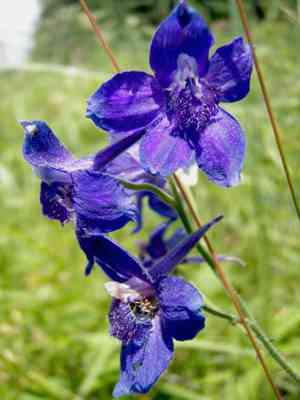
Menzies's larkspur, a perennial featuring lofty spikes of vivid blossoms, flourishes when trimmed in early spring or late winter. Trim faded flower stems down to the basal leaves to stimulate subsequent blooms. Removing spent flowers encourages additional blossoming and hinders self-propagation. Eliminate any impaired or ailing stems to preserve the plant's well-being. Trimming aids menzies's larkspur by fostering fresh development, guaranteeing a dense structure, and boosting floral output in the subsequent period.
Advantages of Trimming Menzies's Larkspur
Advantages of Trimming Menzies's Larkspur
Trimming menzies's larkspur encourages robust development by reallocating energy to existing shoots and aids in maintaining a desired form, preventing excessive growth and fostering a dense, organized look.
Optimal Time for Pruning Menzies's Larkspur
Optimal Time for Pruning Menzies's Larkspur
Cutting or trimming menzies's larkspur in late winter or early spring is recommended as its growth cycle aligns with moderate climates. This timing allows gardeners to remove dead or damaged foliage from the prior season before new growth begins. It helps prevent disease spread and gives the plant a healthy start, ensuring strong growth. Late winter pruning also permits shaping the plant without risking the removal of new buds, which typically form in spring. Furthermore, these seasons avoid autumn, when pruning might stimulate new growth vulnerable to early frost damage.
Tools Required for Pruning Menzies's Larkspur
Hand Pruners
Ideal for making precise cuts on menzies's larkspur, crucial for deadheading individual blooms or snipping small stems.
Gardening Gloves
Protection for the gardener's hands from menzies's larkspur's potentially irritating sap during the trimming process.
Pruning Shears
Perfect for shaping menzies's larkspur, cutting off faded flowers, and maintaining the plant's overall health and appearance.
Long-handled Loppers
Useful for reaching higher sections of menzies's larkspur without strain and for cutting thicker stems that hand pruners cannot manage.
Garden Scissors
Helpful for fine-tuning the shape of menzies's larkspur and trimming small, delicate areas that demand accuracy.
Cleaning Cloth
Essential for wiping tools clean after use to prevent disease transmission between plants, vital for the health of menzies's larkspur.
How to Prune Menzies's Larkspur
Clean Tools
Sanitize all pruning implements before use to prevent disease transmission to menzies's larkspur.
Remove Diseased Leaves
Carefully snip off any diseased leaves from menzies's larkspur, ensuring cuts are made at the base of the leaf stem, and dispose of them properly to avoid contaminating healthy parts.
Remove Withered Leaves
Identify and gently cut away any withered leaves from menzies's larkspur, ensuring cuts are clean and as close as possible to the main stem without causing harm.
Shape Plant
Gently shape menzies's larkspur by selectively removing any overcrowded or poorly positioned leaves to maintain good air circulation and a neat, balanced look.
Clean Up
After pruning, clear away all removed foliage from around menzies's larkspur to reduce the risk of pest and disease accumulation in the debris.
Common Pruning Errors with Menzies's Larkspur
Incorrect Cut Placements
Pruning too far from or too close to the main stem of menzies's larkspur can harm the plant. Cuts made too far can leave unsightly stubs prone to disease, while cuts too close can damage the stem and vital growth nodes.
Excessive Pruning
Removing too much foliage from menzies's larkspur at once can stress the plant, leading to weak growth or even plant death. It's crucial to prune only what's necessary.
Pruning Healthy Growth
Some gardeners mistakenly remove healthy growth in an attempt to shape menzies's larkspur or reduce its size, which can inadvertently reduce flowering and the plant's overall vigor.
Using Dull Tools
Pruning menzies's larkspur with dull tools can result in jagged cuts that make the plant more susceptible to disease and pests.
Neglecting To Clean Tools
Failing to clean tools before and after use can spread diseases and pests from one plant to another, which can be particularly detrimental when working with menzies's larkspur.
Ignoring Plant Structure
Not considering the natural form of menzies's larkspur when pruning can lead to an unnatural appearance and poor flowering since menzies's larkspur has a specific growth pattern that should be maintained.
General Pruning Advice for Menzies's Larkspur
Correct Cut Angles
Make clean cuts at a 45-degree angle just above an outward-facing bud, to direct new growth outward and prevent water accumulation that could lead to disease.
Selective Thinning
Promote airflow and light penetration by selectively removing crowded or crossing branches. This helps maintain the health of menzies's larkspur and encourages better flowering.
Renewal Pruning
For older menzies's larkspur plants, practice renewal pruning by removing a few of the oldest stems at the base to rejuvenate the plant and encourage new growth.
Deadheading
Regularly removing spent flowers of menzies's larkspur can encourage further blooming and prevent the plant from putting energy into seed production.
Sharp Tools
Always use sharp, clean pruning shears or scissors for pruning menzies's larkspur to make precise cuts and minimize damage to the plant.
Gradual Pruning
Prune menzies's larkspur gradually, especially when shaping the plant or controlling its size, to avoid shock and give the plant time to recover between pruning sessions.



