How to Prune Deodar cedar?
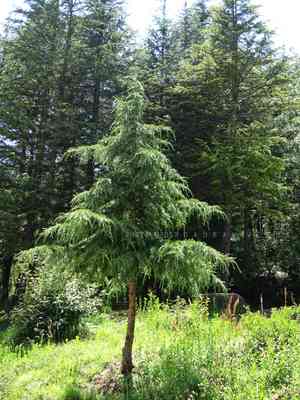
This evergreen conifer, recognized by its pendulous limbs and conical silhouette, thrives with limited trimming. For Cedrus deodara, snip off fresh shoots to uphold its form and eliminate any deceased or compromised timber. Execute pruning during its dormant phase in winter to stimulate vigorous spring development. Avoid extensive cutting to safeguard its inherent structure, concentrating solely on subtle thinning and contouring. Appropriate pruning improves air movement and structural integrity, guaranteeing the tree's well-being and visual charm.
What Are the Benefits of Pruning Deodar Cedar?
What Are the Benefits of Pruning Deodar Cedar?
Trimming deodar cedar promotes robust development and helps maintain its desired form. Regular cutting can prevent excessive growth, ensuring deodar cedar stays healthy and visually appealing in a garden setting.
What Is the Best Time for Pruning Deodar Cedar?
What Is the Best Time for Pruning Deodar Cedar?
Winter is considered the ideal period for pruning deodar cedar because the plant is typically dormant then. Pruning during dormancy minimizes plant stress, lowers the risk of disease spread, and helps prevent sap loss common in active growth. Additionally, the lack of leaves in winter offers better visibility for pruning decisions and shaping. Winter trimming encourages vigorous growth in the subsequent spring and allows deodar cedar to recover from cuts before new growth begins. It also avoids disrupting flowering and fruiting cycles.
What Tools Do I Need to Prune Deodar Cedar?
Hand Pruners
Hand pruners are essential for making clean cuts on small branches and twigs of deodar cedar. They provide precise control, necessary for shaping the tree or removing small deadwood without harming surrounding foliage.
Loppers
For branches that are slightly thicker and beyond the reach of hand pruners, loppers with long handles offer the leverage needed to cut through. They are suitable for trimming lower branches of deodar cedar that may have grown too long.
Pruning Saw
A pruning saw is required for larger branches of deodar cedar that hand pruners and loppers cannot manage. It is designed to cut on the pull stroke, offering more control and efficiency.
Pole Pruner
When dealing with higher branches, a pole pruner allows for limb removal without using a ladder. This enhances gardener safety and ensures that the upper parts of deodar cedar can be effectively pruned.
Hedge Shears
For formal hedges or to shape the outer foliage of deodar cedar, hedge shears will help create straight, neat lines. They are not suitable for larger branches but are perfect for trimming and shaping foliage.
Gloves and Safety Gear
While not a cutting tool, protective gloves and safety gear like goggles are vital during pruning to prevent injuries from sharp tools and falling debris.
How to Prune Deodar Cedar
Step1: Inspect for Dead or Diseased Branches
Examine deodar cedar for any indications of dead branches, diseased wood, or weak growth. This should be done during the dormant season, ideally late winter or early spring, to prevent sap bleeding, which can attract insects and lead to disease.
Step2: Prepare Pruning Tools
Gather the necessary tools for pruning deodar cedar, including sharp bypass pruners, loppers, and a pruning saw. Ensure they are clean and disinfected to prevent the spread of pathogens.
Step3: Remove Dead Branches
Begin by removing dead branches. Cut these branches back to a healthy part of deodar cedar, making the cut just above a lateral branch or bud. For large branches, use the three-cut method: Make a notch on the underside of the branch about 6-12 inches away from the trunk, then cut through the branch from the top about 1-2 inches beyond the notch, and finally, remove the stub by cutting just outside the branch collar.
Step4: Cut Away Diseased Wood
Identify and prune back diseased wood on deodar cedar. Make clean cuts at least several inches below the diseased areas to ensure all infected tissue is removed. Avoid tearing the bark when cutting.
Step5: Prune Weak Growth
Remove weak wood that is thinly attached, tends to grow inward towards deodar cedar, or competes with the main leader for dominance. Pruning these parts will help improve the structure and strength of deodar cedar.
Step6: Shape and Balance Pruning
After pruning dead, diseased, or weak branches, examine deodar cedar for overall shape and balance. Lightly trim any out-of-place branches to maintain a natural, pyramidal shape characteristic of deodar cedar. Avoid heavy top pruning, which can disrupt the growth pattern of deodar cedar.
Step7: Cleanup Pruning Debris
Clean up all debris, including fallen branches and leaves around deodar cedar, to prevent the spread of disease.
Step8: Tool Maintenance Post-Pruning
Once pruning of deodar cedar is complete, take care of your tools by cleaning and sharpening them before storage to ensure they are ready for the next use.
Step9: Monitor Plant Recovery
Monitor deodar cedar for signs of new growth and health status throughout the growing season. Proper aftercare, including watering and fertilizing, can help deodar cedar recover from the pruning process and thrive.
Post-Pruning Care for Deodar Cedar
Post-Pruning Care for Deodar Cedar
Immediately after pruning deodar cedar, ensure clean cuts to prevent disease entry. For optimal recovery, place deodar cedar in an area with adequate but not excessive sunlight. Maintain slight humidity and shield deodar cedar from extreme temperatures. Post-pruning, apply a balanced fertilizer to replenish nutrients and encourage growth. Regularly inspect for signs of stress, such as discolored foliage or sap loss. If symptoms persist, consult a professional for potential disease management.
Common Pruning Mistakes with Deodar Cedar
Excessive Pruning Reduces Plant Health
Over-pruning, which involves removing too much foliage and can severely damage deodar cedar's health and structural integrity.
Dull Tools Cause Disease and Pest Issues
Using dull or unclean pruning tools which can lead to ragged cuts, increasing the risk of disease and pest infestation in deodar cedar.
Unplanned Pruning Harms Natural Form
Pruning without a clear objective, leading to unnecessary cutting or shaping that can detract from deodar cedar's natural form and vigor.
Improper Cutting Damages Cambium Layer
Tearing or stripping bark when cutting, as improper technique can harm deodar cedar's cambium layer and hinder proper healing.
Cuts Near Trunk Risk Improper Healing
Cutting too close to the trunk or parent branch, which can create stubs that may not heal properly and are susceptible to pathogens.
Common Pruning Tips for Deodar Cedar
Sharp Tools for Clean Cuts and Disease Prevention
Always use sharp, clean pruning tools to make clean cuts that deodar cedar can heal from more efficiently, reducing the risk of disease.
Prune for Health: Remove Only Damaged Branches
Prune with purpose, focusing on removing dead, diseased, or damaged branches to improve deodar cedar's overall health and appearance.
Angle Cuts for Natural Shape and Growth
Make cuts at a slight angle, away from the bud, to encourage deodar cedar's natural shape and direct new growth in the desired direction.
Preserve Branch Collar for Faster Healing
Leave the branch collar intact when removing larger branches to promote faster wound healing and prevent decay from entering the trunk of deodar cedar.
Early Formative Pruning Shapes Strong Structure
Conduct any formative pruning during the early years of deodar cedar's growth to establish a strong, well-spaced framework of branches, considering its naturally pyramidal shape.



