How to Prune Capsicum annuum var. conoides?
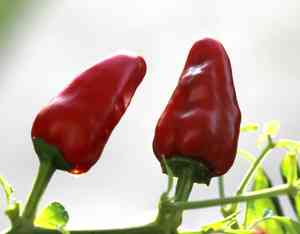
This yearly or brief perennial is celebrated for its produce, frequently utilized in cooking. Efficient trimming for capsicum annuum var. conoides entails eliminating any ailing or compromised foliage and stalks to preserve plant well-being and foster development. Nip off the initial blossoms to promote a more compact specimen. Ideal trimming periods are from mid to late spring and throughout summer, coinciding with the plant's vigorous growth stages. Trimming capsicum annuum var. conoides enhances air movement and sun exposure, resulting in increased harvests and superior fruit characteristics.
Advantages of Trimming Capsicum Annuum Var. Conoides?
Advantages of Trimming Capsicum Annuum Var. Conoides?
Trimming capsicum annuum var. conoides encourages robust development and assists in maintaining its desired form. It ensures energy is channeled towards developing strong branches and abundant harvests, rather than supporting excessive foliage.
Optimal Time for Trimming Capsicum Annuum Var. Conoides?
Optimal Time for Trimming Capsicum Annuum Var. Conoides?
The ideal pruning periods for capsicum annuum var. conoides align with active growth phases and occur before fruit development. Pruning in mid-spring allows for the removal of any frost-damaged branches and fosters a healthier start to the season's growth. Late spring pruning is beneficial as capsicum annuum var. conoides enters a rapid growth stage, and any corrective shaping can guide productive growth while minimizing plant stress. During summer, continuous trimming helps manage the size of capsicum annuum var. conoides, enhances air circulation, and supports improved fruit production. Proper timing ensures the plant has sufficient time to recover and generate new growth, which is especially crucial for fruit-bearing species like capsicum annuum var. conoides. It prevents cutting the plant during flowering or fruit set, which could reduce yield. Pruning outside these optimal seasons may lead to poor plant health and decreased fruit production.
Tools Required for Pruning Capsicum Annuum Var. Conoides?
Bypass Pruners
Capsicum annuum var. conoides is a pepper plant with somewhat fragile stems that necessitates precise cuts to prevent damage. Bypass pruners operate like scissors, creating clean cuts and minimizing harm to the plant's tissues.
Pruning Shears
For thinning branches and removing smaller, non-woody growth on capsicum annuum var. conoides, pruning shears offer the necessary control and accuracy.
Gloves
Handling capsicum annuum var. conoides may lead to exposure to capsaicin, which can irritate the skin. Gloves provide protection against this while offering a better grip on pruning tools.
Garden Scissors
When precisely shaping capsicum annuum var. conoides or selectively removing leaves, garden scissors can offer more accuracy than pruners.
Tool Disinfectant
Capsicum annuum var. conoides can be vulnerable to disease transmission through uncleaned cuts. Disinfectant should be used to clean tools before and after pruning to minimize this risk.
How to Prune Capsicum Annuum Var. Conoides
Sanitize Tools
Before beginning the pruning process, ensure all pruning tools are clean and disinfected to prevent the spread of disease to capsicum annuum var. conoides.
Identify Diseased Foliage
Carefully inspect capsicum annuum var. conoides for any diseased leaves, identifiable by discoloration, spots, or deformities. Diseased foliage must be removed to maintain the plant's health.
Remove Diseased Foliage
Using sharp pruning shears, snip off diseased leaves at their base where they connect to the stem. Make clean cuts without harming nearby healthy parts of capsicum annuum var. conoides.
Identify Withered Foliage
Locate withered or dead leaves, which are typically dry, brown, and brittle to the touch. These leaves no longer benefit capsicum annuum var. conoides and should be pruned.
Prune Withered Foliage
Trim withered leaves by cutting them at the stem's base, just as with diseased leaves. Ensure not to cut into the green, healthy tissue to avoid stressing capsicum annuum var. conoides.
Common Pruning Errors with Capsicum Annuum Var. Conoides
Excessive Pruning
Pruning too much can stress capsicum annuum var. conoides, leading to reduced vigor and fewer fruits. Remove only the necessary parts to shape the plant or stimulate growth.
Incorrect Tool Usage
Using dull or dirty tools can damage capsicum annuum var. conoides by creating jagged cuts that are more susceptible to disease. Always use clean, sharp tools.
Neglecting Plant Structure
Without considering capsicum annuum var. conoides's natural growth habit, gardeners might mistakenly prune important flowering sites or growth nodes, negatively impacting yield.
Ignoring Diseased Areas
Failing to promptly remove diseased or damaged limbs can allow the problem to spread throughout capsicum annuum var. conoides, affecting overall health.
Unintended Topping
Cutting the top off of capsicum annuum var. conoides without a clear purpose can lead to poor fruiting and a misshapen plant structure.
General Pruning Advice for Capsicum Annuum Var. Conoides
Selective Thinning
Identify and remove specific branches to open up the canopy of capsicum annuum var. conoides for improved light penetration and air circulation, promoting healthier growth.
Focus On Dead Or Weak Limbs
Regularly trim away dead, diseased, or weak stems to direct capsicum annuum var. conoides's energy towards producing robust and fruitful growth.
Pruning For Shape
Lightly clip capsicum annuum var. conoides to maintain the desired shape and size, which can also stimulate new growth where cuts are made, but be careful to preserve flowering sites.
Sucker Removal
Pinch or snip off suckersâgrowth from the base or the roots of capsicum annuum var. conoidesâto prevent the plant from becoming too bushy and to concentrate resources on fruit production.
Clean Cuts
Make clean, angled cuts on capsicum annuum var. conoides, just above a leaf node or branching point, to promote fast healing and minimize the risk of disease.



