How to Prune Schreber's watershield?
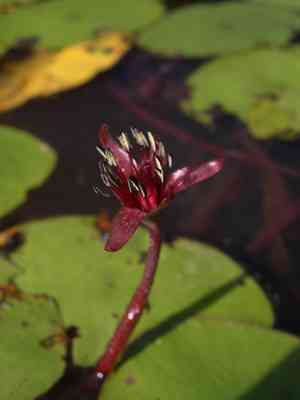
Schreber's watershield, a perennial aquatic plant that floats, features shiny foliage and stems that are underwater. To preserve its appearance and well-being, pruning entails eliminating faded blossoms and any leaves that are dead or turning yellow. Perform minor trimming from spring through autumn as new shoots emerge. Trimming in the early spring, prior to the growth period, can avert excessive development. Reducing the foliage stimulates new growth and stops the buildup of debris, thereby enhancing the water's condition. Always employ sanitized, sharp implements to lessen the impact on schreber's watershield.
Advantages of Trimming Schreber's Watershield
Advantages of Trimming Schreber's Watershield
Trimming schreber's watershield promotes robust development and assists in preserving its desired form within aquatic environments, ensuring peak health and visual appeal.
Optimal Period for Trimming Schreber's Watershield
Optimal Period for Trimming Schreber's Watershield
Pruning schreber's watershield in early spring is ideal as the plant remains dormant, and removing dead or damaged parts won't stress it, potentially stimulating new growth. Late summer pruning is beneficial, allowing schreber's watershield to recover before winter, avoiding new growth damage from early frosts. Early fall is also suitable for thinning summer overgrowth, ensuring schreber's watershield maintains good health and shape through dormancy. These timings prevent disruption to the plant's natural cycle and flowering, enhancing vigor and aesthetic quality.
Necessary Tools for Trimming Schreber's Watershield
Long-Handled Pond Shears
For schreber's watershield, which lives in water, long-handled pond shears enable gardeners to trim the plant without entering the water. These shears offer extended reach and precise cutting control, perfect for reducing overgrown sections of schreber's watershield.
Pond Gripper
Schreber's watershield may require the removal of decaying material or control of its spread in a water body. A pond gripper can reach into the water to extract unwanted plant matter without excessive disturbance, which is good for maintaining schreber's watershield's habitat.
Pruning Clippers
For cutting thicker stems of schreber's watershield that might extend above the water surface, sharp pruning clippers are crucial. They create clean cuts that encourage healthy regrowth.
Skimming Net
Not a conventional pruning tool, but vital for schreber's watershield maintenance. A fine-mesh skimming net can collect and remove any floating debris or detached foliage after pruning, keeping the environment clean and preventing decay.
How to Trim Schreber's Watershield
Inspect
Examine schreber's watershield for diseased, withered, or dead leaves and branches that require removal.
Sterilize
Before trimming schreber's watershield, disinfect pruning tools with rubbing alcohol or a bleach solution to prevent disease transmission.
Remove Leaves
Carefully detach diseased and withered leaves from schreber's watershield using hand-held pruning shears, ensuring a clean cut to avoid further stress.
Trim Branches
Cut dead and diseased branches from schreber's watershield back to the point of healthy growth, making angled cuts to prevent damage to the adjacent stem tissue.
Discard
Properly dispose of all removed material from schreber's watershield, away from healthy plants, to prevent disease spread.
Common Trimming Errors with Schreber's Watershield
Excessive Trimming
Removing too much foliage from schreber's watershield can stress the plant, impede its growth, and increase its susceptibility to diseases.
Incorrect cutting method
Using dull or unclean tools can harm schreber's watershield's delicate stems, leading to a higher risk of infection.
Ignoring dead matter
Failing to regularly remove dead or decaying material can hinder schreber's watershield's growth and negatively impact water quality if it's an aquatic plant.
Trimming active growth
Cutting schreber's watershield during periods of active growth can prevent the plant from blooming and reaching its full aesthetic potential.
Disregarding plant structure
Not considering the natural shape and structure of schreber's watershield during trimming may result in an unnatural appearance and poor plant health.
General Trimming Advice for Schreber's Watershield
Utilize sharp implements
Employ sharp and clean pruning shears to make precise cuts on schreber's watershield, which aids in rapid healing and reduces disease risk.
Regular examination
Periodically inspect schreber's watershield for any indications of dead or dying tissue, and remove these parts promptly to maintain plant vitality.
Correct cut placement
When trimming schreber's watershield, ensure cuts are made just above a node or a set of leaves to encourage proper new growth.
Moderation
Adopt a conservative approach to trimming schreber's watershield, focusing on minimal and strategic cuts that maintain or enhance the plant's natural form.
Post-trimming cleanup
After trimming schreber's watershield, promptly remove all cuttings from the water or surrounding area to prevent decomposition and potential water quality issues.



