How to Prune Tree of heaven?
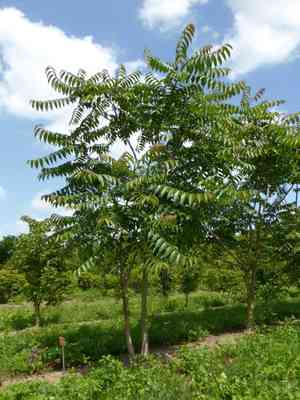
Known for its swift development and hardiness, Ailanthus altissima thrives with consistent trimming to control its dimensions and curb its invasive tendencies. Perform pruning in late winter or early spring prior to foliage emergence, concentrating on excising deceased or compromised limbs, reducing crowded sections, and sculpting the canopy. Key points involve refraining from excessive cutting, as this can trigger vigorous suckering. Trimming can boost air circulation and light exposure, thereby improving the plant's vitality and aesthetic appeal while limiting its proliferation.
What Are the Benefits of Pruning Tree Of Heaven?
What Are the Benefits of Pruning Tree Of Heaven?
Trimming tree of heaven promotes vigorous development and maintains its desired shape. It helps revitalize the plant by eliminating weak or dead limbs, fostering a robust structure that resists damage and illness.
What Is the Best Time for Pruning Tree Of Heaven?
What Is the Best Time for Pruning Tree Of Heaven?
During late winter and early spring, tree of heaven is typically dormant, having shed its leaves in autumn and not yet begun its active growth phase. This timing minimizes stress and allows for better wound closure before new growth starts. Additionally, the plant's structure is more visible without foliage, enabling more precise cuts. Pruning before spring growth also helps avoid the sap flow season, which can lead to excessive bleeding and potential weakening of tree of heaven. It further prevents the potential spread of diseases, which are more prevalent in warmer, wetter months. Thus, late winter to early spring pruning aligns with tree of heaven's dormancy and pre-growth phases, contributing to its health and management.
What Tools Do I Need to Prune Tree Of Heaven?
Hand pruners
Hand pruners are perfect for trimming smaller branches and shoots of tree of heaven. They enable precise cuts, which encourages healthy regrowth and lowers the risk of disease.
Loppers
Loppers offer the extra leverage needed to cut through tree of heaven's thicker branches, typically up to 1 1/2 inches in diameter. Their long handles make reaching higher branches easier.
Pruning saw
A pruning saw is essential for cutting branches exceeding 1 1/2 inches in diameter. Tree of heaven can have sturdy, woody growth that demands the sharper, larger teeth of a saw.
Chainsaw
For mature tree of heaven trees with very thick branches or trunks, a chainsaw might be the most efficient tool. However, chainsaws should only be operated by trained individuals.
Pole pruner
A pole pruner combines a saw and a lopper on an extendable pole, making it suitable for cutting out-of-reach branches without a ladder, which is advantageous for taller specimens of tree of heaven.
Personal Protective Equipment
Safety goggles, gloves, and durable clothing are crucial when pruning tree of heaven to guard against potential injury from falling branches and contact with the tree’s sap, which can be an irritant.
How to Prune Tree Of Heaven
Step1: Inspecting and Identifying Plant Damage
Thoroughly inspect tree of heaven to identify all dead, diseased, and broken branches. Look for limbs showing signs of decay, discoloration, wounds, or those no longer producing foliage.
Step2: Selection of Appropriate Pruning Tools
Choose the correct pruning tools based on the size of the branches to be removed. Use sharp, clean pruning shears for small branches, loppers for medium branches, and a saw for large limbs.
Step3: Sanitization of Pruning Equipment
Sanitize all pruning tools with a solution of 1 part bleach to 9 parts water to prevent the spread of disease from infected parts of tree of heaven to healthy ones.
Step4: Removal of Dead Branches
Begin pruning by removing dead wood, cutting where the dead branch meets healthy wood. Make the cut just outside the branch collar to promote proper healing.
Step5: Cutting Back Diseased Limbs
Remove any diseased limbs by cutting them back to healthy tissue, ensuring the cut is made well beyond the affected area to prevent disease spread.
Step6: Pruning of Broken Branches
Prune broken branches back to the nearest lateral branch or bud, making a clean, angled cut to discourage water accumulation and facilitate healing.
Step7: Structural Thinning for Light and Air
Assess the remaining branches for structure and balance. Thin out any crowded areas to increase light penetration and air circulation, which will contribute to tree of heaven's overall health.
Step8: Disposal of Pruning Debris
After making all necessary cuts, clear away all pruning debris from the base of tree of heaven, as it can harbor pests and diseases that may re-infect the tree.
Step9: Monitoring Post-Pruning Health
Monitor tree of heaven regularly after pruning for signs of stress, disease, or insect infestation, addressing any issues promptly to maintain the tree's health.
Step10: Moderation in Pruning Practices
Avoid excessive pruning in any one season, as tree of heaven can produce vigorous sucker growth in response to over-pruning. Limit trimming to what is necessary for the health and safety of the tree.
Post-Pruning Care for Tree Of Heaven
Post-Pruning Care for Tree Of Heaven
Immediately after pruning, water tree of heaven thoroughly to minimize stress. Ensure the pruned area is exposed to moderate, indirect sunlight to facilitate healing, avoiding extreme temperatures or high humidity which may cause stress. Apply a balanced, slow-release fertilizer to support new growth, but skip high nitrogen concentrations to prevent weak, excessive sprouting. Regularly inspect the wounds for signs of disease or pests, treating promptly with appropriate horticultural methods if detected.
Common Pruning Mistakes with Tree Of Heaven
Unclean Pruning Equipment Disease Spread
Pruning tree of heaven without proper cleaning and sterilization of tools may spread diseases.
Improper Cutting Causes Infection Risk
Cutting into the trunk or main branches of tree of heaven can create large wounds that heal slowly and are prone to infection.
Over-pruning Leads to Plant Shock
Removing too much foliage at once can shock tree of heaven, potentially leading to growth issues or increased vulnerability to pests.
Common Pruning Tips for Tree Of Heaven
Use Sharp, Clean Shears for Branches
Use sharp, clean pruning shears specifically suited for the thickness of tree of heaven's branches to make clean cuts.
Remove Only Dead or Diseased Branches
Target the removal of dead, diseased, or intersecting branches to maintain tree of heaven's health and shape.
Selective Thinning for Healthier Plants
Carry out selective thinning to increase light penetration and air circulation, which benefits tree of heaven's overall health.



