How to Propagate Narrow leaf zinnia?
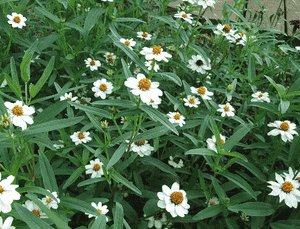
The most effective method for propagating narrow leaf zinnia involves planting seeds in the springtime. This procedure is quite straightforward, and indicators of successful propagation encompass both germination and the appearance of seedlings. No further advice on propagation is necessary for this particular plant.
What Is the Best Time To Propagate Narrow Leaf Zinnia?
Propagation Type
Seeding
Propagation Season
Spring
What Tools Are Used in Narrow Leaf Zinnia Propagation?
Seed trays
Seed trays are shallow containers with individual compartments for seeds, allowing for organized planting and easy transfer of young plants. They are perfect for narrow leaf zinnia, as the sections prevent root tangling, promoting healthier development.
Sterile potting mix
A high-quality, sterile potting mix offers narrow leaf zinnia seedlings a nutrient-rich, disease-free environment, crucial for their delicate initial growth phase. The mix also ensures proper drainage and aeration, vital for narrow leaf zinnia root health.
Misting bottle
A misting bottle gently waters narrow leaf zinnia seeds without disturbing the soil or washing away small seeds, ensuring uniform moisture distribution which is essential for successful germination.
Clear plastic dome or cover
A clear plastic dome or cover fits over the seed tray, creating a greenhouse-like environment that maintains high humidity and stable temperatures, both of which are beneficial for narrow leaf zinnia seed germination.
Grow lights
Grow lights provide a consistent light source, ensuring that narrow leaf zinnia seedlings receive the light intensity and spectrum needed for photosynthesis, especially in areas with insufficient natural sunlight.
Heating mat
A heating mat gently warms the soil, encouraging faster and more uniform narrow leaf zinnia seed germination, particularly useful in cooler climates or during seasons with lower ambient temperatures.
Dibber or seed dibble
A dibber or seed dibble is used to create uniform holes in the potting mix for narrow leaf zinnia seeds. This tool ensures that seeds are planted at the correct depth, which is crucial for proper germination and initial root development.
Fine mesh sieve
A fine mesh sieve is used to lightly dust the surface of sown narrow leaf zinnia seeds with a thin layer of potting mix. This helps to cover the seeds adequately without burying them too deeply, aiding in optimal germination conditions.
How to Propagate Narrow Leaf Zinnia?
Propagation Type
Seeding
Difficulty Level
Easy
How to Care for Your Newly Propagated Narrow Leaf Zinnia?
How to Care for Your Newly Propagated Narrow Leaf Zinnia?
After transplanting narrow leaf zinnia, water the plants regularly, especially during dry periods, to keep the soil consistently moist. Provide full sunlight and well-drained soil to ensure healthy growth. Fertilize with a balanced fertilizer every 4-6 weeks. Remove spent flowers to encourage continuous blooming. Monitor for pests such as aphids and caterpillars, and treat with appropriate methods if necessary. Aim to provide good air circulation to prevent powdery mildew.
Common Mistakes to Avoid When Propagating Narrow Leaf Zinnia
Overwatering
Excessive moisture around narrow leaf zinnia seeds or cuttings can lead to fungal infections or root rot, significantly decreasing the chances of successful propagation.
Deep planting
Sowing narrow leaf zinnia seeds too deeply can prevent them from receiving adequate light for germination, potentially resulting in failed propagation.
Ignoring soil mix
Using an inappropriate soil mix can impair narrow leaf zinnia seedling development. Soil that is too dense or not well-draining can cause waterlogging and root issues.
Neglecting initial care
Failure to provide consistent care during the early stages of narrow leaf zinnia's growth, like keeping the soil moist and providing sufficient light, can lead to weak or stunted plants.
Overcrowding
Planting narrow leaf zinnia seeds too close together can result in competition for light, space, and nutrients, hindering growth and leading to underdeveloped plants.
Tips For Propagating Narrow Leaf Zinnia
Adequate moisture
Maintain evenly moist soil for narrow leaf zinnia without overwatering. This ensures the seeds have the right conditions for germination without the risk of fungus or rot.
Seed depth
Sow narrow leaf zinnia seeds at a shallow depth, as they require light to germinate effectively. Covering them with a thin layer of soil or vermiculite can aid in successful propagation.
Soil composition
Use a well-draining, light soil mix for narrow leaf zinnia propagation to encourage healthy root development and prevent waterlogging.
Consistent care
Regularly monitor narrow leaf zinnia seedlings for moisture levels, light availability, and temperature, adjusting care as necessary to promote robust growth.
Spacing
Ensure narrow leaf zinnia seeds are spread out evenly to avoid overcrowding. Proper spacing allows each seedling adequate access to nutrients and reduces competition.



