How to Propagate Laurustinus?
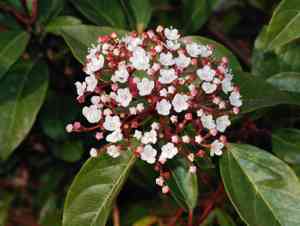
The most suitable period for propagating laurustinus is during the spring and summer months, predominantly by utilizing cuttings. Its reproduction process is quite straightforward, with indicators of success being the emergence of fresh foliage. Ensure consistent humidity and warmth for the best results.
Optimal Time for Laurustinus Propagation
Propagation Method
Cutting
Propagation Period
Spring, Summer
Tools Required for Laurustinus Propagation
Sharp Pruning Shears
Crucial for taking laurustinus cuttings, sharp shears create clean cuts that heal quickly, reducing damage and disease risk. They are used to snip stems, ideally during dormancy.
Rooting Hormone
This substance stimulates root growth on laurustinus cuttings. A rooting hormone powder or gel applied to the stem's cut end accelerates root development and boosts propagation success.
Sterile Potting Mix
A sterile potting mix prevents contamination by harmful pathogens and fungi that could damage new laurustinus cuttings. The mix should be well-draining and light to support root growth.
Propagation Tray
This tray is vital for organizing laurustinus cuttings in a controlled setting. They often feature domes to maintain high humidity around cuttings, essential for successful rooting and initial growth.
Heat Mat
For laurustinus cuttings, a heat mat provides a stable, ideal soil temperature to encourage better and faster root development. This is particularly useful in cooler climates or seasons.
Watering Can with a Fine Rose
Gentle watering is essential for maintaining moisture without disturbing laurustinus cuttings or causing soil erosion. The fine rose attachment ensures a light mist, providing adequate water while protecting young plants.
Disinfectant for tools
Disinfecting pruning shears and other propagation tools before use reduces the risk of disease transfer to laurustinus. This step is important for ensuring the overall success and health of new plants.
How to Propagate Laurustinus?
Propagation Method
Cutting
Difficulty Level
Moderately Challenging
Caring for Your Newly Propagated Laurustinus
Caring for Your Newly Propagated Laurustinus
After successful laurustinus propagation, place young plants in a location with partial to full sunlight. Water to keep soil consistently moist, but avoid saturation. Fertilize lightly in spring and prune as needed to maintain shape. Protect from extreme cold and apply mulch to insulate the root system. Monitor for pests and treat appropriately.
Common Errors to Avoid When Propagating Laurustinus
Overwatering cuttings
Excessive watering of laurustinus cuttings can lead to root rot, which is detrimental to root development. Saturated soil conditions can also foster fungal growth that harms delicate new roots.
Using non-sterile equipment
When propagating laurustinus, using unsterilized tools can introduce pathogens to cuttings or parent plant wounds, potentially causing infections that hinder growth or even kill the plant.
Taking cuttings with poor nodal integrity
Laurustinus cuttings lacking a healthy node often fail to sprout new roots or grow adequately because nodes are critical points for new growth.
Neglecting humidity for cuttings
Ignoring the need for a high humidity environment for laurustinus cuttings can cause them to dry out before rooting, as they often require a moist environment to maintain tissue turgidity.
Tips For Propagating Laurustinus
Select healthy parent plants
Choosing a robust and disease-free parent plant for cuttings ensures a higher chance of successful rooting and plant development for laurustinus.
Proper cutting technique
Making a clean cut just below a node at a 45-degree angle increases the surface area for root development and promotes healthier root systems in laurustinus cuttings.
Use rooting hormones
Applying rooting hormones to the cut end of laurustinus cuttings can significantly enhance root formation and improve the overall success rate of propagation.
Maintain consistent moisture
Keeping the soil consistently moist (but not waterlogged) supports the rooting process for laurustinus, as consistent moisture is key for new root development without the risks of overwatering.



