How to Propagate Large-flowered bellwort?
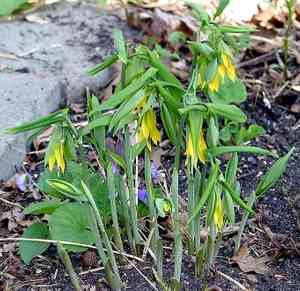
Large-flowered bellwort flourishes most effectively when multiplied via separation. This technique is well-suited because it ensures minimal disruption to the root structure. For successful multiplication, carefully separate the roots when the plant is not blooming, which encourages more robust root growth. Ensure that every segment possesses a part of both roots and shoots to facilitate optimal establishment in its new environment.
Optimal Period for Propagating Large-flowered Bellwort
Propagation Method
Division
Propagation Period
Spring,Autumn
Tools Required for Large-flowered Bellwort Propagation
Garden Spade or Fork
These implements are vital for excavating around the large-flowered bellwort clump to gently lift it from the earth without harming its root structure. The spade or fork should possess a robust handle and a keen edge to effectively penetrate the surrounding soil and separate the plant mass for division. This is crucial as large-flowered bellwort has delicate components that require careful handling to prevent stress and injury.
Pruning Shears
Pruning shears are utilized to trim any impaired or overly long roots and to remove any deceased or diseased foliage prior to replanting. This aids in preserving the health of large-flowered bellwort by inhibiting the spread of potential infections and fostering more vigorous growth after transplantation.
Root Knife
A root knife is especially advantageous for cleanly severing the dense root masses of large-flowered bellwort. It enables precise cuts with minimal harm to the healthy portions of the root system, which is essential for successful re-establishment in the new planting site. The specialized nature of the root knife in managing root divisions assists in the careful separation of root material, ensuring each new section has sufficient roots to sustain growth.
Watering Can or Hose with Gentle Spray Setting
Post-division irrigation is crucial for large-flowered bellwort to recuperate and establish well in its new environment. A watering can or hose with a soft spray setting is advised to adequately moisten the soil without causing erosion or dislodging the newly planted divisions. This gentle watering helps settle the soil around the roots, minimizing air pockets, and supplying the necessary moisture to stimulate root development.
How to Propagate Large-flowered Bellwort?
Propagation Type
Easy
How to Nurture Your Newly Propagated Large-flowered Bellwort?
How to Nurture Your Newly Propagated Large-flowered Bellwort?
Following propagation, keep the soil consistently damp but not waterlogged, as large-flowered bellwort does not tolerate dry conditions well. Apply mulch around the plants with organic material to help retain soil moisture and suppress weeds. Shield from direct sunlight and ensure the area remains shaded. Monitor for indications of pests or disease, and address any issues promptly to maintain plant vitality.
Common Errors to Avoid When Propagating Large-flowered Bellwort
Over-watering
Excessive watering of large-flowered bellwort can lead to root rot, which impedes the plant's capacity to absorb vital nutrients and water for growth and survival.
Inadequate soil mixture
Employing a soil blend that lacks proper drainage can cause water to accumulate around large-flowered bellwort's roots, making them vulnerable to fungal diseases and root decay.
Improper division
Incorrectly separating the root system of large-flowered bellwort can harm the plant's roots, diminishing its ability to establish and flourish when replanted.
Excessive handling
Overly handling or disturbing the root zone during propagation can stress large-flowered bellwort, resulting in reduced vigor and potentially hindering the plant's growth and development.
Tips For Propagating Large-flowered Bellwort
Use sharp tools
When dividing large-flowered bellwort, always use clean, sharp implements to make precise cuts. This minimizes damage to the roots and lessens the risk of introducing pathogens.
Ensure adequate moisture
While over-watering is detrimental, maintaining a balanced moisture level is crucial. The soil should be damp but not saturated to support healthy root growth without causing rot.
Select appropriate soil
Utilize a well-draining soil mix rich in organic matter to promote healthy root development and sufficient drainage, which is essential for large-flowered bellwort's growth.
Minimize root disturbance
When propagating large-flowered bellwort through division, handle the root ball with care to prevent excessive disruption. This helps the plant to recover and grow more efficiently post-transplant.



