How to Propagate Spanish moss?
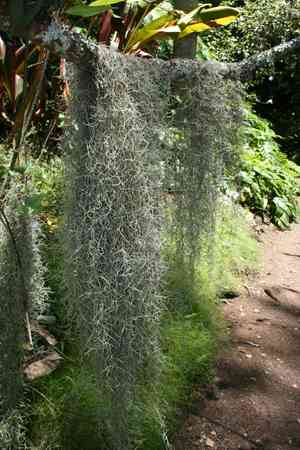
Spanish moss primarily reproduces via separation, ideally performed during the Spring and Autumn periods. This method is moderately straightforward, with successful proliferation indicated by fresh development and more vibrant, robust leaves. Ensure steady hydration and diffused light for peak outcomes.
Optimal Time for Spanish Moss Propagation
Propagation Method
Separation
Propagation Period
Spring, Autumn
Tools for Spanish Moss Propagation
Sharp Scissors or Pruning Shears
For the division technique, sharp scissors or pruning shears effectively cut through the slender, fibrous stems of spanish moss without significant harm. Clean cuts encourage rapid healing and lower infection risk.
Sterilizing Agent (Isopropyl Alcohol or Bleach Solution)
Prior to propagation, sterilizing cutting tools is vital to minimize disease transfer to spanish moss. A sterilizing agent ensures elimination of any pathogens on scissors or shears.
Misting Bottle with Water
Post-division, lightly misting newly propagated spanish moss is beneficial to maintain the humidity levels necessary for proper development. This tool allows for gentle hydration without excessive watering.
Gloves
Handling spanish moss can sometimes cause skin irritation for sensitive individuals. Gloves offer skin protection during the propagation process.
Hanging Containers or Mesh
Given spanish moss's epiphytic nature, using hanging containers or mesh provides ample air circulation around the plant, crucial for its growth and preventing rot in a propagating environment.
Watering Can with a Long Spout
Though not a primary tool for the actual propagation, a watering can with a long spout is useful for post-propagation spanish moss care, offering controlled watering that mimics natural rainfall in its habitat.
How to Propagate Spanish Moss?
Propagation Type
Division
Difficulty Level
Easy
Caring for Your Newly Propagated Spanish Moss
Caring for Your Newly Propagated Spanish Moss
Once spanish moss is firmly attached and beginning to establish, ensure it receives proper care. Maintain high humidity through regular misting, and provide bright, indirect light. Avoid saturating spanish moss, as it is prone to rot in overly wet conditions. Spanish moss is quite drought-tolerant, so frequent watering isn't necessary. Fertilize sparingly once a month with a diluted, balanced fertilizer, ideally during the growing season. Monitor for pests and diseases, addressing any issues promptly to prevent spread.
Common Errors to Avoid When Propagating Spanish Moss
Overwatering
Excessive watering of spanish moss can lead to rot, as it's an epiphytic plant requiring minimal water. Too much moisture can harm the plant, which is adapted to absorb water and nutrients from the air through its leaves.
Insufficient air flow
Propagating spanish moss in an area with poor air circulation can result in moisture buildup and fungal infections. Adequate air flow is essential to mimic its natural growing conditions and prevent disease.
Incorrect substrate use
Spanish moss does not need soil; planting it in the ground or a soil-based substrate can cause it to rot. It naturally hangs from trees and absorbs nutrients from the environment, not from soil.
Overcrowding
Planting spanish moss too densely can restrict air flow and light, both vital for its growth and health. Overcrowding can lead to competition for resources and an increased risk of disease.
Neglecting humidity levels
Failure to maintain a sufficiently high humidity environment can lead to dehydration of spanish moss, as it relies on atmospheric moisture. Dry air can stress the plant and hinder propagation success.
Tips For Propagating Spanish Moss
Adequate lighting
Placing spanish moss in bright, indirect light supports healthy growth. Direct sunlight can be too intense, while insufficient light can diminish the plant's vigor.
Mist appropriately
Regularly misting spanish moss with water can replicate its preferred natural humidity, but avoid overdoing it to prevent rot. Light, frequent mists will suffice to keep it hydrated.
Optimal air circulation
Ensuring good air flow around spanish moss is crucial for preventing moisture accumulation and fungal diseases. Hang or mount spanish moss so air can easily circulate around it.
Moderate clump sizes
When propagating spanish moss, create moderate clump sizes to allow each strand sufficient access to light and air, helping to maintain plant health.
Use suitable supports
Spanish moss should be propagated on appropriate supports that mimic its natural habitat, such as tree bark or hanging structures, to promote healthy growth.



