How to Propagate Eastern skunk cabbage?
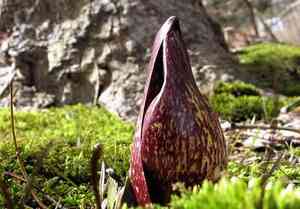
The Eastern skunk cabbage, or Skunk cabbage, is most effectively multiplied by dividing its root system during the prime periods of spring and fall. This propagation method presents a moderate level of difficulty, with indicators of success being the emergence of fresh foliage and robust root development. To achieve peak growth, provide appropriate care and a conducive environment.
What Is the Best Time To Propagate Eastern Skunk Cabbage?
Propagation Type
Separation
Propagation Season
Spring, Autumn
What Tools Are Used in Eastern Skunk Cabbage Propagation?
Garden Trowel
A garden trowel is crucial for excavating around the base of eastern skunk cabbage to carefully extract the plant from the soil. Its curved blade allows gardeners to cut through the earth with minimal disruption to the root system. The trowel's ergonomic handle aids in applying precise force when digging up the plant.
Root Pruning Shears
Root pruning shears are essential for making clean cuts through the thick rhizomes of eastern skunk cabbage during the division process. Their sharp, accurate blades enable selective cutting, which causes less stress to the plant and encourages quicker recovery and new growth.
Gardening Gloves
Gardening gloves shield the propagator's hands from the pungent-smelling fluid that eastern skunk cabbage releases when touched or damaged. They also offer improved grip and dexterity when separating the rhizomes.
Watering Can with a Fine Rose
After division, thoroughly watering eastern skunk cabbage helps to settle the soil and remove air pockets. A watering can equipped with a fine rose attachment gently disperses water, ensuring that the newly planted divisions remain undisturbed.
Sterilizing Solution
Employing a sterilizing solution to clean tools before and after propagation is vital for preventing the transmission of diseases between plants. Eastern skunk cabbage's vulnerability to pathogens is reduced when clean tools are used for each cut.
Plant Labels and Marker
Plant labels and markers are necessary for documenting the date of division and any other pertinent details. Labeling the propagated eastern skunk cabbage plants assists in monitoring their growth progress and any future care requirements.
How to Propagate Eastern Skunk Cabbage?
Propagation Type
Division
Difficulty Level
Simple
How to Care for Your Newly Propagated Eastern Skunk Cabbage?
How to Care for Your Newly Propagated Eastern Skunk Cabbage?
To ensure the successful establishment and development of eastern skunk cabbage following propagation, maintain consistently moist but not waterlogged soil. Mulching helps retain soil moisture and minimize temperature fluctuations. Typically, no additional fertilization is needed, as eastern skunk cabbage is adapted to low-nutrient environments. Monitor for signs of stress or disease and address them as required. The native habitat conditions of eastern skunk cabbage should be replicated as closely as possible for optimal growth. Regarding location, eastern skunk cabbage should not be moved to an environment significantly different from where it was initially propagated.
Common Mistakes to Avoid When Propagating Eastern Skunk Cabbage
Ignoring humidity needs
Failing to maintain high humidity for eastern skunk cabbage can lead to drying out and poor root development, as these plants thrive in wetlands and damp conditions.
Poor water quality
Using chlorinated or contaminated water can harm the delicate roots of eastern skunk cabbage, leading to suboptimal growth or even plant demise.
Overhandling seeds
Excessive handling or disturbance of eastern skunk cabbage's seeds can damage the fragile embryonic tissues, lowering germination rates.
Inadequate light
Providing too much direct sunlight can stress eastern skunk cabbage, as they naturally grow in shaded conditions, potentially causing leaf scorch.
Tips For Propagating Eastern Skunk Cabbage
Wet substrate
Utilize a consistently moist planting medium for eastern skunk cabbage, which mimics their natural swampy habitat, to encourage healthy root development.
Acidic ph
Ensure the planting medium has an acidic pH, resembling the soil conditions of eastern skunk cabbage's native environment for optimal growth.
Gentle seed sowing
Sow eastern skunk cabbage's seeds with care and minimal disturbance to safeguard the integrity of the seed and promote successful germination.
Filtered light
Provide eastern skunk cabbage with filtered or dappled light, which simulates the understory conditions where it thrives in the wild.



