How to Propagate Stauntonia latifolia?
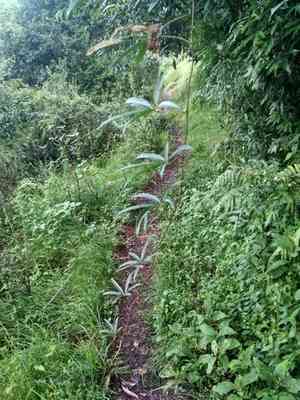
Stauntonia latifolia, a member of the Stauntonia genus within the Lardizabalaceae family, is chiefly multiplied by seeding. Begin by lightly abrading the seeds to improve sprouting. Immerse the seeds for a full night prior to embedding them in a potting blend that drains effectively. Ensure the substrate remains uniformly damp, yet not oversaturated. Furnish a warm and humid setting for the best development of young plants, employing a warming mat if required.
When Is the Best Time to Propagate Stauntonia Latifolia?
Propagation Method
Seed Planting
Propagation Period
Spring
What Equipment Is Used in Stauntonia Latifolia Propagation?
Seed Trays
These are vital for initiating seeds in a regulated setting. They facilitate proper spacing and reduce root disruption during transplantation, leading to stronger stauntonia latifolia seedlings.
Seed Starting Mix
A specialized blend that provides excellent drainage and aeration, essential for the germination of stauntonia latifolia's seeds. It lowers the risk of fungal diseases and supports healthy root growth.
Heat Mat
Maintains a steady soil temperature, optimizing conditions for quicker and more uniform germination of stauntonia latifolia's seeds. It is especially useful in colder climates or during off-seasons.
Humidity Dome
Placed over seed trays, it helps retain moisture and create a micro-environment that mimics tropical conditions, crucial for the successful germination of stauntonia latifolia.
Spray Bottle
Used for gentle watering to avoid disturbing the soil and seeds of stauntonia latifolia. It ensures even moisture distribution without waterlogging, which can be harmful to seedling health.
Grow Lights
Supply the necessary light spectrum to support photosynthesis in stauntonia latifolia's seedlings, particularly in areas with limited natural sunlight. They help ensure robust and healthy development.
Labels and Markers
Important for tracking sowing dates and plant information, which is crucial for monitoring growth stages and identifying successful germination of stauntonia latifolia.
Hand Trowel
Useful for transplanting seedlings with minimal root disturbance into larger containers or directly into the garden. Ensures that stauntonia latifolia develops a strong root system.
How to Propagate Stauntonia Latifolia?
Propagation Type
Simple
How to Care for Your Newly Propagated Stauntonia Latifolia?
How to Care for Your Newly Propagated Stauntonia Latifolia?
Once the stauntonia latifolia seedlings have emerged and developed several true leaves, gradually introduce them to outdoor conditions by placing them in a sheltered spot and exposing them to increasing amounts of sunlight daily. Transplant the young plants to their permanent growing location in the garden or larger pots, ensuring they receive partial to full sunlight and are in well-draining soil. Continue to water regularly and apply a balanced fertilizer every few weeks to encourage healthy growth. Regularly check for pests and diseases, and provide support structures if the plant begins to vine.
Common Errors to Avoid When Propagating Stauntonia Latifolia
Overwatering
Excessive moisture can lead to root rot, which can impede root development and ultimately kill the plant.
Underwatering
Insufficient moisture can prevent cuttings from establishing roots and hinder growth.
Incorrect soil composition
Using soil that is too dense or poorly drained can suffocate new roots and cause fungal infections.
Improper cutting technique
Cutting stems incorrectly or using dull tools can damage plant tissue, reducing the chances of successful rooting.
Lack of humidity control
Inadequate humidity can cause cuttings to dry out before they have a chance to root.
Insufficient light
Cuttings need adequate light for photosynthesis and growth, but too much direct sunlight can scorch them.
Tips For Propagating Stauntonia Latifolia
Use well-draining soil
Ensure the soil mix includes components like perlite or sand to enhance drainage and prevent waterlogging.
Maintain optimal moisture
Keep the soil consistently moist but not waterlogged to support root development without causing rot.
Sterilize cutting tools
Always use clean, sharp tools to make cuts to prevent infections and damage to plant tissues.
Provide high humidity
Use a humidity dome or a plastic bag to cover the cuttings and maintain a moist environment, which fosters root growth.
Ensure adequate light
Place the cuttings in a location with bright, indirect light to promote photosynthesis without the risk of burning the tender new growth.



