How to Propagate Tamarillo?
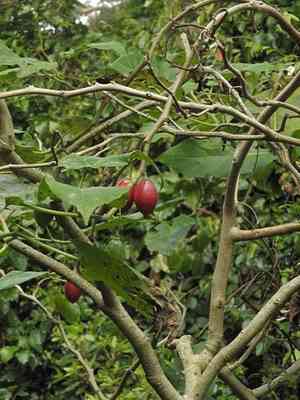
Originating from South America, the tamarillo flourishes in adequately drained substrates and responds favorably to propagation techniques like grafting. Achieving a high rate of success necessitates choosing a robust rootstock to sustain the scion, preferably from a more resilient yet closely allied species. Precision is crucial when making incisions and firmly securing the graft junction, preserving humidity as the tissues integrate. Following its establishment, ongoing attention will guarantee the proper development of the new tamarillo.
What Is the Best Time To Propagate Tamarillo?
Propagation Type
Grafting
Propagation Season
Spring,Winter
What Tools Are Used in Tamarillo Propagation?
Budding and Grafting Knives
These specialized blades are employed for making precise incisions on tamarillo during grafting. Clean, accurate cuts ensure better alignment and contact between the scion and rootstock, crucial for successful grafting.
Grafting Tape or Parafilm
This material is used to wrap and secure the graft junction of tamarillo. It maintains necessary humidity and shields the graft union from external elements while allowing it to breathe, facilitating successful healing and union.
Rootstock and Scion Material
Carefully chosen rootstocks and scions are vital for the grafting of tamarillo. The rootstock should be vigorous and disease-resistant to impart these beneficial traits to the grafted plant.
Pruning Shears
Used to prepare the rootstock and to trim any excess or unwanted parts before and after grafting. Sharp, clean pruning shears help prevent disease transmission and promote healthier growth in tamarillo.
Disinfectant for Tools
To prevent the spread of pathogens during the grafting of tamarillo, all tools should be sanitized before use. This ensures the health and viability of both rootstock and scion material during propagation.
How to Propagate Tamarillo?
Propagation Type
Moderately Difficult
How to Care for Your Newly Propagated Tamarillo?
How to Care for Your Newly Propagated Tamarillo?
After grafting, position the grafted tamarillo in a sheltered, partially shaded spot to avoid direct sunlight, which can stress the young graft. Maintain consistent soil moisture but prevent over-watering, which could lead to root rot. Monitor the graft regularly, removing any unwanted shoots emerging from the rootstock. Once established and growing, gradually expose the tamarillo to more sun, and begin a feeding regimen with a balanced fertilizer to support healthy growth. Protection from extreme weather and regular inspection for pests or diseases will ensure the robust growth of tamarillo.
Common Mistakes to Avoid When Propagating Tamarillo
Overwatering
Excessive watering can cause root rot in tamarillo, which prefers well-draining soil. This error can suffocate roots, reduce oxygen, and lead to fungal diseases.
Deep planting
Planting tamarillo seeds or cuttings too deeply can hinder germination or rooting due to insufficient light and potential stem rot.
Ignoring cutting health
Using unhealthy or diseased tamarillo cuttings for propagation can result in poor establishment and spread diseases to new plants.
Neglecting humidity
Tamarillo cuttings require a high humidity environment to root effectively. Failing to provide adequate humidity can lead to desiccation and rooting failure.
Overcrowding
Overcrowding tamarillo seeds or seedlings can restrict light and nutrient access, leading to weaker plants and reduced growth potential.
Tips For Propagating Tamarillo
Healthy donor plants
For cuttings, always select robust and disease-free donor plants, as this increases the chances of propagation success for tamarillo.
Appropriate medium
Utilize a propagation medium that is well-draining and fertile. This ensures that tamarillo receives the right balance of moisture and aeration for root development.
Optimal cutting size
Prepare tamarillo cuttings that are 4-6 inches in length with several leaf nodes. This size promotes better rooting while still being manageable.
Humidity control
Create a humid environment for tamarillo cuttings, achievable with a plastic cover or misting system to maintain moisture without oversaturation.
Space management
Provide ample space between tamarillo seeds or seedlings to ensure proper light penetration and nutrient uptake, leading to healthier and more vigorous plants.



