How to Propagate Bristly greenbrier?
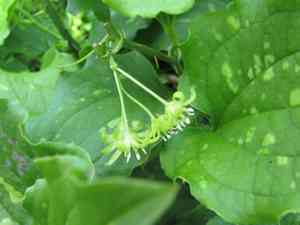
The favored propagation technique for Bristly greenbrier involves division, ideally performed in either spring or autumn. This procedure is quite straightforward, and the emergence of fresh shoots and foliage signifies successful propagation. For the best outcome, ensure you carefully disentangle the roots during the division process.
What Is the Best Time To Propagate Bristly Greenbrier?
Propagation Type
Division
Propagation Season
Spring,Autumn
What Tools Are Used in Bristly Greenbrier Propagation?
Garden Spade or Fork
These implements are essential for the division technique when propagating bristly greenbrier. The spade or fork is utilized to carefully excavate and lift the root ball from the earth, minimizing root damage. Their sharp edges and sturdy handles enable precise work around the root system, which is vital for successful division.
Pruning Shears
Properly sanitized pruning shears are employed to sever the roots when dividing bristly greenbrier. They create clean cuts, ensuring neat divisions and promoting faster recovery and re-establishment of the plant. Sharp, clean cuts help prevent disease and stress to the plant.
Rooting Hormone
While not always required, applying a rooting hormone to the severed sections of bristly greenbrier's roots can improve root development. Rooting hormones accelerate root growth and boost the overall success rate of propagation, especially in more challenging environments or conditions.
Watering Can with Fine Rose
Following transplantation, gentle irrigation is necessary to help bristly greenbrier establish in its new location. A watering can with a fine rose attachment ensures a soft, dispersed water flow that does not disturb newly planted divisions or expose roots by washing away soil.
Potting Mix or Garden Soil
A high-quality potting mix or native garden soil improves the growing conditions for new divisions of bristly greenbrier. The medium should be well-draining yet moisture-retentive, rich in organic matter, and free of disease-causing pathogens and weeds.
Labeling Stakes
Labeling each division of bristly greenbrier with planting stakes is important for monitoring its progress and maintaining appropriate care schedules. It aids in tracking the different divisions and understanding how they adapt to their new environments.
How to Propagate Bristly Greenbrier?
Propagation Type
Easy
How to Care for Your Newly Propagated Bristly Greenbrier?
How to Care for Your Newly Propagated Bristly Greenbrier?
Water the plants consistently to keep the soil damp, especially during dry periods. Bristly greenbrier prefers a partially shaded spot, so ensure it's not exposed to prolonged direct sunlight, which can scorch the leaves. Watch for signs of stress or pest infestation, and manage as needed. During the growing season, fertilize with a balanced, slow-release product to support vigorous growth.
Common Mistakes to Avoid When Propagating Bristly Greenbrier
Overwatering during root development
Excessive watering can lead to root rot and fungal issues, particularly during the initial stages of root establishment for bristly greenbrier. Too much moisture in the soil hinders adequate air circulation around the roots, thereby reducing the plant's ability to absorb nutrients effectively.
Planting cuttings too deep
Inserting cuttings of bristly greenbrier too far into the soil can impede their ability to sprout effectively. Deep burial can also result in stem rot due to reduced light exposure and increased soil moisture.
Ignoring node placement on cuttings
Nodes are crucial for root emergence in cuttings. A common error is to take cuttings that lack sufficient nodes, or to plant them in a way that nodes are not in contact with the rooting medium, both of which can drastically reduce propagation success.
Tips For Propagating Bristly Greenbrier
Use of a rooting hormone
Applying a rooting hormone to the cuttings of bristly greenbrier can significantly boost rooting success. This compound encourages faster root growth, thereby stabilizing the plant more quickly.
Maintaining high humidity
For the successful propagation of bristly greenbrier, maintaining a high humidity environment is essential. Enclosing the propagation area with a clear plastic cover can help retain moisture and warmth, accelerating root development.
Preparing cuttings properly
Selecting healthy, robust parts of bristly greenbrier for cuttings, and ensuring each cutting has at least two to three nodes increases the chances of successful root development. Cut just below a node, as this area contains high concentrations of necessary growth hormones.



