How to Propagate White mountain saxifrage?
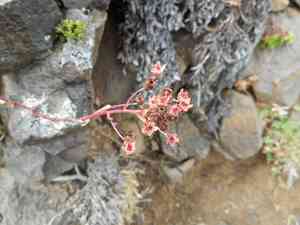
White mountain saxifrage flourishes when reproduced via cuttings, an effective technique enabling cultivators to guarantee genetic uniformity in their specimens. Begin with a vigorous, pathogen-free parent plant to sever a substantial, foliage-bearing segment. Employ a rooting stimulant to foster root formation and embed it in porous soil abundant in organic material, ensuring sufficient hydration. Position the cutting in diffused illumination where it can take root without the strain of strong sunlight. Given appropriate attention, the cutting will cultivate strong roots, leading to a resilient new plant.
Optimal Time for White Mountain Saxifrage Propagation
Propagation Type
Cutting
Propagation Season
Spring,Autumn
Tools for White Mountain Saxifrage Propagation
Sharp pruning shears
These are vital for making clean cuts from the parent white mountain saxifrage plant. Sharp blades ensure cuttings are taken without crushing plant tissues, which is crucial for successful rooting and plant health. Clean cuts aid faster healing for both the parent plant and cuttings, reducing infection risk and boosting propagation success.
Rooting hormone
This chemical substance encourages root development from white mountain saxifrage cuttings. Dipping the cut end into rooting hormone significantly increases the likelihood of successful root formation. This is particularly important for white mountain saxifrage to help establish a strong, healthy root system.
Sterilized potting mix
A well-draining, sterilized potting mix offers a safe and favorable environment for white mountain saxifrage root development from cuttings. Sterilization helps prevent disease-causing pathogens that could harm cuttings before roots establish. A light, nutrient-balanced medium also supports optimal root growth.
Plant pots with drainage holes
These pots are necessary to hold the sterilized potting mix and the cutting until it fully roots. Drainage holes are essential to prevent water accumulation at the pot's bottom, which could lead to rotting of the new white mountain saxifrage roots.
Misting bottle
A misting bottle is useful for maintaining humidity around white mountain saxifrage cuttings without over-saturating the soil, which can be harmful. Regular misting helps prevent cuttings from drying out, especially during the initial stages of root formation.
Propagating White Mountain Saxifrage
Propagation Type
Easy
Caring for Your Newly Propagated White Mountain Saxifrage
Caring for Your Newly Propagated White Mountain Saxifrage
Once white mountain saxifrage has rooted and begun to grow, gradually introduce it to its natural surroundings. This involves slowly exposing the plant to more direct sunlight and progressively reducing humidity by opening the plastic cover. Once established, white mountain saxifrage needs well-drained soil and can endure dry conditions. Water sparingly, ensuring the soil is moist but not waterlogged. Fertilize lightly during the growing season to encourage robust growth.
Common Propagation Errors for White Mountain Saxifrage
Overwatering
Excessive watering can cause root rot and fungal diseases in white mountain saxifrage, as its natural habitat is rocky and well-drained. Overwatering hinders root oxygenation, leading to a weakened plant more susceptible to disease and less likely to propagate successfully.
Using dense soil
Employing a soil mix that is too compact or clay-rich can impede drainage, which is vital for white mountain saxifrage health. Poor drainage can similarly lead to root diseases and hinder the root growth necessary for successful propagation.
Overcrowding cuttings
Placing cuttings too close together can result in poor air circulation around the plants, increasing the risk of fungal infections and reducing overall propagation success. Sufficient space is necessary for healthy growth and development.
Advice for Propagating White Mountain Saxifrage
Use sandy soil mix
Utilize a sandy, well-draining soil mix to replicate white mountain saxifrage's natural rocky environment. This ensures proper drainage and moisture retention, providing an ideal setting for roots to establish and grow.
Moderate watering
Maintain a balanced watering routine, ensuring the soil is moist but not waterlogged. Overwatering can harm white mountain saxifrage, so it's crucial to allow the soil to dry out slightly between waterings.
Provide adequate light
Ensure white mountain saxifrage receives sufficient but indirect sunlight. Direct, harsh sunlight can be damaging, while too little light can hinder growth. Optimal light conditions support healthy growth and facilitate successful propagation.
Soft tip cuttings
Use soft tip cuttings for propagation. This method generally yields higher success rates with white mountain saxifrage, promoting healthy new growth when planted in suitable conditions.



