How to Propagate Lizard's tail?
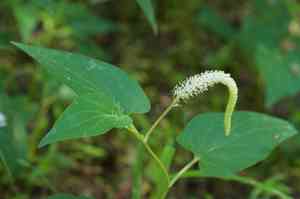
Saururus cernuus usually reproduces via separation in either spring or fall. This technique is quite straightforward for novice gardeners to execute. Indicators of successful reproduction encompass fresh sprouts and robust root structures. Sufficient hydration is crucial throughout this procedure.
Optimal Time for Lizard's Tail Propagation
Propagation Method
Splitting
Propagation Period
Spring, Fall
Tools for Lizard's Tail Propagation
Garden Spade or Shovel
A robust garden spade or shovel is vital for excavating the lizard's tail clump from the ground. Its sharp edge should cleanly cut through soil and roots, minimizing plant damage. This tool assists in lifting the entire root ball, crucial for stress-free plant division.
Pruning Shears
Sharp pruning shears are needed for trimming excess foliage or roots before division. This helps lessen transplant shock and ensures lizard's tail's energy focuses on new growth. Shears must be clean and sterilized to prevent disease spread during propagation.
Garden Fork
A garden fork is employed to gently separate lizard's tail roots during division. Its tines allow for more delicate separation than a spade, reducing root damage. It can also aerate the soil in the new planting area, improving root oxygen flow.
Watering Can with a Fine Rose
After lizard's tail is divided and planted, a watering can with a fine rose attachment ensures gentle, even water distribution over the soil. This prevents soil compaction and root disturbance, helping new divisions settle without being washed away or exposed to air pockets.
Plastic Pots or Planting Trays
If lizard's tail divisions are to be temporarily potted before permanent transplanting, plastic pots or planting trays are required. They should have adequate drainage holes to prevent waterlogging, essential for the new plants' health.
Rooting Hormone
While not strictly necessary, applying rooting hormone to lizard's tail's cut ends during division can promote faster, stronger root development. This is especially useful to give each division the best chance to grow into a healthy, independent plant.
Sterilizing Solution
To prevent disease transmission during propagation, tools, pots, and trays should be cleaned and sterilized with a suitable solution, such as diluted bleach or alcohol. Hygiene is paramount for successful lizard's tail division propagation and establishment.
How to Propagate Lizard's Tail?
Propagation Method
Division
Difficulty Level
Simple
Caring for Your Newly Propagated Lizard's Tail
Caring for Your Newly Propagated Lizard's Tail
Lizard's tail thrives in wet or boggy conditions, making them perfect for water gardens or poorly drained areas. Plant them in full to partial shade. Keep the soil consistently moist; during hot summers, extra watering may be needed. Mulch can help retain soil moisture. Cut back foliage in late autumn to prepare for spring growth. Fertilizers are usually unnecessary if lizard's tail is in rich soil, but a balanced, slow-release fertilizer can be applied in spring if growth is poor.
Common Propagation Mistakes for Lizard's Tail
Overwatering
Excessive watering can cause root rot in lizard's tail, as its roots need consistent moisture but not waterlogging. Overly saturated soil deprives roots of oxygen, leading to decay and potential plant death.
Deep planting of cuttings
Planting cuttings too deeply can cause lizard's tail cuttings to rot before they establish. Cuttings should be inserted shallowly to firm up and avoid being smothered by soil.
Ignoring humidity
Disregarding the need for high humidity can harm lizard's tail propagation. Cuttings of lizard's tail require high humidity to prevent drying out before rooting.
Poor light conditions
Failing to provide sufficient light can impede lizard's tail growth. While it thrives in partial shade, inadequate light can result in weak growth and poor propagation outcomes.
Tips For Propagating Lizard's Tail
Sterile equipment
Using sterilized cutting tools is crucial to prevent disease spread to lizard's tail during propagation. This ensures healthy growth and reduces infection risk.
Soil mixture
A well-draining and nutrient-rich soil mixture aids successful rooting of lizard's tail cuttings. The mix should retain moisture without becoming waterlogged, providing an ideal medium for root development.
Humidity control
Creating a humid environment benefits lizard's tail cuttings. Using a humidity dome or plastic bag over the cutting can help maintain the necessary moisture level around it.
Moderate watering
Ensuring moderate and consistent watering practices can help lizard's tail establish a healthy root system. Soil should be kept moist but not overly wet to prevent root issues.
Appropriate cutting size
Selecting a cutting of the correct size, typically 4-6 inches long, increases the chance of successful lizard's tail propagation. Shorter cuttings may lack energy to root, and longer ones may struggle to remain upright.



