How to Propagate Hooded pitcher plant?
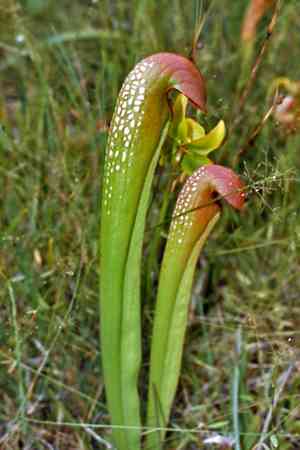
Sarracenia minor, a carnivorous plant indigenous to the southeastern regions of the United States, can be effectively propagated through division. Gently separate the rhizomes, ensuring that every segment possesses a minimum of one active growth point. Embed these separated portions into an acidic, well-draining substrate, preferably a blend of peat moss and perlite. Sustain elevated humidity levels and guarantee the growing medium stays damp, yet not oversaturated, to foster robust development.
Optimal Time for Hooded Pitcher Plant Propagation
Propagation Method
Splitting
Propagation Period
Spring,Autumn
Tools Required for Hooded Pitcher Plant Propagation
Sharp Knife or Pruning Shears
A keen knife or pruning shears are vital for the splitting process. They are employed to carefully separate the rhizomes of hooded pitcher plant without causing undue harm. Their sharpness guarantees clean cuts, lowering infection risk and promoting quicker recovery.
Sterilizing Solution
Before and after making cuts, tools should be disinfected with a solution such as rubbing alcohol or a diluted bleach mixture. This step is crucial to prevent the spread of pathogens and ensure the health of the plant sections.
Planting Containers
Receptacles are used to house the divided sections of hooded pitcher plant, providing an environment where they can establish roots. Using containers with good drainage is important to avoid waterlogging which can lead to root rot.
Sphagnum Moss
Sphagnum moss is frequently utilized as a substrate for hooded pitcher plant due to its capacity to retain moisture while offering sufficient aeration to the roots. It helps emulate the plant's natural bog-like environment.
Distilled or Rainwater
Since hooded pitcher plant is sensitive to the minerals in tap water, using distilled or rainwater ensures that the newly divided plants do not suffer from mineral buildup which can hinder their growth.
Humidity Dome
A humidity dome or plastic cover is beneficial for maintaining the elevated humidity levels required during the initial stages of root establishment. This tool aids in preventing the young divisions from drying out rapidly.
Grow Lights
If natural light is insufficient, grow lights can be used to provide the necessary light spectrum for photosynthesis. They ensure that the divisions receive consistent light, critical for successful rooting and growth.
How to Propagate Hooded Pitcher Plant?
Propagation Type
Simple
Post-Propagation Care for Your Hooded Pitcher Plant
Post-Propagation Care for Your Hooded Pitcher Plant
Following propagation, hooded pitcher plant needs consistent moisture, so it's essential to water regularly with distilled or rainwater. Place the plant in a bright location, ideally with 6-8 hours of direct sunlight daily. Avoid fertilizer, as hooded pitcher plant is accustomed to nutrient-poor environments. Monitor for pests and diseases and provide a slightly humid environment to mimic its natural habitat. Regularly check for new growth and ensure the soil remains well-drained to prevent root rot.
Common Errors to Avoid When Propagating Hooded Pitcher Plant
Overwatering
Excessive moisture can cause root rot and fungal diseases, which are detrimental to hooded pitcher plant's health.
Using Basic Soil
Regular garden soil that is not acidic enough can lead to poor nutrient uptake, stunting hooded pitcher plant's growth.
Inadequate Lighting
Placing hooded pitcher plant in low light conditions can inhibit its photosynthesis process, leading to weak and leggy growth.
Improper Humidity
Failing to maintain high humidity levels can result in desiccation, harming the overall health of hooded pitcher plant.
Wrong Propagation Method
Using inappropriate methods like leaf cuttings can lead to unsuccessful propagation attempts.
Tips For Propagating Hooded Pitcher Plant
Potting Medium
Use a mix of sphagnum peat moss and perlite to ensure good drainage and proper acidity for hooded pitcher plant.
Watering
Water using distilled or rainwater to avoid mineral buildup, ensuring the medium is always moist but not waterlogged.
Humidity
Maintain high humidity by placing hooded pitcher plant in a terrarium or using a humidity tray to mimic its natural habitat.
Lighting
Provide bright, indirect light to support healthy growth and vibrant coloration in hooded pitcher plant.
Division
Propagate hooded pitcher plant by dividing the rhizomes during re-potting for higher success rates.



