How to Propagate East asian sage?
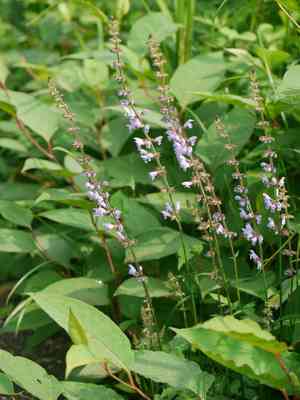
East Asian sage flourishes when reproduced via cuttings. To successfully increase East Asian sage, choose robust, non-blooming stalks. Snip the stem sections, each approximately four inches in length, making sure several leaves are present. Submerge the severed tip in a rooting compound to stimulate root formation and embed in a damp, adequately draining potting substrate. Offer diffused illumination and sustain soil hydration until roots take hold, usually within a couple of weeks. This technique guarantees vigorous development and plant well-being.
When Is the Best Time to Propagate East Asian Sage?
Propagation Method
Cutting
Propagation Period
Spring,Summer
What Equipment Is Used in East Asian Sage Propagation?
Sharp pruning shears
These are crucial for making clean cuts on east asian sage's stems, minimizing harm and lowering infection risk. A sharp, clean cut prevents fraying or crushing, which can negatively impact rooting.
Rooting hormone powder
This product encourages root development from east asian sage cuttings. Applying rooting hormone to the cut stem end before planting boosts the likelihood of successful root formation, thereby improving propagation success.
Sterile potting mix
Utilizing a sterile, well-draining potting mix offers a clean, disease-free environment for east asian sage cuttings to root. A mix primarily of peat, perlite, and vermiculite supports proper moisture retention and aeration, vital for root growth.
Humidity dome or plastic cover
Maintaining a high humidity environment around east asian sage cuttings prevents moisture loss and wilting, which is essential during the initial stages of root development. The dome or cover helps create a mini greenhouse effect for ideal growing conditions.
Plant propagation tray
These trays are useful for organizing and managing multiple east asian sage cuttings efficiently. They also allow for easy monitoring and maintenance of moisture levels and general care across all propagating cuttings.
How to Propagate East Asian Sage?
Propagation Difficulty
Easy
How to Care for Your Newly Propagated East Asian Sage?
How to Care for Your Newly Propagated East Asian Sage?
Once east asian sage cuttings have developed roots, typically within 4-6 weeks, gradually acclimate them to less humid conditions by progressively removing the plastic cover. Transplant the rooted cuttings into individual pots with similar well-draining potting soil. Position them in a spot with bright, indirect light and maintain consistent watering, allowing the soil to dry slightly between waterings. Fertilize lightly every 4-6 weeks during the growing season with a balanced liquid fertilizer. Avoid overwatering to prevent root rot.
Common Mistakes to Avoid When Propagating East Asian Sage
Overwatering
Excessive watering of east asian sage can lead to root rot, which is detrimental to the plantâs health and significantly hinders successful propagation. Too much moisture in the soil deprives roots of necessary oxygen, leading to decay.
Using poor soil mix
Choosing an unsuitable soil mix when potting east asian sage can impede proper root development. A mix that lacks adequate drainage and aeration may cause the roots to suffocate or rot, hindering growth and propagation.
Excessive use of fertilizers
Over-fertilization can lead to an imbalance in soil nutrients, which can harm east asian sage's root growth and overall health. Too many nutrients can cause 'fertilizer burn,' damaging the plantâs roots and reducing propagation success.
Tips For Propagating East Asian Sage
Suitable cutting selection
Choosing healthy, non-flowering stems for cuttings ensures a higher rate of successful propagation for east asian sage. This method promotes better root development from cuttings.
Optimal rooting environment
Providing a moist, well-draining soil mix and ensuring indirect light helps east asian sage cuttings to establish roots effectively. This environment supports optimal moisture levels without waterlogging, fostering healthy root growth.
Regular monitoring
Regularly checking the moisture levels in the soil and the health of the cuttings can prevent issues such as rot or drying out. Early detection of problems allows for timely interventions, which is crucial for the propagation success of east asian sage.



