How to Propagate Globe yellowcress?
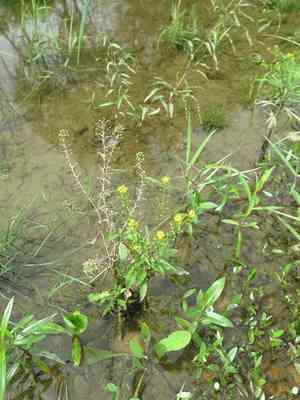
Globe yellowcress flourishes when reproduced by seeding. To achieve robust development, choose a potting medium that drains effectively and confirm the location gets abundant sunshine. Distribute the seeds uniformly, lightly covering them with substrate to encourage prime sprouting. Consistent irrigation will aid in the growth of young plants, but refrain from overwatering to avert root problems. Keep an eye out for insects and illnesses, dealing with any concerns swiftly to preserve vigorous growth.
When Is the Optimal Time to Propagate Globe Yellowcress?
Propagation Method
Seeding
Propagation Period
Spring
What Equipment Is Utilized in Globe Yellowcress Propagation?
Seed trays
Seed trays are essential for planting globe yellowcress seeds. They enable the gardener to meticulously and neatly organize the propagation process. The compact design of seed trays ensures that multiple seeds can be sown with uniformly distributed space, which promotes adequate air circulation and minimizes the risk of fungal infections. Using seed trays helps manage the initial growth environment by maintaining consistent soil moisture and temperature, which are crucial for globe yellowcress germination.
Fine vermiculite or perlite
Vermiculite or perlite serves as a medium for sowing globe yellowcress seeds. Both are sterile, lightweight, and facilitate good aeration and moisture retention, creating an ideal environment for seed germination. They prevent soil compaction, thereby aiding root expansion and health. This is particularly beneficial for globe yellowcress, whose delicate seeds may struggle in denser substrates.
Misting spray bottle
A misting spray bottle is vital for gently watering globe yellowcress seeds. Unlike traditional watering methods, misting minimizes the risk of disturbing the seeds or causing soil erosion. This tool ensures that seeds and seedlings receive moisture in a controlled manner, which is essential for healthy growth and development during the delicate germination phase.
Clear plastic dome or cover
A clear plastic dome or cover is used over seed trays to maintain high humidity and stable temperature conditions, both of which are crucial for successful globe yellowcress germination. The dome also protects seeds and emerging seedlings from pests and harsh environmental elements, providing a microclimate that supports robust early growth.
How to Propagate Globe Yellowcress?
Propagation Difficulty
Simple
How to Nurture Your Newly Propagated Globe Yellowcress?
How to Nurture Your Newly Propagated Globe Yellowcress?
After propagation, ensure globe yellowcress receives sufficient water, keeping the soil consistently moist but not saturated. Provide a location with partial to full sunlight. Fertilize lightly with a balanced, water-soluble fertilizer every 4-6 weeks during the growing season. Regularly check for pests and diseases, and prune any dead or damaged foliage to encourage healthy growth.
Common Errors to Avoid When Propagating Globe Yellowcress
Overwatering
Excessive moisture can lead to root rot, which damages the root system and can kill globe yellowcress.
Insufficient Light
Providing too little light results in weak growth and can hinder the plant's ability to develop strong roots.
Using Poor Soil
Soil that doesn't drain well can cause water to accumulate, leading to rot and nutrient deficiencies.
Incorrect Cutting Technique
Improper cutting methods can damage the plant tissue, reduce the likelihood of successful rooting, and introduce pathogens.
Tips For Propagating Globe Yellowcress
Moderate Watering
Ensure the soil remains consistently moist but not waterlogged to provide optimal conditions for root development.
Bright, Indirect Light
Place globe yellowcress in an area where it receives adequate indirect sunlight to promote healthy growth without causing leaf burn.
Well-Draining Soil
Use a light, well-draining soil mix to prevent water accumulation and provide a balanced nutrient environment.
Clean Cutting Tools
Always use sterile, sharp tools to make clean cuts, reducing the risk of infection and promoting quicker healing and rooting.
Rooting Hormone
Apply rooting hormone to cuttings to boost the development of new roots and increase the chances of successful propagation.



